
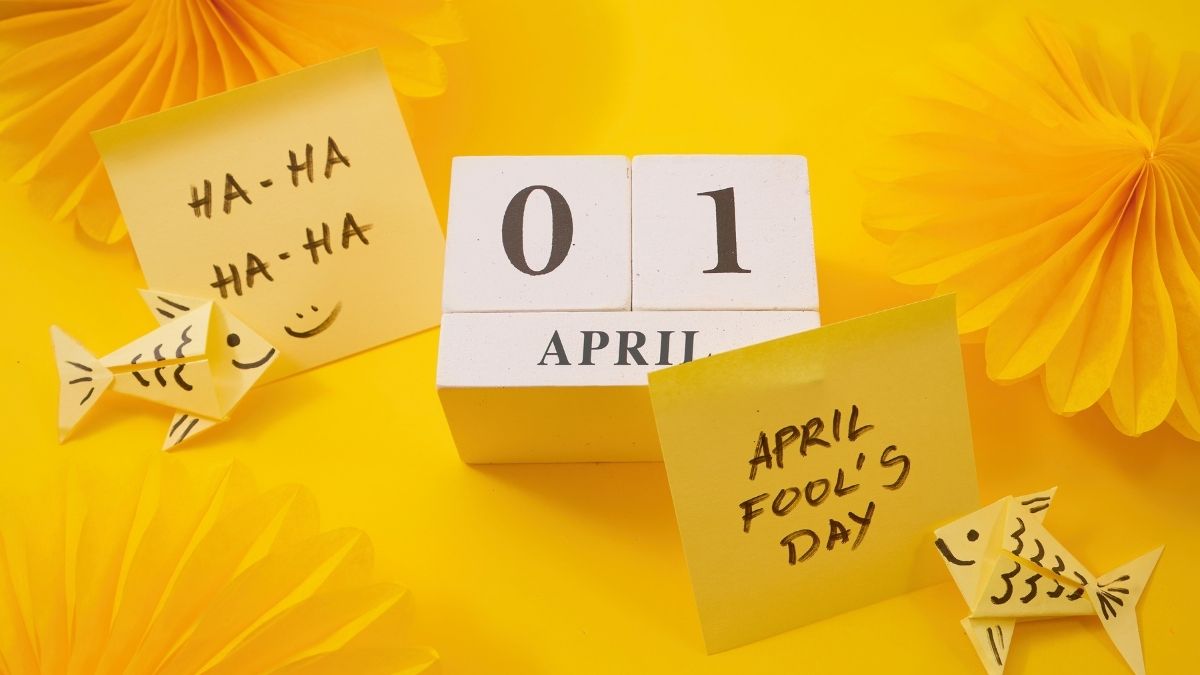



April Fool’s Day is celebrated globally on April 1, with people playing pranks, sharing jokes, and enjoying light-hearted fun with friends and family. Over the years, even popular brands have joined in, often pulling off pranks that truly catch people off guard. But have you ever wondered where the day originated and why April 1 became the global day of jokes and mischief? Scroll on to find out.
How A Calendar Shift In France Gave Birth To A Playful Tradition
Let’s begin by clarifying that there are several origin stories of April Fool’s Day, and how accurate they are, or which one is the most credible, is still up for debate. While scholars disagree on many theories, most agree that one of the most widely accepted origin stories dates back to 16th-century France.
According to History.com and National Geographic, France switched from the Julian calendar to the Gregorian calendar in 1582. Under the old system, the New Year was typically celebrated around the spring equinox, near April 1. However, with the shift to the new calendar, New Year’s Day moved to January 1.
It is believed that those who continued celebrating the New Year in April were mocked as “April fools.” They were seen as gullible, often compared to young fish, which may have inspired the term poisson d’avril, meaning “April fish.” The phrase is still used for April Fool’s Day in France, Italy, Belgium, and French-speaking Canada.
Even today, people in France and Italy stick paper fish on the backs of friends or family as a prank. When it’s discovered, they shout “Poisson d’avril!” or “Pesce d’aprile!”
Also Read: CT Exclusive: 10 Summer Food & Travel Memories That Remind You Of Your Childhood
April Fool’s Day: Other Origin Stories
An even older theory suggests that April Fool’s Day may trace its origins to English poet Geoffrey Chaucer’s 1390 work, The Nun’s Priest’s Tale. The story features a rooster and a fox tricking each other, possibly around April 1. However, many historians argue that this reference may have resulted from a typo or misinterpretation in early texts.
Another theory traces the origins of April Fool’s Day to Hilaria, an ancient Roman spring festival. In Latin, Hilaria means joyful, and the festival was celebrated usually at the end of March in honour of the goddess Cybele. The day involved people dressing up in disguises and playfully mocking others, traditions that may have inspired modern-day pranks.
According to the Detroit Free Press, the unpredictable weather around early April could also be one of the reasons behind the tradition, as the changing season often brought confusion and surprise, much like the spirit of April Fool’s Day.
Also Read: Did You Know Indian Travellers Have To Pay A ₹1 Lakh Transit Fee In El Salvador?
Honestly, we believe all these myths and traditions have played a role in making the April Fool’s Day we celebrate today. Which one did you like the most? Let us know in the comments!
Cover Image Courtesy: Canva Pro/vetrestudio
For more such snackable content, interesting discoveries and the latest updates on food, travel and experiences in your city, download the Curly Tales App. Download HERE. First Published: April 01, 2026 12:42 PMFAQs
Why is April Fool's Day celebrated?
April Fool’s Day is celebrated on the first day of April as a day of jokes, pranks, and light-hearted fun.
When did April Fool's Day celebration start?
It is believed that back in the 16th-century France, when the country switched to Gregorian calendar, New Year’s Day moved from around April 1 to January 1. Those who continued celebrating in April were mocked as “April fools,” leading to prank traditions.
Where is April Fool’s Day celebrated?
It is celebrated across the globe with different traditions.