

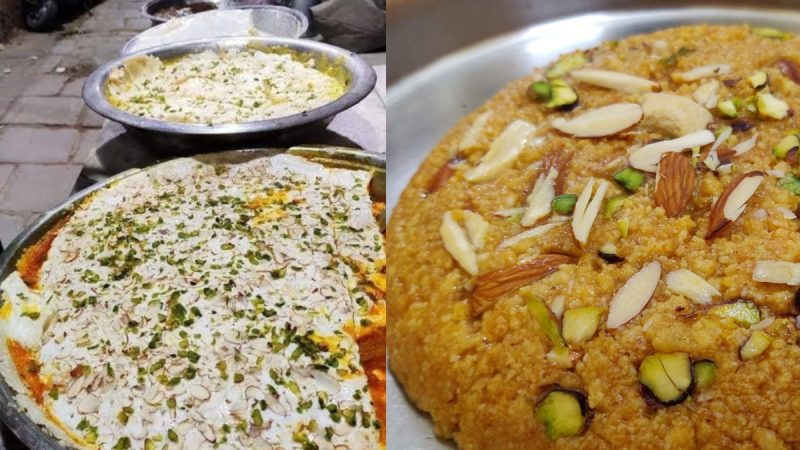
When you think of Varanasi, you probably imagine its ghats, temples, evening aartis, and spiritual vibe. But ask any local with a sweet tooth, and they’ll tell you that the city is also home to some of the richest and most unique mithais in India. And right at the top of that list is a winter special sweet with a name that instantly grabs attention: Palang Tod.
So, What Is Palang Tod?
Palang Tod is a traditional milk-based mithai that is famous in Varanasi and nearby regions during winter. It is made by slowly cooking large quantities of cow and buffalo milk for hours, sometimes even up to 10 to 12 hours, on a low flame. As the milk cooks, thick layers of cream (malai) begin to form on top. These layers are gently pushed to the side and collected one by one.
These cream layers are then soaked in sugar syrup, flavoured with saffron and cardamom, stacked carefully, and topped with dry fruits like almonds, pistachios, and melon seeds. The final mithai is dense, creamy, slightly crumbly, and has a deep caramelised taste that comes from hours of slow cooking. It’s not too sweet but extremely rich.
The Funny Story Behind The Name
Now let’s talk about the name, because that’s where things get really interesting. “Palang Tod” literally translates to “bed breaker.” Why would anyone name a mithai that? According to local folklore, this sweet is so rich, heavy, and filling that after eating it, you feel completely full and relaxed, almost sleepy. The joke is that once you eat it, you’re ready to go lie down on your bed with such satisfaction that you might just break it!
According to Times Now News, another popular belief is that Palang Tod was traditionally served to newly married couples during cold winter nights. Since it’s packed with energy-giving ingredients like thick malai, saffron, and nuts, it was considered a natural “winter power booster.”
Also Read: No Date? No Worries! This Restaurant In Hong Kong Offers ‘Princess Treatment’ By Cute Servers
Only Available In Winter
One of the most special things about Palang Tod is that it is strictly seasonal. You can usually find it only between Diwali and Holi, which means from around December to February. The cold weather plays an important role in helping the cream layers form properly during the cooking process.
It is often served in a kulhad (clay cup) and sometimes paired with saffron milk to balance out its richness. So if you ever visit Varanasi in winter and love trying unique Indian mithais, this is one dessert you absolutely shouldn’t miss.
Cover Image Courtesy: Wikimedia Commons/Katugoswami21 and @CoolnwiseCool/X
FAQs
What is Palang Tod mithai made of?
Palang Tod is a traditional milk-based sweet made by slowly cooking cow and buffalo milk for several hours.
Why is it called Palang Tod?
The name “Palang Tod” literally means “bed breaker.” Locals believe that the mithai is so rich, heavy, and filling that after eating it, you feel extremely relaxed and sleepy.
Why is Palang Tod so expensive?
The mithai requires hours of slow cooking, large quantities of milk, and careful collection of cream layers.
Is Palang Tod available throughout the year?
No, Palang Tod is a strictly seasonal sweet that is usually available only during the winter months, typically between Diwali and Holi (December to February).