

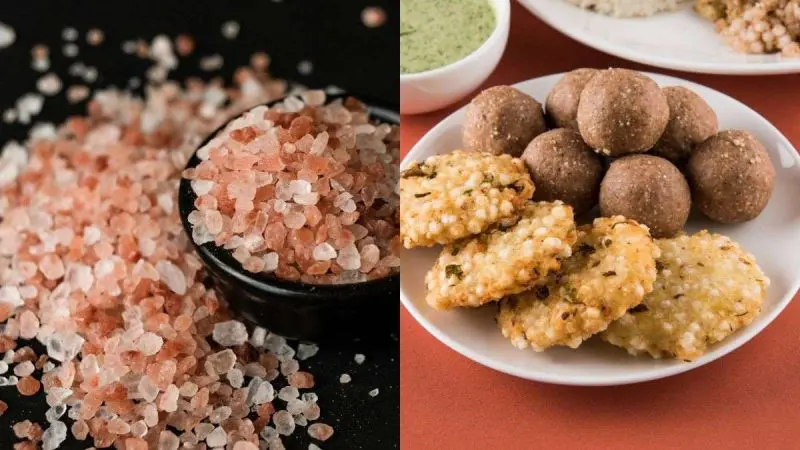
During Navratri in India, many people eat vrat wale chips, sabudana tikki and other fasting foods made with sendha namak. But have you ever wondered why we use sendha namak instead of regular salt during these nine auspicious days? The reason is linked to religious traditions and will definitely interest you.
Why Is Sendha Namak Used During Navratri Fasts?
Navratri is here, which means grocery shops in the market will be full of fasting-friendly snacks. Even restaurants and cafes will offer Navratri menus with food made using sendha namak. Be it tasty vrat wale chips, sabudana tikki, sabudana khichdi, kuttu puri or other satvik food items, every food item meant for people keeping fasts will use sendha namak or rock salt. But why? Why is regular salt avoided during these fasts?
Rock salt, or sendha namak, is a type of salt that is minimally processed and is often mined from Himalayan regions. Unlike regular table salt, it is usually sold in a less refined form. You might have also noticed that sendha namak has a different texture. The regular namak in our kitchen is usually fine and powdery, whereas this special fasting salt is often coarse and grainy. Since it is less processed, many people consider it satvik or “spiritually clean”. It is commonly used in fasting recipes because many people consider it appropriate for a satvik diet. This belief is linked to religious fasting traditions.
Also Read: Vaishno Devi-Style Gufa In Delhi: Why Preet Vihar Temple Is A Navratri Must-Visit
Benefits Of Rock Salt
Apart from being less processed, sendha namak is also chosen for its taste. Compared to regular table salt, some people find that rock salt has a milder taste, making it suitable for dishes like buttermilk and raita. You would like to know that sendha namak is also believed to support digestion, reduce bloating and boost metabolism. Moreover, it also contains trace amounts of minerals like potassium and magnesium.
Now, you must be clear about why sendha namak is preferred during Navratri. But here is one more important thing. Since sendha namak is generally not fortified with iodine like regular iodised salt, completely replacing table salt with rock salt on non-fasting days is not advised. It could increase your risk of iodine deficiency. So, make sure you also use iodised table salt in your regular meals.
Also Read: Fasting This Navratri? 5 Common Mistakes You Must Avoid For A Healthy Vrat This Festive Season
So, tell us, what fasting food will you be enjoying the most during these nine days?
Cover Image Courtesy: Canva Pro/Danielobrienphotography and Subodhsathe
FAQs
What is sendha namak?
Sendha namak is rock salt. It is commonly used in Indian fasting foods.