

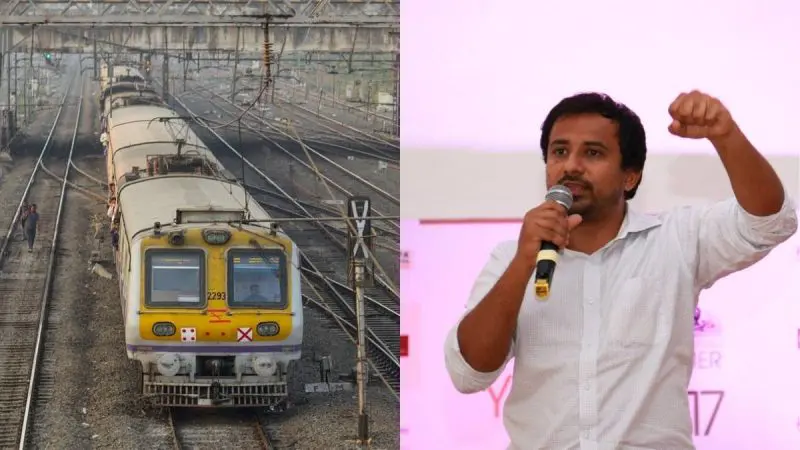
If you’re a woman who relies on metros, local trains or any form of public transport, chances are you’ve experienced, or at least witnessed, harassment during your commute. While most people choose to look away or hesitate to intervene, Dipesh Tank decided to take action. Since 2013, the man has been working alongside railway authorities to identify and help catch harassers, with one goal in mind: making Mumbai’s local trains a safer place for women.
Dipesh Tank Is On A Mission To Make Mumbai Locals Safer For Women
In 2013, while waiting at Malad railway station, Dipesh Tank witnessed a disturbing scene that would change the course of his life. A group of young men hanging out of a moving local train were making obscene gestures at women on the platform, with some even pretending to lunge at them. What he witnessed wasn’t unusual; it was something commuters saw far too often on Mumbai’s local trains.
When he brought the issue to the authorities, Dipesh was met with one excuse after another. Officials cited jurisdiction issues, said only victims could file complaints, or questioned how the offenders could be identified. Instead of giving up, he decided to take matters into his own hands and become part of the solution.
According to Mumbai Mirror, later that year, the activist launched War Against Railway Rowdies (WARR). This volunteer-led initiative worked alongside the Government Railway Police (GRP) and the Railway Protection Force (RPF) to identify and help catch offenders.
The operation was simple but effective. Volunteers discreetly recorded incidents at stations, while plain-clothes police officers tracked the suspects using live descriptions relayed from one station to the next. The coordinated effort helped officials intercept alleged harassers before they could disappear into the crowds, marking one of the first citizen-led collaborations of its kind on Mumbai’s suburban railway network.
Also Read: Mumbai’s Iconic Air India Building To Get New Identity; Ashoka Stambha To Replace Airline Logo
A ‘WARR’ Against Rowdies & Predators
Over the years, WARR has helped railway authorities identify and nab more than 150 harassers. The campaign has also drawn greater attention to women’s safety, prompting wider CCTV coverage at stations and the installation of surveillance cameras in several ladies’ compartments.
Determined to document what women face during their daily commute, he invested in a spy camera and began recording incidents from inside moving trains. He regularly shares the footage with railway officials to help them identify offenders and highlight the scale of the problem.
Today, beyond his own daily commute, Tank dedicates hours to monitoring Mumbai’s Western, Central, and Harbour railway lines, using his camera not just to expose harassment but to make the city’s lifeline a little safer for every commuter.
Did you know Dipesh Tank’s work has also inspired a movie? The 2025 short film Dear Men is inspired by his efforts to make Mumbai’s local trains safer for women. More than just telling his story, the film urges men to stop being silent bystanders and become part of the solution against harassment.
Also Read: Konkan Travel Gets Easier As Indian Railways Approves New Mumbai-Sawantwadi Express
Not all heroes wear capes; some wear spy glasses and help catch hooligans and harassers red-handed.
Cover Image Courtesy: Flickr & Facebook/dipesh.tank
FAQs
Who is Dipesh Tank?
Dipesh Tank is a Mumbai-based rail-safety activist who has been working since 2013 to make the city's local trains safer by helping railway authorities identify and catch harassers.
How does Dipesh Tank help catch harassers?
Tank and WARR volunteers document incidents using cameras and share the footage with the Government Railway Police (GRP) and Railway Protection Force (RPF), helping officials identify and take action against offenders.
What inspired Dipesh Tank to start this initiative?
In 2013, after witnessing a group of men harassing women at Malad railway station and seeing little action from authorities, Tank decided to launch WARR to support law enforcement and improve women's safety.