

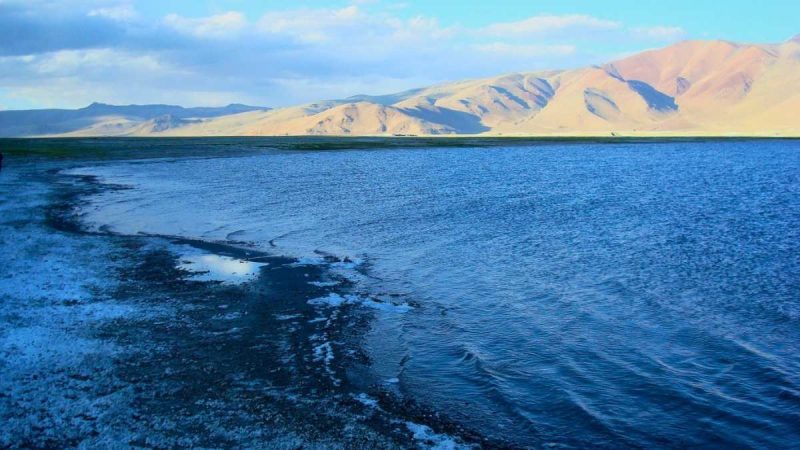
Ladakh is known for its dramatic mountains, high-altitude landscapes and striking blue lakes. But one of its iconic water bodies, Tso Kar, has been quietly shrinking. The lake has lost nearly 70% of its area over the last decade, going from around 11,000 acres to just about 3,200 acres. Now, the Ladakh administration has launched an ambitious project to bring it back to life.
Why Is Tso Kar Lake Being Revived?
The shrinking Tso Kar lake is not just an environmental concern. It has also affected the fragile ecosystem around the lake and the communities that depend on it. According to NDTV, with the water spread declining, fewer migratory birds are arriving at the lake, while grazing grounds for local Pashmina goat herders have also reduced. Some herders have reportedly had to travel 50-75 km from their villages in search of pasture.
Tso Kar has historically been an important habitat for migratory birds, including the black-necked crane. Restoring the lake could therefore help bring back both its wetlands and the wildlife that depends on them.
Also Read: Planning A Ladakh Trip? Sara Ali Khan Stayed At THIS Resort, Prices Start From ₹19,352
How Will Ladakh Revive The Lake?
The administration plans to divert water from the Rupsho Kharnak glacier stream, located at an altitude of around 18,045 feet and approximately 11.5 km from Tso Kar.
The stream can carry up to 132 cusecs, or around 320 million litres of water a day during summer. Instead of letting this water flow unused into the Sindhu River, the project will channel it towards Tso Kar using gravity and a series of natural depressions.
Three natural depressions along the route will act as holding areas before the water reaches the lake. Together, they are expected to hold around 1,230 million litres of water. Check dams and pipes will regulate the flow between them.
Also Read: Ladakh Trips To Get Easier For Foreigners; Single Permit & Airport Verification Desks Planned
Work Is Already Underway
The project has now moved from planning to execution. Since September 9, around 20 cusecs of water has been diverted into the first depression, which reportedly filled to about 20% within four days.
The water is being carried through an earthen channel and an old concrete canal that had remained unused since 1995. The administration expects the first water to reach Tso Kar in the first week of October.
Interestingly, the plan was changed to minimise ecological intervention. An 11-km RCC channel had initially been proposed, but the administration opted for a simpler earthen channel instead, citing ecological concerns.
The restoration project is expected to do more than simply refill Tso Kar. The three natural depressions will effectively become freshwater wetlands, allowing sediments carried by the glacier water to settle before it reaches the main lake.
These new water bodies could also create additional habitats for migratory birds and potentially become new tourist attractions, as they are visible from the adjoining Leh-Manali Highway.
The administration has set an ambitious target of October 2027 to fully revive Tso Kar. Officials have described the initiative as the first project of its kind and scale in India to revive a shrinking high-altitude lake under such challenging climatic conditions.
Also Read: In Pics: Rainbow Clouds Seen In Ladakh As Sky Turns Into A Rare Dreamy Painting
And if the project succeeds, it could offer a blueprint for restoring other vulnerable water bodies in high-altitude regions.
Cover Image Courtesy: Wikimedia Commons
FAQs
Why is Tso Kar Lake shrinking?
The lake has been losing its water spread over the past decade due to changes in water availability and the fragile high-altitude ecosystem. Its area has reportedly fallen by nearly 70% in 10 years.
Why is Tso Kar Lake important?
The lake supports a fragile wetland ecosystem and provides an important habitat for migratory birds, including the black-necked crane. Its surrounding grasslands are also important for local Pashmina goat herders.
How is Ladakh planning to revive Tso Kar Lake?
Officials plan to divert water from the Rupsho Kharnak glacier stream towards Tso Kar using gravity, natural depressions, check dams and channels.