

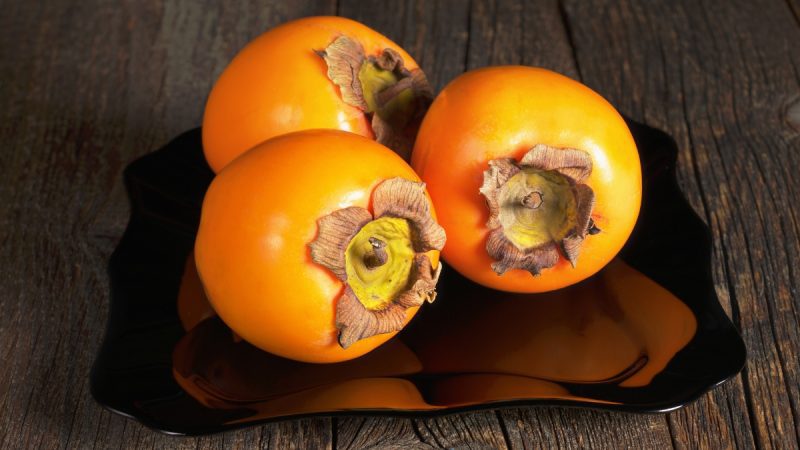
If you’ve been scrolling through Instagram lately, you might have noticed one fruit popping up everywhere. It’s persimmon, and suddenly, India can’t get enough of it. From reels showing people debating whether to eat it with the skin or without to desserts like simple puddings made by blending persimmon pulp with cocoa powder, this fruit is making a splash. But why has persimmon become so ubiquitous? In a recent post, Instagram content creator CA Sarthak Ahuja explains why this common orange fruit is growing significantly in India.
The Rise Of Persimmon In India
Although persimmon is not a particularly new fruit in India, Sarthak claims that its popularity is growing at a never-before-seen rate. He reveals that in just two years, the area used for persimmon cultivation in Himachal Pradesh’s Kullu district has doubled from 200 to 400 hectares. And this year, production is expected to reach 1,400 metric tonnes. That’s a lot of persimmons!
It’s not just about quantity. The fruit is attracting attention because of its health benefits. Rich in Vitamin C, Vitamin A, dietary fibre, potassium, and antioxidants, persimmons are naturally sweet, healthy, and surprisingly good for you. Instagram users keep comparing the flavour to pineapple, mango, and even apricot, showing just how versatile and enjoyable it is.
Also Read: Why Do Restaurants Always Serve Dim Sums In Sets Of Three?
Why Farmers Are Switching From Apples
Here’s something many of us might not realise: persimmon is becoming more than just a trendy fruit, it’s a smart choice for farmers. Sarthak explains that apple farming in India’s Himalayan foothills is becoming less profitable because of rising temperatures. Farmers are losing almost half of their apple profits due to climate change, which makes apple cultivation more difficult.
Compared to apples, persimmons are easier to grow organically. They need fewer insecticides and are also more resilient to changes in the climate. Sarthak Ahuja, in his post, also mentioned the possibility of persimmon-based goods like squashes, jams, and jellies dominating the market.
Unlike fleeting social media trends, the popularity of persimmons shows a change in Indian agriculture. It is not only a reaction to the challenges posed by climate change but also represents a fresh opportunity for farmers. It’s healthy, profitable, easy to eat, and yes, Instagram-worthy too.
Cover Image Courtesy: Canva/Aleksandrs Samuilovs
For more such snackable content, interesting discoveries and the latest updates on food, travel and experiences in your city, download the Curly Tales App. Download HERE.