

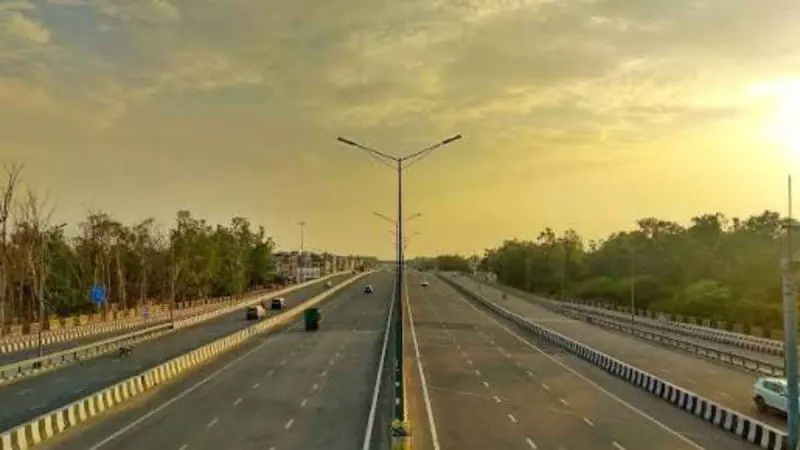
The National Highways Authority of India (NHAI) is planning to build a 12-km greenfield bypass in Dehradun, Uttarakhand, in a bid to reduce the city’s persistent traffic congestion. The four-lane, access-controlled bypass is being built at an estimated cost of ₹716 crore and will connect directly with the Delhi-Dehradun Expressway. Read on to know more.
Delhi-Dehradun Expressway To Reduce Travel Time to Mussoorie
According to reports by NDTV, the bypass will start at Jhajhara and connect with the Paonta Sahib-Ballupur section of NH-7 before linking with the Delhi-Dehradun Expressway near the Asharodi check post. Once operational, the road will serve as an alternate south-western route, diverting traffic away from central Dehradun towards the Selaqui industrial area, Vikasnagar, Herbertpur and Paonta Sahib in Himachal Pradesh. The project is currently targeted for completion by April 2027.
The new route is anticipated to ease congestion and reduce vehicular pollution within Dehradun while improving interstate connectivity with Haryana, Punjab and Himachal Pradesh through the Delhi-Dehradun Economic Corridor.
Major Relief For Delhi To Mussoorie Travellers
The expressway could offer significant relief to tourists travelling from Delhi towards Mussoorie via the Delhi-Dehradun Expressway. Instead of entering the crowded parts of Dehradun, motorists will be able to use the bypass, potentially cutting travel time to Mussoorie by 30-40 minutes.
The route is also expected to make journeys between Dehradun and Mussoorie, Rishikesh, Vikasnagar and Paonta Sahib smoother. During long weekends and peak tourist periods, when traffic in Dehradun typically rises sharply, the bypass could help reduce pressure on the city’s existing roads. The improved connectivity is also expected to benefit freight movement to nearby industrial areas and support economic activity across the region.
Also Read: Delhi-Dehradun Expressway All Set For Mussoorie Expansion; Here’s What It Means For Travellers
Expressway Designed To Keep Environment Consideration
The project has implemented several measures targeted at reducing its impact on the surrounding forest and wildlife. While the bypass has a design speed of 100 kmph, selected roadways will have an 80 kmph speed limit to minimise the impact on forest areas. The highway’s Right of Way (ROW) has also been cut down to 30 metres, compared with the conventional 60 metres, to limit tree loss and preserve the surrounding ecological balance.
Wildlife movement has been factored into the design as well. A 350-metre-long Vehicular Over Pass (VOP) will be constructed to facilitate the safe movement of large animals, along with a dedicated Cattle Over Pass (COP).
Also Read: Delhi-Meerut Namo Bharat: 5 Things Passengers Must Keep In Mind Until Aug 14
The project will also include seven minor bridges and 21 box culverts to support wildlife movement. For smaller animals, including reptiles and amphibians, five dedicated Hume Pipe culverts will be provided.
Good news for Delhi travellers.
Cover Image Courtesy: Wikimedia Commons
FAQs
Is the Delhi-Dehradun Expressway completed?
Yes, the 213-kilometer Delhi-Dehradun Expressway was officially inaugurated and opened to the public by Prime Minister Narendra Modi on April 14, 2026.