

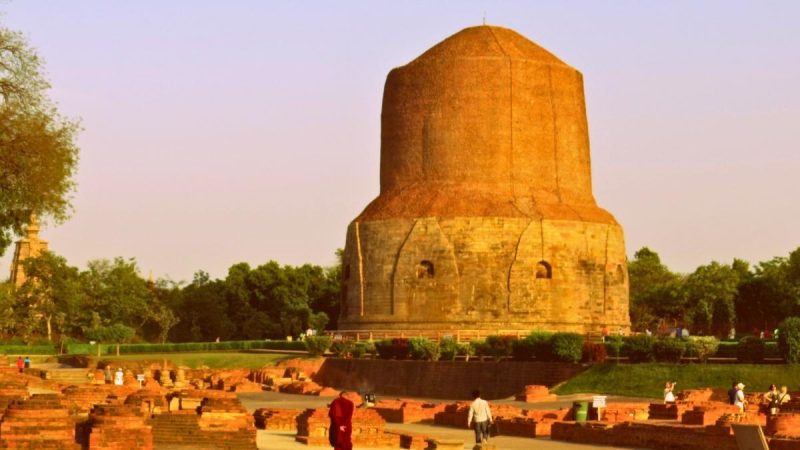
We come bearing some good news! After a wait of 28 years, the ancient Buddhist site of Sarnath has officially been inscribed on the UNESCO (United Nations Educational, Scientific and Cultural Organisation) World Heritage List. Located northeast of Varanasi, Sarnath has now become India’s 45th UNESCO World Heritage Site, marking a significant milestone in the country’s rich cultural and historical legacy.
UNESCO Recognises Sarnath As A World Heritage Site
Sarnath’s long-awaited recognition as a UNESCO World Heritage Site was announced during the 48th session of the World Heritage Committee in Busan, South Korea. With this addition, India now has 45 UNESCO World Heritage Sites, placing it sixth in the world and second in the Asia-Pacific region in terms of the total number of recognised heritage sites, according to The Times of India.
The recognition comes nearly 28 years after Sarnath was placed on UNESCO’s Tentative List in 1998. Its nomination dossier was formally submitted to the World Heritage Committee in January 2025, paving the way for the site’s eventual inscription on the prestigious list.
A proud moment for every Indian!
Delighted that Sarnath in Uttar Pradesh has been inscribed on the UNESCO World Heritage List.
Sarnath has a close association with Lord Buddha, whose timeless message of wisdom, compassion and harmony inspires the world.
This recognition… https://t.co/KkdMOg6g0d
— Narendra Modi (@narendramodi) July 25, 2026
Prime Minister Narendra Modi took to X to announce the historic milestone and said, “This recognition celebrates India’s profound civilisational and spiritual heritage. It will also inspire more people across the world to come to Sarnath and connect with the ideals of Lord Buddha.”
Also Read: 2.7 Billion-Year-Old Yana Caves In Karnataka Declared Geo-Heritage Site Of National Importanance
More About This Ancient Buddhist Site
Sarnath holds immense significance in Buddhism. According to Buddhist scriptures, it was here that Lord Buddha arrived after attaining enlightenment in the sixth century BCE. It is also said that he met his first disciples and delivered his first sermon, marking the beginning of the spread of Buddhist teachings.
Sarnath became one of the most important centres of Buddhist learning and pilgrimage in the world over the centuries. Kings, patrons and monastic communities built stupas, temples and monasteries making it one of the four holiest Buddhist pilgrimage sites.
Today, visitors can experience this rich legacy through its protected archaeological remains such as the Chaukhandi Stupa, Dhamek Stupa, and Dharmarajika Stupa. Together these monuments form the historic landscape known as Deer Park where the journey of Buddhism began.
Also Read: From Malcha Mahal To Turkman Gate: Delhi Opens 75 Heritage Sites For Adoption
Have you visited Sarnath? Let us know your experience in the comments.
Cover Image Courtesy: Wikimedia Commons
FAQs
How many UNESCO World Heritage Sites does India have?
With Sarnath's inclusion, India now has 45 UNESCO World Heritage Sites.
Is Sarnath included on the UNESCO World Heritage List?
Yes, Sarnath was officially inscribed on the UNESCO World Heritage List during the 48th session of the World Heritage Committee held in Busan, Republic of Korea.
Why is Sarnath called Deer Park?
Sarnath is historically known as Deer Park (Mrigadava) because it is believed to be the place where Lord Buddha delivered his first sermon in a park inhabited by deer.
What does UNESCO World Heritage status mean?
UNESCO World Heritage status recognises places of outstanding cultural or natural value to humanity, helping promote their conservation and global recognition.