
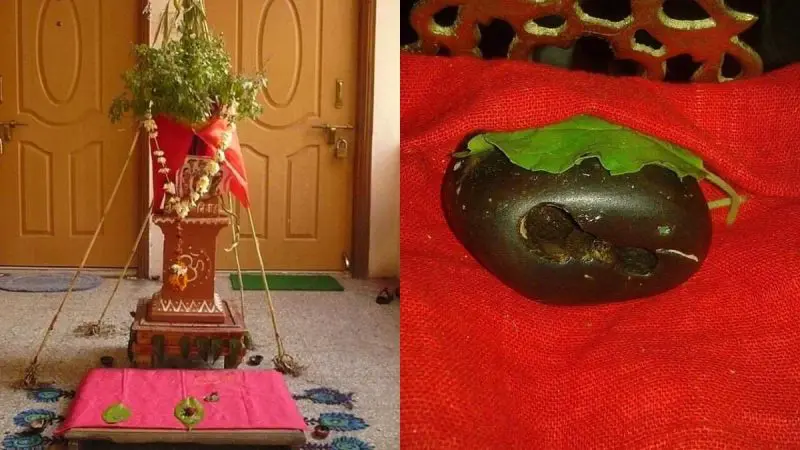
Tulsi Vivah is a Hindu festival celebrating the wedding of the sacred Tulsi plant, worshipped as Goddess Tulsi, to Lord Vishnu, who is usually represented by the Shaligram stone. But did you know why Lord Vishnu became a stone? Here’s the reason behind the mythological story.
Story Behind Tulsi Vivah
Tulsi Vivah is an important Hindu festival that marks the ceremonial wedding of Goddess Tulsi with Lord Vishnu. Families place the Shaligram stone, which represents Lord Vishnu, next to the decorated Tulsi plant during evening prayers and wedding rituals. But why did Lord Vishnu become a stone? According to the ISKCON Bhiwandi website, once there was a woman named Vrinda, who was deeply devoted to her husband, Jalandhara, a demon. Her pure devotion gave him special protection and made him invincible and impossible to defeat, even by the Devtas.
To protect the world, Lord Vishnu assumed the form of Jalandhara, which broke the protection. Deceived, her vow was broken, and her husband was defeated in a battle. When Vrinda discovered the truth, her grief turned into fury, and she cursed Lord Vishnu to become a stone.
Also Read: Indian Cricket Team Prays At World’s Richest Temple In Kerala, Dedicated To Lord Vishnu
Check Correct Timings For Ceremony In 2026
According to ISKCON Bhiwandi, Lord Vishnu gently accepted her curse. Vrinda then gave up her life, and the Tulsi plant grew from her. Lord Vishnu blessed Tulsi to be sacred forever and promised to stay united with her. This is the reason why devotees celebrate their wedding every year, where Lord Vishnu appears as the Shaligram stone. The message is simple: Lord Vishnu never abandons a sincere devotee and always keeps his word.
The ceremony is performed like a traditional Indian wedding. The Tulsi plant is bathed, draped in a red chunri and adorned with bangles, a bindi and flowers. The Shaligram is placed beside her. The mandap is usually decorated with mango leaves, sugarcane, marigold flowers and diyas. According to India.com, mantras are also chanted while devotees offer sindoor, turmeric, rice and sweets.
According to Drik Panchang, Dwadashi Tithi will begin at 6:31 am on November 21, 2026, and end at 4:56 am on November 22, 2026. The Tulsi Vivah ceremony is traditionally performed in the evening.
Also Read: Dev Deepawali In Varanasi: 7 Experiences That Make The Trip Worth It!
So, we hope you are now clear about the mythological story behind Tulsi Vivah.
Cover Image Courtesy: Tulasi Vivaha, Wikipedia and Jonoikobangali
FAQs
When is Tulsi Vivah 2026?
Tulsi Vivah will be celebrated on November 21, 2026.
What is Tulsi Vivah?
Tulsi Vivah is a Hindu festival that marks the ceremonial wedding of Goddess Tulsi and Lord Vishnu.


