

Day in and day out, many of us stay glued to our laptops and phones—taking “urgent” calls and replying to “just one email,” even on vacations or during family dinners. It has quietly become the norm in modern work culture, even though most people know it isn’t healthy. Fed up with this lifestyle, a woman earning ₹5 lakh per month in a corporate job decided to quit and switch to digital creation and became a fractional CMO. On an Instagram post, she shared that she is much happier now.
Woman Calls ₹5 Lakh Corporate Job A ‘Golden Cage’
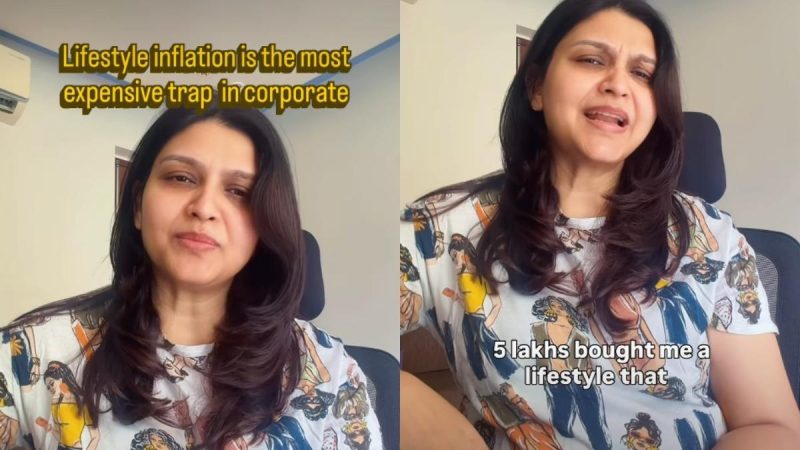
After 14 years in a corporate career, Joyeeta (@theog_girl__) left her high-paying job to become a fractional CMO and says she feels much happier now. “₹5 lakhs a month–that’s what I made when I quit my job three months ago,” she revealed in an Instagram post.
Curious about her decision, many online users asked what made her walk away from such a high-paying role. Responding to them, Joyeeta explained, “₹5 lakhs a month bought me a lifestyle I didn’t want. It bought me distance—from myself, my child, and any life not optimised for the next promotion.”
She shared that while the money paid for dinners at great restaurants, she often spent that time replying to Slack messages. Despite taking international vacations, she found herself constantly interrupted by “urgent calls.” The high salary also allowed her to buy expensive clothes, but she rarely had the time to dress up or spend meaningful moments with loved ones.
Also Read: Rajpal Yadav Reacts To Why Nawazuddin Siddiqui Called His Home A ‘Langar’
Feels Happier Now, Despite Earning Much Less
“Lifestyle inflation is the most expensive trap in corporate jobs. ₹5L ka job ek golden cage ban jaata hai.I thought I was buying status. I was buying my own dependence on the thing draining me,” she wisely noted.
She explained how higher earnings often lead to higher spending, with EMIs and financial commitments building around that income, making it difficult to walk away, even when you want to.
Now, she says that despite earning less, she feels like she has “more.” “More mornings with my child, more evenings with my family, more of myself,” she shared. According to her, true sukoon (peace) doesn’t come from money, but from not being controlled by it.
However, she also pointed out that her decision was planned. “I quit to find out who I could be without that status, money, and designation—but before that, I made sure I had zero EMIs,” she added.
Joyeeta’s perspective is a great reminder that financial success doesn’t always guarantee personal fulfillment! We hope this helped a lot of you see the grass isn’t always greener on the other side.
Cover Image Courtesy: Instagram/@theog_girl__
For more such snackable content, interesting discoveries and the latest updates on food, travel and experiences in your city, download the Curly Tales App. Download HERE.
FAQs
What is “lifestyle inflation”?
Lifestyle inflation refers to the tendency to spend more as your income increases, often leading to higher expenses, EMIs, and financial commitments that can make it difficult to step away from a job.
What lessons can professionals take from Joyeeta's story?
Her story highlights the importance of balancing income with well-being, being mindful of lifestyle inflation, and planning finances carefully before making major career decisions.
What is work-life balance?
Work-life balance refers to maintaining a healthy division between professional responsibilities and personal life, ensuring neither consistently overshadows the other.
Why is work-life balance important?
It helps reduce stress, prevents burnout, improves mental and physical health, and allows more time for family, hobbies, and personal growth.