

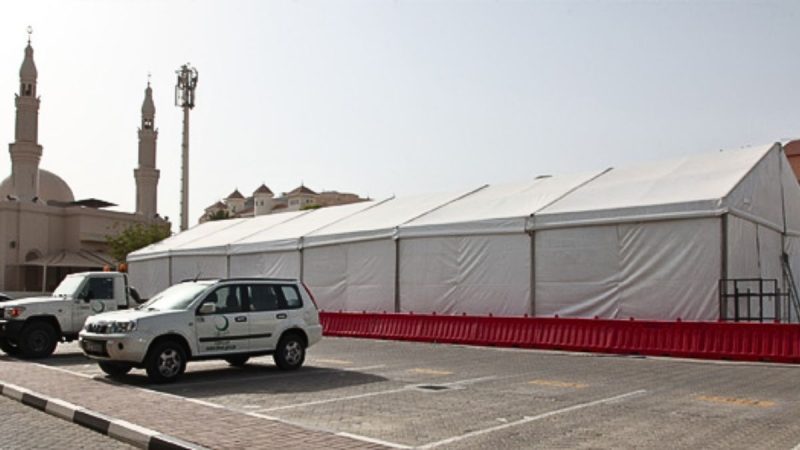
If you’re planning to set up a Ramadan tent in Abu Dhabi this Holy Month, you need to play by the rules. The process just got clearer, simpler, and completely free. The Abu Dhabi Department of Municipalities and Transport has officially issued detailed guidelines for obtaining permits to install temporary Ramadan tents across the emirate.
Abu Dhabi Sets Clear Rules For Ramadan Tents
According to a report by Gulf Today, these permits allow companies and residents to host Iftar tents legally during Ramadan. All that’s needed is to follow a well-defined set of rules designed by the government to keep public spaces safe and accessible.
Simple, Digital, And Free Proccess To Gain Permit
The department confirmed that the Ramadan tent permit service comes at zero cost and does not require any extra documentation. Applicants only need to log in using their digital ID, submit the request online, and wait for approval. Once authorised, they can move ahead with the installation.
Size, Height, And Location Rules You Can’t Ignore
The department has drawn firm lines when it comes to tent specifications. Only one tent is allowed outside a plot’s boundaries. The tent’s area must not exceed 60 square metres, and its maximum height is limited to 5 metres.
Location matters as the rules allow tents to be installed directly in front of the plot owner’s residence, within the space between the plot and the sidewalk. Blocking roads, footpaths, or public services is a strict no. Excavation work is also banned, and tents cannot sit on top of service structures or annexes.
What Materials Are Allowed And What’s Banned
The tent can be use materials commonly associated with tents, such as wool, Bedouin fabrics, tarpaulins, or similar coverings. Anything outside this scope risks violating permit conditions.
Cooking equipmentcompleteopen flames are strictly prohibited. Also, there’s a complete ban on commercial activities like selling, buying, renting, or holding promotional events inside the tent.
Also Read: UAE Astronomers Predict Ramadan Dates, Hinting At A Possible 4-Day Eid Weekend
Responsibility Lies With The Permit Holder
The department made one thing very clear. If the tent causes damage to public or private property during installation or removal, the permit holder bears full responsibility. Setting up a tent in an unauthorised location counts as a violation and can lead to legal action.
Authorities also reserve the right to demand immediate removal of the tent in cases of emergencies, public complaints, or breaches of permit conditions. Permit holders must also exempt the Municipality from any claims or liabilities linked to the use of the tent.
Set up a tent following a smooth, respectful, and stress-free process, and it becomes a win-win situation for all.
Cover Image Courtesy: DEWA/Website
For more such snackable content, interesting discoveries and the latest updates on food, travel and experiences in your city, download the Curly Tales App. Download HERE.