

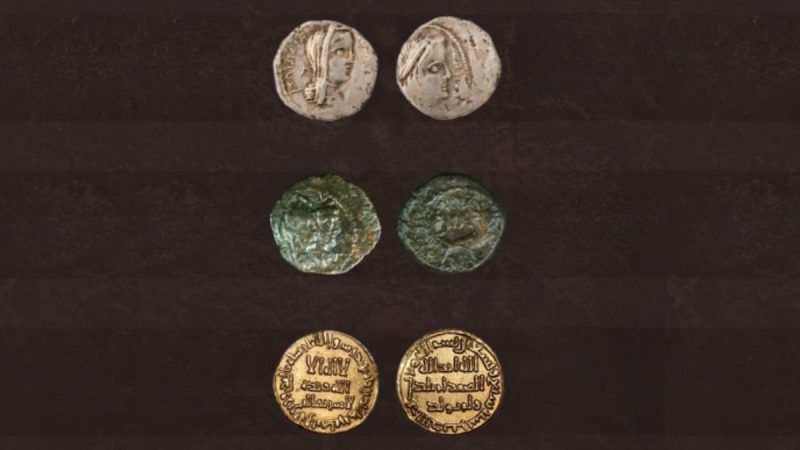
A handful of ancient coins just added a few thousand years of context to what we know about AlUla. Archaeologists working in Saudi Arabia’s AlUla governorate have unearthed silver coins dating back to the seventh and eighth centuries B.C., Nabataean bronze coins from the first century A.D., and Umayyad Islamic coins from the late first century A.H., according to an announcement from the Saudi Press Agency.
Archaeologists Unearth Ancient Coins From AlUla Revealing Historic Trade Connections
Coins aren’t just currency to archaeologists; they’re some of the most reliable artefacts for reconstructing how ancient economies actually worked. Beyond their monetary value, they carry information about political authority, trade networks, cultural exchange, and how people physically moved between regions centuries ago. Some of the most significant pieces in this find came from Hegra, the UNESCO World Heritage-listed Nabataean city that once served as a major waypoint on the ancient incense trade routes. The discovery of coins from many civilisations in the same area strongly suggests that AlUla maintained its commercial importance over many different historical periods, rather than enjoying a short boom before declining.
Also Read: What Is Astrotourism And Why Is AlUla Turning Its Night Sky Into A Global Attraction?
AlUla’s Long History As A Crossroads
This isn’t a discovery about AlUla so much as it’s confirmation of something historians already suspected. The region has long been understood as a link connecting the southern Arabian Peninsula with the Levant, Egypt, and the wider Mediterranean, a corridor where goods, ideas, and people moved across cultures for centuries. AlUla itself is one of the most important archaeological landscapes in the Arabian Peninsula, with thousands of rock inscriptions, ancient settlements and monumental tombs which together document more than 200,000 years of human history in the region.
Also Read: AlUla Manara Design Is Approved & It Looks Something Out Of A Sci-Fi Movie!
Part Of A Bigger Excavation Effort
The Royal Commission for AlUla, working alongside international research teams, has been steadily uncovering new evidence of the area’s role in regional trade, agriculture, and early urban development in recent years. This latest coin discovery slots into that broader picture, tracing AlUla’s path from a modest oasis settlement into a genuinely prosperous trading hub whose reach extended well past the Arabian Peninsula. For historians, each new find like this adds another verified data point to how commercial and cultural exchange actually functioned in the ancient world, not just theory, but physical evidence people once held in their hands.
Cover Image Courtesy: The Royal Commission Of AlUla/X
FAQs
What coins were found in AlUla?
Silver coins from the 7th–8th centuries B.C., Nabataean bronze coins from the 1st century A.D., and Umayyad Islamic coins from the late 1st century A.H.
Where exactly were the coins discovered?
In Saudi Arabia's AlUla governorate, with significant pieces recovered from Hegra.