

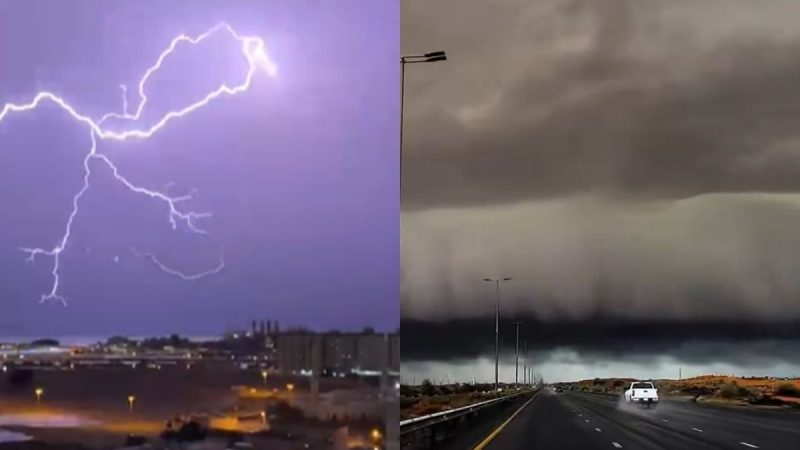
The skies did not hold back. Thunder broke in the dark, lightning flashed in the sky, and a downpour soaked the cities of Dubai to Abu Dhabi and across the UAE region. By early Friday, March 27, citizens throughout the UAE had a full-fledged storm system on display.
Weather Alert In The UAE: Thunder, Lightning, Flash Flood Risks In Every City
The National Centre of Meteorology reported that a volatile low-pressure system is affecting the country. This has caused numerous instances of rain, intense winds and thunderstorms.
The government has emphasised that thunder and lightning are normal occurrences during these weather conditions. Nevertheless, the situation is unstable.
The Eastern Parts Suffer The Biggest Blow
Certain places were affected more than others. Fujairah and other eastern regions experienced the highest rainfall, with Taawun recording the most significant amount to date.
Rain gauges recorded significant levels in the country:
47.9mm in Al Tawiyeen
39.7mm in Al Marjan
33.3mm in Khor Fakkan
31.6mm in Khatm Al Shakla
In Sharjah, wadis started to run when engineered downpours flooded, temporarily halting traffic along the Mleiha-Shawka Road. In other areas, there were flooded streets and trees and debris falling due to the disturbance.
Winds Hit 60kph, Seas Turn Rough
The storm wasn’t just about rain. The wind increased to brisk with a gale of up to 60kph in certain places. The resulting change was to render the sea rough both in the Arabian Gulf and the Sea of Oman.
Both the low pressure at the surface and the trough in the upper air stimulate the very mechanism of the weather system. In layman’s terms, it is the type of arrangement that drives tempest clouds and makes them recurrent.
And they’re not done yet. Convective clouds are likely to lead to more rainfall in Al Dhafra and the northern emirates.
Governments Move Quickly To Mitigate Hazards
Officials didn’t wait around. In Abu Dhabi, police lowered the speed limit to 60kph on major highways, such as Abu Dhabi–Al Ain Road, to avoid accidents in low visibility and wet weather.
In the meantime, the National Emergency Crisis and Disaster Management Authority advised people to remain at home unless there is a need to go out. It is very straightforward: do not risk.
Avoid flood-prone areas. Keep out of the way of loose buildings and trees. And when you’re driving, be sure to think carefully.
According to the report provided by The Gulf News, the police also advised against flocking around valleys or even inside running wadis. Breaking may result in fines of AED1,000-AED2,000 and even the impoundment.
Also Read: UAE Weather Update: Light Rain Expected Across the Country In The Coming Days
It Is Unsafe To Risk Because The Weather Is Unstable
Officials affirmed that alerts would be going out through the national warning system in case of a rise in risk. At this point, the recommendation remains the same: remain vigilant, stay updated, and remain secure.
Cover Image Courtesy: Kimberley D’souza Pereira/Instagram, khd_uae/X
For more such snackable content, interesting discoveries and the latest updates on food, travel and experiences in your city, download the Curly Tales App. Download HERE.FAQs
Why is the UAE experiencing thunderstorms now?
A low-pressure system combined with upper-air instability is driving the current weather.