

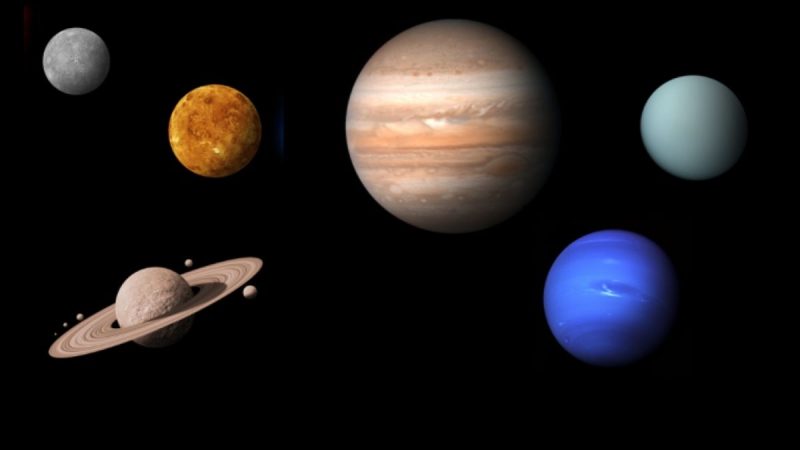
The sky will have designs this Ramadan. In a beautiful procession of six planets, on Saturday, 21 February 2026, the people in Dubai will have an extraordinary sight of the planets combining all at once immediately after the Iftar, calling it the ‘Planetary Parade’. Where can one observe them? In the silent desolation of the Al Qudra Desert. Al Thuraya Astronomy Centre is the host of the event, and by all accounts, it is gearing up to be a much-buzzed skywatching event of the decade.
This Ramadan, Witness A Planetary Parade At The Al Qudra Desert, Dubai
It is said that a report by the Gulf News says that this cosmic event will include Venus, Mars, Jupiter, Saturn, Uranus and Neptune. This does not occur frequently, and definitely not with the Ramadan vibes to it.
What Is A Planetary Parade & Why Is This Special?
A planetary parade occurs when a group of planets are seen in a row in the night sky as seen by the Earth.
The planets spin at their respective speeds. Mercury races around in 88 days. Saturn takes nearly 29 years. To have 6 planets in one sweeping arc is a cosmic stroke of luck.
That’s why this event matters. Two or three worlds crossing? Fairly common. Six? That’s a rare sky bonus.
The Planets You Will See At Iftar
It will be a busy night sky on 21 February, in the best sense.
Jupiter is gleaming and presents the bands of clouds when using a telescope. Mars, shining with its usual red colour. Saturn comes out earlier than usual and goes down early, and therefore, this is all about time in case you want to see its rings. Uranus and Neptune are not visible to the naked eye but can be seen using telescopes with powerful lenses. Such a combination of naked eye and the telescope planets makes the observation gratifying both to the beginner and the experienced sky watchers.
An Islamic Evening Mash-Up Of Religion And Science
Evening starts at 6 pm with an introduction, and Iftar and Maghrib prayer at 6.20 pm and Saturn viewing at 6.45 pm. Be on time.
With the passing of the night, scientists speak about the strong relation between Ramadan and moon sighting with the Islamic lunar calendar. Communities have passed through this connection in a path that is over 1,400 years, and particularly strong in an open desert sky.
At 7.45 pm, all the attention is paid to the planetary parade. Telescopes are later focused on the Moon, Jupiter and deep sky objects such as nebulae and star clusters. You can even take photos using the telescopes through your phone.
Also Read: Catch The Final Supermoon Of 2025 In Dubai With This Magical Full Moon Yoga Desert Experience
Why You Should Book Early
There are limited spaces, and there is already interest. It is not only an astronomy event. It is a thought-provoking Ramadan experience that identifies Iftar with the universe.
The event takes place between 6 pm and 10 pm in Al Qudra Desert. The tickets are available on through althurayaastronomycenter.ae. Some nights stay with you, and this will be one of them.
Cover Image Courtesy: NASA/Website
For more such snackable content, interesting discoveries and the latest updates on food, travel and experiences in your city, download the Curly Tales App. Download HERE.FAQs
What is a planetary parade?
It’s when multiple planets appear aligned across the sky from Earth.