

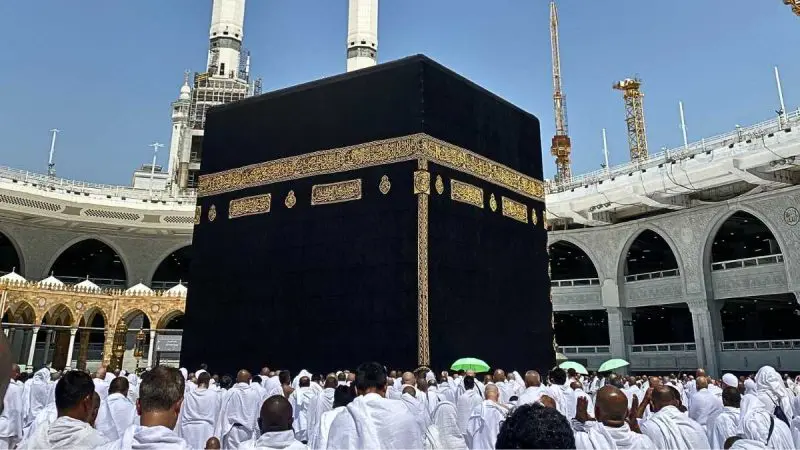
Every year during Hajj, one particular ritual grabs attention across the world. Thousands of pilgrims walk towards Mina carrying tiny pebbles in their hands, then throw them at giant concrete pillars. To someone seeing it for the first time, it can look intense, even confusing. But for Muslims performing Hajj, this moment carries deep meaning. The ritual is known as the “stoning of the devil”, also called Ramy al-Jamarat and it marks one of the final major acts of the pilgrimage in Makkah.
Why Pilgrims Perform The ‘Stoning Of The Devil’ Ritual During Hajj
This year, the scenes unfolded once again under brutal heat. Temperatures touched around 44°C in Makkah and Mina as more than 1.7 million pilgrims continued the journey outdoors.
The ritual goes back to the story of Hazrat Abraham (PBUH). According to Islamic belief, Satan tried to stop him from obeying God’s command to sacrifice, Hazrat Ishmael (PBUH).
Why Pilgrims Throw Pebbles In Mina
It is believed that Satan appeared to Abraham at three different spots. Each time, Abraham rejected him by throwing stones.
Today, pilgrims recreate that moment by throwing small pebbles at three concrete structures in Mina, just outside Makkah. The act symbolises rejecting evil, temptation and negative thoughts.
For many pilgrims, it is more emotional than anything else. Some quietly pray while throwing the stones. Others stand for a few moments after finishing, clearly overwhelmed.
Also, despite the huge crowds, the ritual is carefully organised now compared to earlier decades when overcrowding created serious safety concerns.
A Pilgrimage Happening In Extreme Heat

The heat this year has been hard to ignore. Pilgrims dressed in white robes moved between holy sites while dealing with harsh sun and long walking hours. Many carried umbrellas or sprayed water on themselves while volunteers distributed bottles of water along the routes.
But even with the physical strain, people continued the rituals with determination.
On Tuesday, pilgrims gathered at Mount Arafat, the site where Prophet Mohammad (PBUH) is believed to have delivered his final sermon. For many Muslims, standing at Arafat is the most emotional part of Hajj.
Then comes Mina and the stoning ritual before Eid Al Adha officially begins.
Also Read: Mecca’s Grand Mosque Introduces 84+ New Signs & Codes Inside To Help Pilgrims Move Easily
More Than 1.7 Million Pilgrims Joined Hajj This Year
Saudi Arabia’s General Authority for Statistics said 1,707,301 pilgrims performed Hajj during the 1447 AH season.
Out of them, over 1.5 million arrived from outside Saudi Arabia. Most came by air, while others entered through land and sea routes.
The numbers included 893,396 male pilgrims and 813,905 female pilgrims.
Hajj involves long hours outdoors, massive crowds and physically demanding rituals. But for Muslims able to complete it, the experience is often described as life-changing.
Cover Image Courtesy: CanvaPro/ Muhammad Khawar Nazir from Pexels
FAQs
Why do pilgrims throw pebbles towards Mina during Hajj?
The process is called the 'stoning of the devil', and it symbolises control over negative, evil thoughts and temptation.