

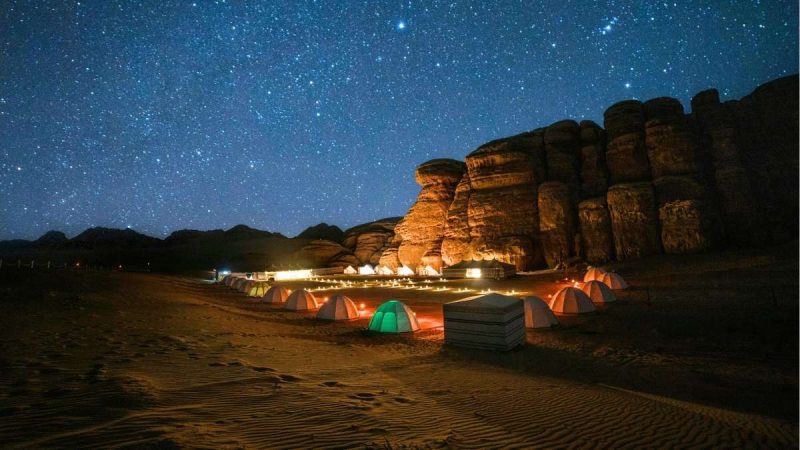
The ancient Saudi site, AlUla, has initiated a new campaign to become one of the most popular dark-sky and astrotourism attraction sites. It has the presence of the world’s best astrophotographers and the local government under the AlUla Manara program. It is aimed at conservation of the night sky, its celebration, and welcoming the world to enjoy it in a responsible manner.
AlUla In Saudi Arabia Enhances The Dark-Sky Tourism In The Country
A report by Scene Now shows the programme enhances the reputation of AlUla as one of the darkest places in the region. It has extremely low light pollution levels and is the best place to stargaze, take astrophotographs, and travel with astronomy.
The Reason Astrotourism Is A Thing In AlUla
Astrotourism might be a niche, yet it is developing at an alarming rate. Travellers desire experiences to be exclusive, significant and rooted in nature.
The project unites the national and Arab astrophotography experts to record the night sky in a scientific and artistic manner. These professionals too share technical expertise, promote professionalism, and assist in creating a world of astronomers and night-sky conservators in the region.
Other than the Instagram-worthy photographs, it is also about creating long-term awareness and knowledge of the local area and branding AlUla as a legitimate world destination to see the dark sky.
Also Read: 10 Best Astro-Tourism Destinations In The World Where You Can Sleep Under The Stars
Secured Skies, Accepted Globally
The governorate has several sites with an international Dark Sky designation. Sites that have satisfied rigorous criteria in the control of light pollution and view of the night sky. AlUla Manara and AlGharameel Reserve are the first official Dark Sky sites in Saudi Arabia and the Gulf.
They were subsequently complemented by Sharaan Nature Reserve and Wadi Nakhlah Nature Reserve. It underlines AlUla’s desire to safeguard its skies in the same way as it does its sceneries and traditions.
Better Than Tourism, Better Than Preservation
The Royal Commission of AlUla regards the night sky as a natural and cultural resource. Stars have been used by travellers to navigate the Arabian Peninsula, define stories, and determine time for centuries.
The programme is aimed at creating scientific and documentary programs that would underline the astronomical characteristics of AlUla and encourage responsible tourism. Tourists get to know the importance of darkness, the impacts of light pollution on the ecosystem, and the importance of safeguarding the sky for future generations to come.
Also Read: Prince William Explores AlUla’s Heritage & Nature Reserve On His Last Day Of Saudi Visit
What Is Next On The List Of Visitors
It is projected that the tourism of AlUla regarding astrotourism will continue to grow. Imagine directed stargazing, astronomy-led tours, astrophotography classes, and organised night-sky events that newcomers and professionals can attend.
Cover Image Courtesy: CanvaPro/SALEH . from Pexels
For more such snackable content, interesting discoveries and the latest updates on food, travel and experiences in your city, download the Curly Tales App. Download HERE.
FAQs
Do I need special equipment for an astro-tourism experience?
Not necessarily. Many stars, constellations and even the Milky Way can be seen with the naked eye in dark-sky locations.
What is the best time of year for stargazing in the Middle East?
The cooler months, usually from October to April, offer the best conditions for astrotourism in the region.
Which countries in the Middle East are best for astro-tourism?
Popular spots include the deserts of United Arab Emirates, Oman, Saudi Arabia and Jordan, where clear skies make it easier to view stars, planets and meteor showers.