

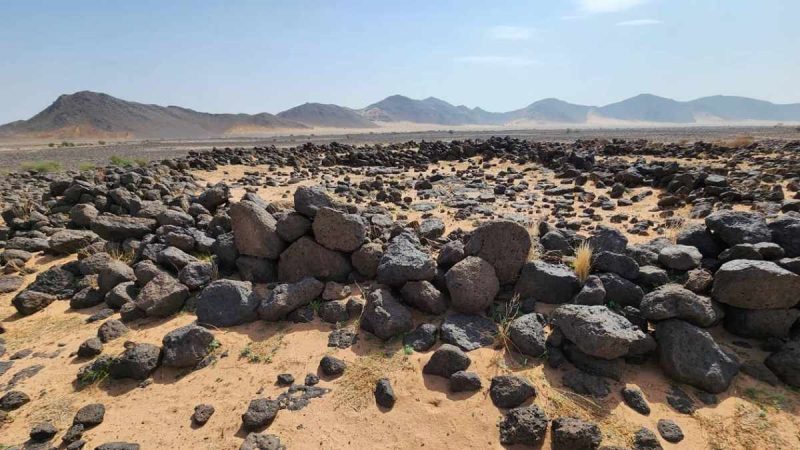
Saudi Arabia’s dramatic black lava fields have just earned a global stamp of scientific approval. The International Union of Geological Sciences (IUGS) has officially recognised volcanic basalt from the Kingdom’s harrats as an international heritage stone, the first time Saudi Arabia has received this designation.
Saudi Arabia’s Volcanic Basalt Just Became a Global Heritage Stone
The nomination, put forward by the Saudi Geological Survey (SGS), crowns years of scientific documentation of the geological, historical and cultural value of basalt across western Saudi Arabia. For thousands of years, this rock has quietly shaped the region’s landscape, settlement patterns and even its local economy through traditional construction and quarrying.
How The Basalt Formed
Saudi harrats are vast volcanic lava fields formed by repeated basaltic eruptions, where flowing lava cooled and hardened over time into the dark, rugged terrain seen across the western region today. SGS notes that basalt’s wide distribution, durability and resistance to heat and erosion make it a valuable source for aggregates and infrastructure materials, with newer uses now extending into fibres, composites and insulation. Many quarries also benefit economically from proximity to major road and rail networks, cutting transport and maintenance costs.
Also Read: Saudi Arabia: Pilgrims Advised Against Stopping Next To The Black Stone In Mecca
Why The Recognition Matters
SGS said the international endorsement reflects growing global recognition of the Kingdom’s geological heritage, supporting national efforts to protect natural heritage sites, encourage scientific research and highlight assets tied to Saudi Vision 2030. It also opens the door to wider scientific cooperation, strengthening Saudi Arabia’s role in global geological heritage initiatives.
What Counts As A Heritage Stone
The Global Heritage Stone Resource programme behind this recognition exists to strengthen geological knowledge and support the responsible use and conservation of historically important natural stones worldwide. According to IUGS, a heritage stone is a natural stone with a documented role in major architecture and monuments, one that carries genuine cultural significance. Established in 1961, the IUGS is among the world’s largest non-governmental scientific bodies advancing the study of geological issues of global importance.
For Curious Travellers
Saudi Arabia’s volcanic terrain, particularly the harrats around Madinah and the western highlands, is fast becoming an unlikely but compelling addition to the Kingdom’s growing list of only-in-Saudi natural wonders.
Cover Image Courtesy: IUGS/Website
FAQs
What is a Global Heritage Stone?
A natural stone with a documented role in major architecture and monuments, recognised for its cultural significance by the IUGS.
What are Saudi harrats?
Vast volcanic lava fields formed by repeated basaltic eruptions, creating the Kingdom's dark, rugged western landscapes.