
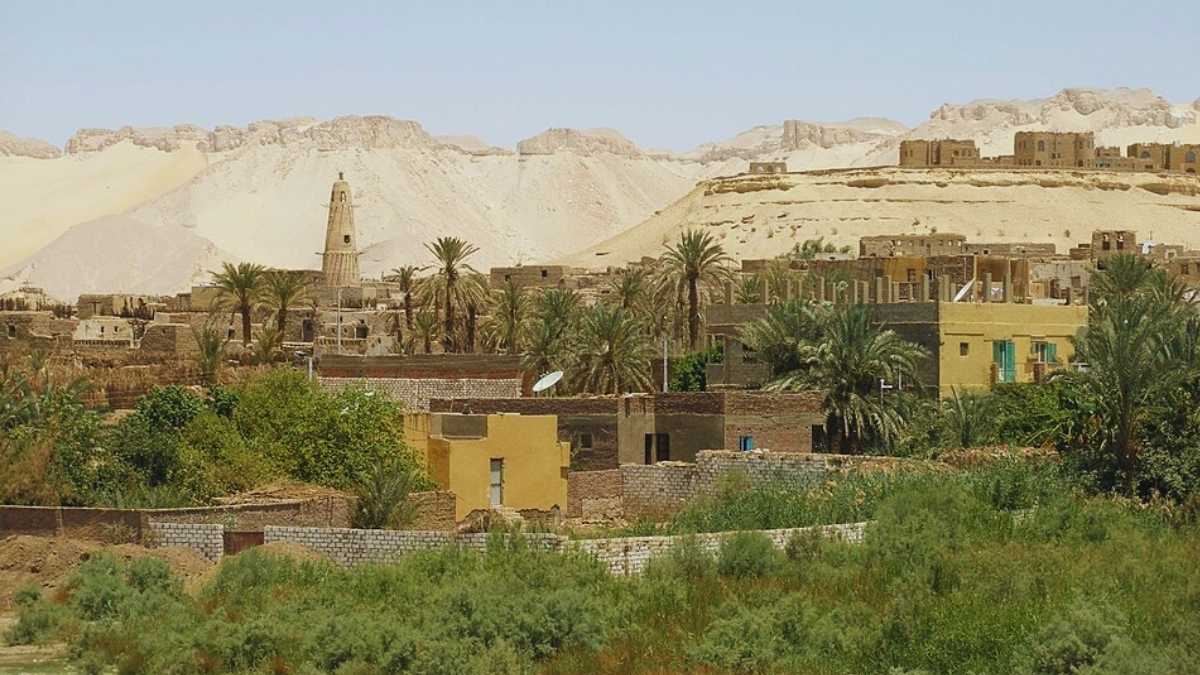



Egypt is popularly known for pyramids and party spots, also holds a space that’s untouched by tourists. Far away in the western Desert, the medieval village of Al-Qasr, an abandoned 12th-century mudbrick village, sits inside the Dakhla Oasis in Egypt. Built during the era of Saladin, Al-Qasr was designed to last.
Inside Al-Qasr, The Abandoned Medieval Village Hidden In Egypt’s Dakhla Oasis
Mudbrick walls rise thick and solid, with doorways staying low. Lanes in here twist tightly, forcing shade where the desert offers none. Every design choice points to survival in a place where heat, sand, and isolation rule.
According to a report by Scene Now, Al-Qasr remains one of Egypt’s most intact medieval settlements, offering a rare look at how communities once lived, traded, and protected themselves far from the Nile.
An Egyptian Village Built To Endure Heat, Privacy, And Protection
Walk through Al-Qasr, and you’ll notice narrow streets designed to reduce sun exposure. Closely packed homes block harsh winds and offer privacy. Thick mudbrick walls keep interiors cool long after the desert starts to heat up.
The architecture’s ultimate goal was endurance. The layout also worked as a natural defense system, making it difficult for outsiders to move quickly or spot key entrances. Even centuries later, the logic still makes sense for the region.
A Once-Busy Stop On Desert Trade Routes
Al-Qasr, for hundreds of years, served as a major stop along caravan routes. Traders passed through carrying dates, salt, grains, and stories.
That movement shaped the village’s identity. Merchants made deals in here and rested before their next expedition. You can still see evidence of that life carved into wooden lintels above doorways, etched with Qur’anic verses, dates, and the names of families who once lived inside.
A Mosque That Still Watches Over the Village
At the heart of Al-Qasr stands its 12th-century mosque, with its wooden minaret standing tall in a desert settlement.
The mosque anchors the village, both physically and spiritually. Life here faded slowly, step by step, generation by generation.
Also Read: Egypt’s National Dish, Koshary Joins UNESCO’s Intangible Cultural Heritage List For 2025
Why Al-Qasr Still Matters Today
Al-Qasr matters because it hasn’t been over-polished. You cannot spot a single glass barrier or dramatic lighting. Maybe that’s why it’s simply iconic. This village didn’t try to conquer the desert; instead learned how to live with it.
For travellers willing to go off-map, Al-Qasr offers something rarer than the generic touristy spots, which are usually swamped.
Cover Image Courtesy: Wikimedia Commons/Vyacheslav Argenberg
For more such snackable content, interesting discoveries and the latest updates on food, travel and experiences in your city, download the Curly Tales App. Download HERE. First Published: February 06, 2026 2:02 PM