
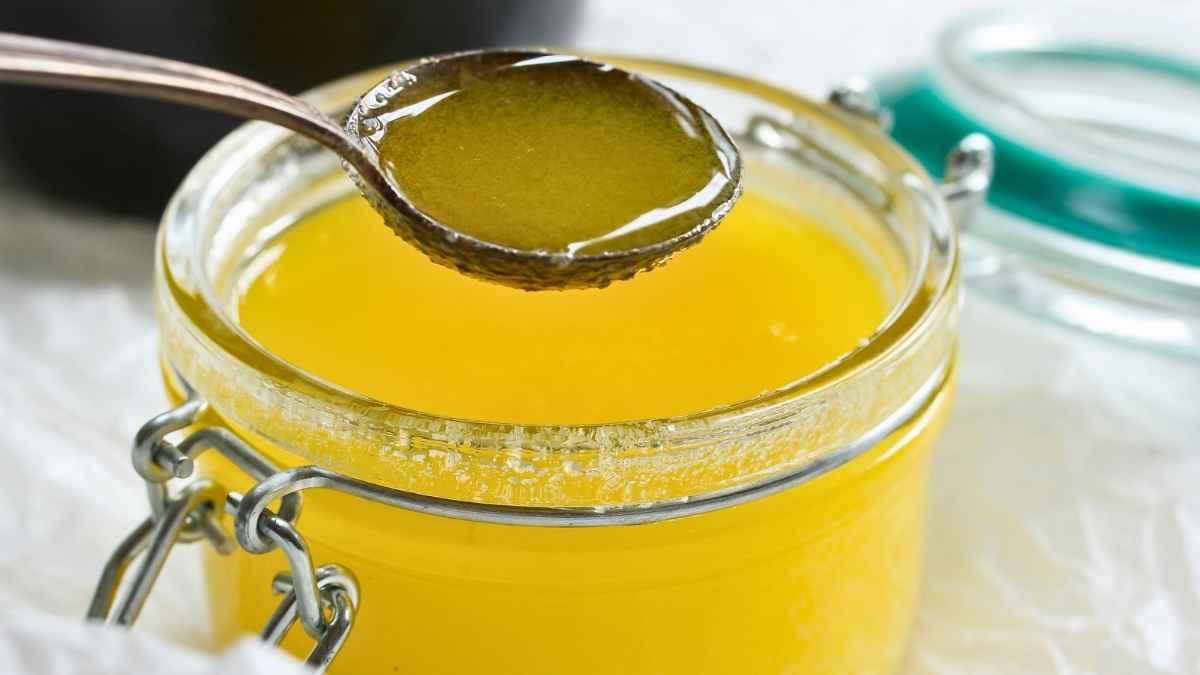



Ghee is a staple in Indian kitchens, whether it is drizzled over a hot bowl of dal, used to prepare festive sweets or offered during daily puja. But did you know that some products sold as ‘Puja Ghee’ may not actually be meant for consumption? In a move to prevent confusion and protect consumers, the Uttar Pradesh Food Safety and Drug Administration (FSDA) has banned the manufacture, storage and sale of products marketed under this name across the state.
Why Has Uttar Pradesh Banned ‘Puja Ghee’?
According to NDTV, the directive was issued by FSDA Commissioner Roshan Jacob on October 10, asking food business operators holding licences or registrations in Uttar Pradesh to stop manufacturing and selling such products.
According to reports, some products made specifically for religious rituals, havans and lighting diyas contain ingredients such as vanaspati, refined oils, fragrances, paraffin, mineral oil and other chemicals. While these substances may be used in products intended for worship, they are not necessarily suitable for consumption.
The bigger concern is that these products can look and smell similar to edible ghee. When sold in similar-looking packaging, they can easily be mistaken for the kind used in cooking. Accidentally consuming them could pose health risks.
The FSDA has clarified that products made using non-edible fats cannot be sold under the name ‘ghee’ or labelled ‘ghee for puja’. Under food safety regulations, ghee is an edible milk-fat product that must meet prescribed standards. Products that do not meet these requirements cannot use the same label simply because they are intended for religious purposes.
Also Read: 2 Indian Ghee Brands Feature On ‘World’s Best & Iconic Butters’; List; Full List Here!
What New Labelling Rules Must Manufacturers Follow?
Along with the ban, the department has introduced mandatory labelling requirements for non-edible products used during worship. Manufacturers must prominently display the warning ‘Not for Human Consumption’ in both Hindi and English on retail packaging.
The packs must also carry a black cross enclosed within a square, as prescribed by the department. These measures are intended to help consumers distinguish products meant exclusively for religious rituals from edible fats and oils.
The department has also prohibited manufacturers from using the same brand name for edible ghee and non-edible products made for religious use. This is meant to reduce confusion and ensure that products intended for worship are clearly differentiated from food items.
The FSDA has warned that businesses failing to comply with the new directives could face strict action. Authorities may confiscate stocks of products that violate the rules and suspend the licences or registrations of the establishments concerned.
Also Read: Viral: River Of Ghee Flows On UP Road After Truck Overturns; Locals Rush To Collect It
This is your reminder to check product labels carefully before purchasing ghee, oils or other fat-based products, even when they are sold for religious use.
Cover Image Courtesy: Canva Pro/vm2002 (representative image)
FAQs
Is ‘Puja Ghee’ safe for consumption?
Not necessarily. Some products sold for religious use may contain non-edible ingredients such as paraffin, mineral oil, fragrances or other chemicals. Consumers should check the label and avoid consuming products marked as non-edible.
Why has Uttar Pradesh banned ‘Puja Ghee’?
Uttar Pradesh has banned products labelled ‘Puja Ghee’ to prevent non-edible fats, oils and chemicals used for religious rituals from being mistaken for edible ghee and accidentally consumed.
Can manufacturers sell non-edible products under the name ‘ghee’?
Under the new directive, manufacturers cannot market products made with non-edible fats as ‘ghee’ or ‘ghee for puja’. The restrictions aim to distinguish products intended for worship from edible ghee.


