
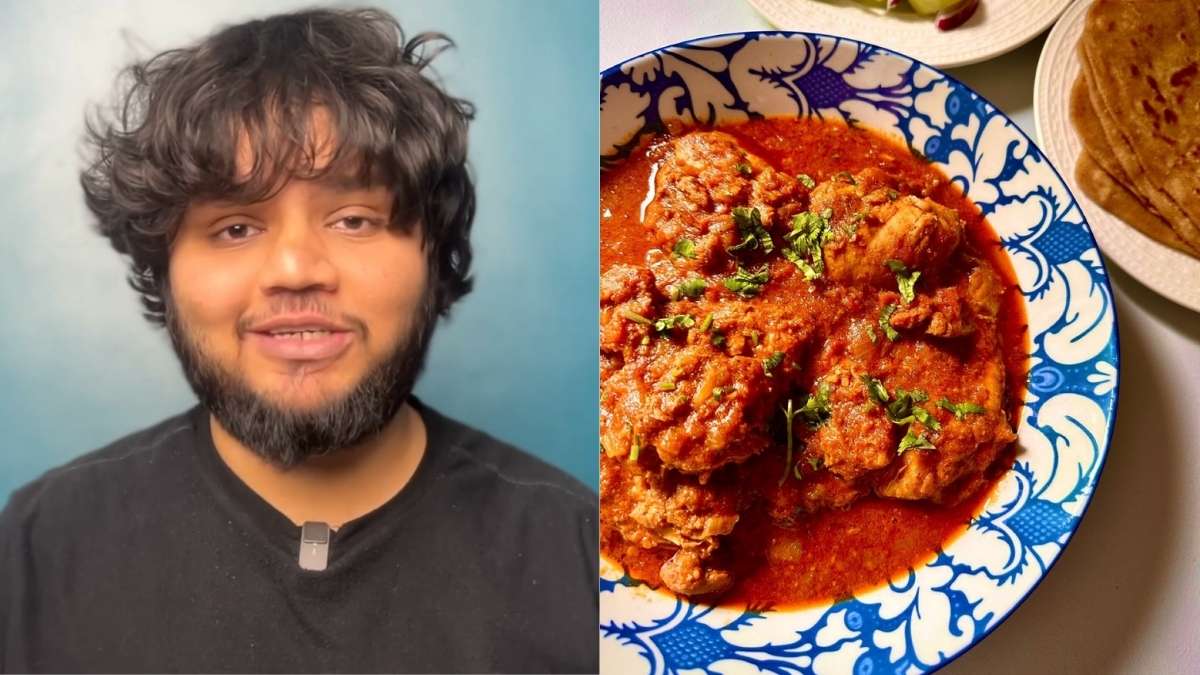

For the last time, contrary to what many believe, vindaloo does not actually contain potatoes. The similarity in the words is pure coincidence, but that misunderstanding has somehow stuck around long enough to become culinary folklore. The spicy vindaloo actually comes from Portugal and was eventually given a new personality by Goan chefs, as told by creator @floydiancookery on Instagram.
The Portuguese Dish That Eventually Became Vindaloo
View this post on Instagram
Pranav Joshi (@floydiancookery) shares the story of vindaloo; actually it begins thousands of kilometres away from Goa, in Portugal, with a preparation known as vinha d’alhos. The phrase translates to wine and garlic, and it describes a practical technique rather than a fancy dish.
Portuguese sailors heading out on long ocean voyages needed ways to keep meat from spoiling. One solution was to marinate it heavily in wine and garlic. The acidity slowed down spoilage, the garlic added flavour, and the result was a preserved meat preparation called carne de vinha d’alhos, literally “meat in wine and garlic.”
When Portuguese traders and colonisers reached India in the 16th century and established themselves in Goa, they tried to recreate the foods they were used to eating back home. That’s where a small logistical issue appeared: wine wasn’t easily available in the region. What was available, however, was coconut toddy, a fermented palm drink common along the Konkan coast.
Also Read: Did You Know India Has A Secret Nude Beach In Goa Where You Can Roam In Your Birthday Suit?
How Vinha d’Alhos Travelled From Portugal To Goa
The Portuguese adapted quickly! Instead of wine, they began using vinegar made from coconut toddy to marinate the meat. But the environment around the dish had changed, and so naturally, the recipe started absorbing local influences.
Goan cooks didn’t stop at vinegar and garlic. They began building layers of flavour using ingredients that were already part of their kitchens. Black pepper, cardamom, and tamarind made their way into the preparation. And then there were red chillies, another ingredient that actually arrived in India through Portuguese trade routes from the Americas. Once these chillies entered the picture, the dish slowly started shifting toward the bolder flavour profile people now associate with vindaloo.
Even the name evolved through everyday speech. Vinha d’alhos gradually morphed into vindaloo, shaped by local pronunciation and language over time.
Why Vindaloo Became Popular During The British Raj?
Interestingly, the dish’s real surge in popularity happened much later, during the British Raj, roughly two centuries after the Portuguese had already introduced it to Goa. British officers stationed in India often hired Goan cooks for their kitchens. One practical reason: Goan chefs had no issue cooking pork, something many Hindu and Muslim cooks understandably avoided.
Pork vindaloo quickly became a regular feature in colonial clubs, cantonments, and private kitchens. The dish also developed a reputation as the perfect food after long evenings of drinking, when something tangy, punchy, and flavour-filled suddenly felt like the best idea in the world.
Somewhere along the way, probably through phonetic confusion, people started assuming the “aloo” in vindaloo meant potatoes. But historically, potatoes had nothing to do with the original preparation.
Also Read: This Hyderabad Mutton Soup Is A Royal Winter Delight With Tender Meat & Silky Nutty Broth
What vindaloo actually represents is something much more interesting; it speaks of a Portuguese preservation technique, reshaped in Goa with local spices, and later carried into colonial dining culture.
Cover Image Courtesy: floydiancookery/Instagram and sonisinha/X
For more such snackable content, interesting discoveries and the latest updates on food, travel and experiences in your city, download the Curly Tales App. Download HERE. First Published: March 13, 2026 3:58 PMFAQs
Does vindaloo actually contain potatoes?
No. Traditional vindaloo does not include potatoes. The word comes from the Portuguese dish vinha d’alhos, meaning wine and garlic.
What is the origin of vindaloo?
Vindaloo originates from a Portuguese preparation called carne de vinha d’alhos, where meat was marinated in wine and garlic to preserve it during long sea voyages.
Why is vindaloo associated with Goa?
Portuguese colonisers brought the dish to Goa in the 16th century, where local cooks adapted it using coconut vinegar and Indian spices.