
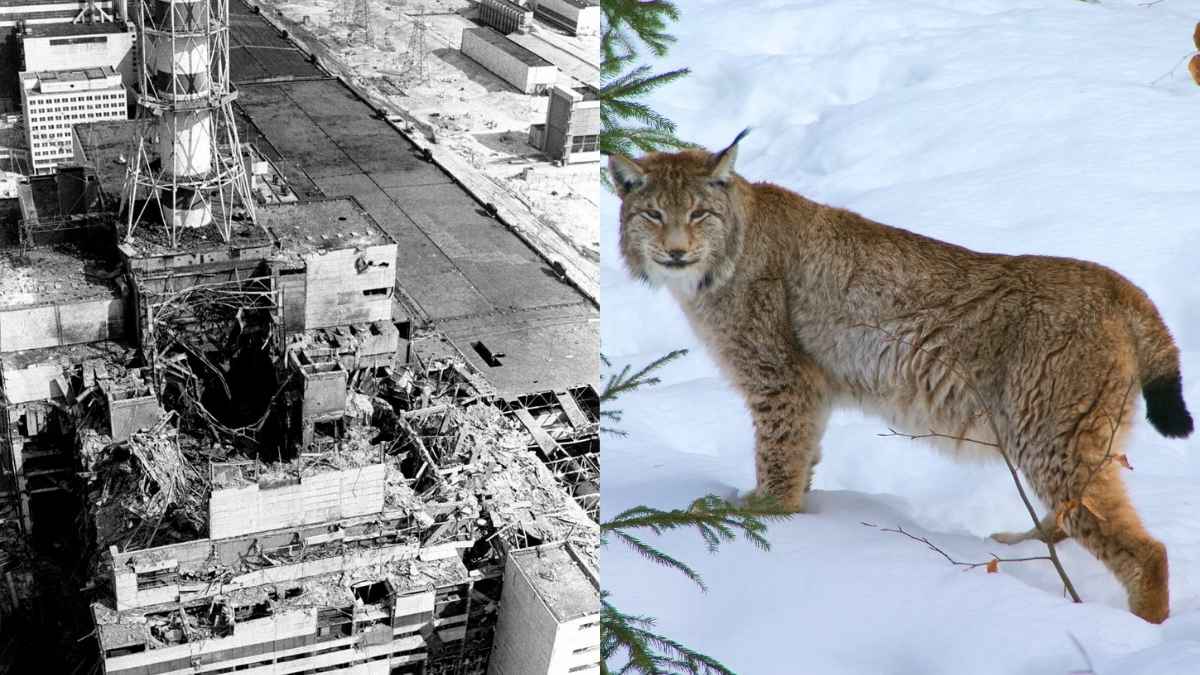


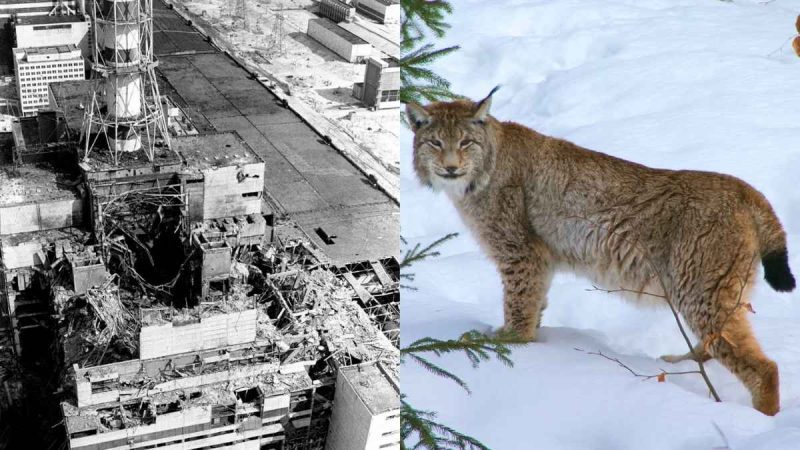
When Reactor No. 4 exploded at Chernobyl in April 1986, it looked like the kind of catastrophe that would poison a landscape for generations. A radioactive plume drifted across Europe. Entire towns were emptied in haste, and around 115,000 people were evacuated from nearby settlements. 31 workers and firefighters died soon after from acute radiation exposure. Around the destroyed plant, authorities carved out a 2,600-square-kilometre exclusion zone and sealed it off from ordinary life.
Chernobyl Today: The Wildlife Sanctuary After Disaster
The expectation was simple: that this would become a dead land. Instead, something stranger happened!
Once people disappeared, the forests thickened, roads cracked open, fields went wild, and animals began reclaiming territory humans had dominated for decades. Today, the Chernobyl Exclusion Zone is often described as one of the world’s most accidental wildlife sanctuaries, a place shaped by radiation, silence, and time.
Wolves roam there in notable numbers; so do foxes, Eurasian lynx, elk, and wild boar. Brown bears, once absent from the area, have returned. European bison have also reappeared. In parts of the Belarusian section of the zone, researchers have found large mammal populations matching, or sometimes exceeding, those in uncontaminated reserves.
Some of the most dramatic recoveries belong to species that had almost vanished locally. Przewalski’s horses, a rare wild horse species, were reintroduced in 1998 as a conservation experiment. They adapted quickly; their population has climbed past 150 animals in parts of the Ukrainian zone. Birdlife has surged too: black storks, white storks, white-tailed eagles, and the globally endangered greater spotted eagle now use the area. In 2019, scientists recorded four breeding pairs at one study site and at least 13 nesting pairs in the Belarusian zone. For a species declining elsewhere, that makes a difference.
Also Read: What Is Delhi-Dehradun Expressway Wildlife Corridor & How Does It Help Animals?
Inside Chernobyl: Where Nature Recovered Without Humans
Then there are the creatures doing something even more fascinating: adjusting. Tree frogs in Chernobyl have been found darker than usual, likely linked to higher melanin levels that may help buffer radiation damage. Studies on wolves suggest possible biological resilience that could lower cancer risk under chronic exposure. Inside the damaged reactor itself, scientists identified a black fungus that appears to use melanin to convert gamma radiation into energy, allowing unusually rapid growth. Nearby vegetation has shown DNA repair responses and stronger tolerance to heavy metals and radiation stress.
None of this erases the harm! The Red Forest, close to the plant, was devastated after the accident when pine trees absorbed intense fallout and turned rust-red before dying. Some animals still show mutation rates, reproductive problems, and health issues. Radiation remains a real ecological force here.
That is what makes Chernobyl so difficult to simplify; it is neither a paradise nor a wasteland.
The same uneasy pattern has appeared elsewhere. Around Fukushima, mammals including bears, raccoons, and wild boars have returned in striking numbers to evacuated areas. At some operating nuclear facilities, too, biodiversity has benefited where large buffer zones remain undisturbed.
Chernobyl’s most uncomfortable lesson may be that wildlife did not thrive because disaster is good for nature. It thrived because humans left. Remove roads, guns, farming pressure, construction, noise, and constant disturbance, and ecosystems often rush back with astonishing speed.
Also Read: Odisha’s Satkosia Tiger Reserve To Get 6 Eco-tourism Hubs; What Wildlife Lovers Can Expect
The reactor broke the land, but human absence let it breathe again.
Cover Image Courtesy: iaeaimagebank/Wikipedia and aconcagua/Wikipedia
For more such snackable content, interesting discoveries and the latest updates on food, travel and experiences in your city, download the Curly Tales App. Download HERE.FAQs
What is the Chernobyl Exclusion Zone today?
It is a restricted area around the nuclear plant that has become an unexpected wildlife habitat over time.
How did wildlife recover after the Chernobyl disaster?
Wildlife returned mainly because humans left, reducing hunting, farming and habitat destruction.
What animals live in Chernobyl today?
Wolves, foxes, lynx, elk, wild boar, European bison and rare bird species now inhabit the area.


