

Matcha may have already found its place in India’s cafe culture, but another colourful drink is slowly joining the trend. Ube lattes and other purple-hued drinks are making their way onto cafe menus, but just as the ingredient gains popularity, there’s a catch. The Philippines has banned fresh ube exports amid concerns over rising demand and limited supply. Here’s all you need to know about this.
Philippines Bans Fresh Ube Exports
Ube, the vibrant purple yam that has been taking over cafe menus and social media, is now facing a rather unexpected problem: there may not be enough of it to keep up with the growing global demand.
The Philippines, the world’s largest producer of ube, has indefinitely banned the export of fresh ube as the country looks to protect its domestic supply and secure enough planting material. According to a Financial Times report, the move comes as demand for the ingredient grows faster than the country’s ability to produce it.
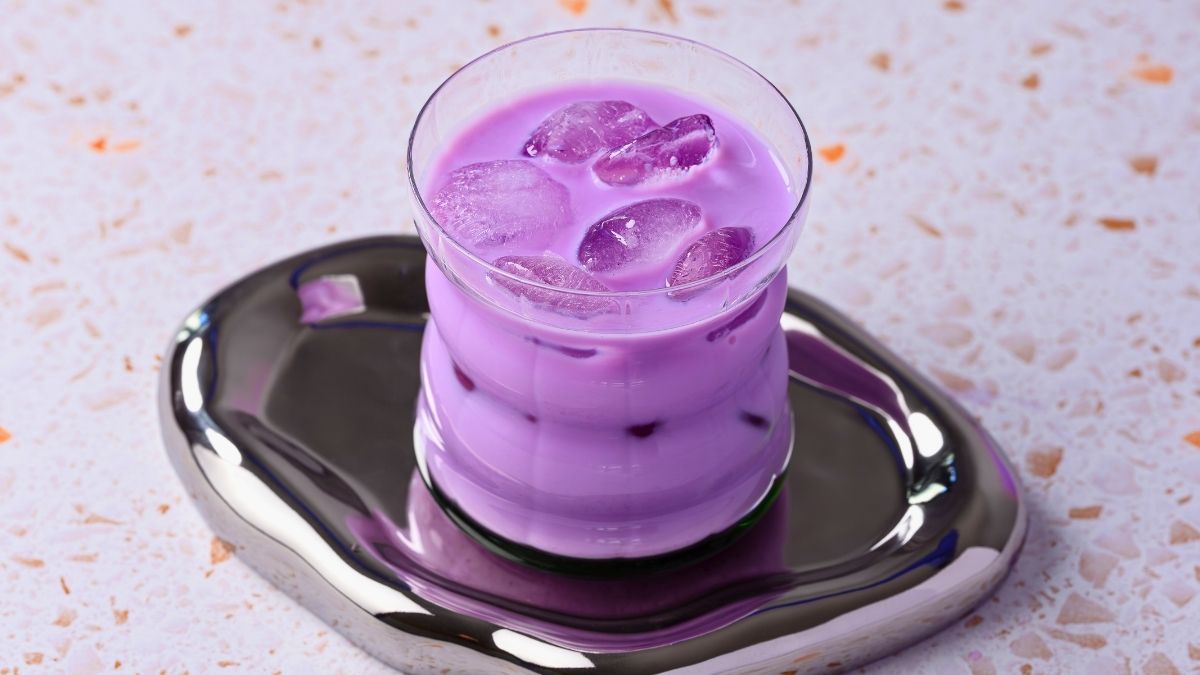
Ube has gone from being a Filipino staple to becoming a global cafe favourite, finding its way into lattes, desserts, pastries and even restaurant menus. Its naturally bright purple colour has also made it a social media favourite, with major coffee chains including Starbucks and Costa Coffee introducing ube-flavoured drinks this year.
The demand is showing up in the numbers too. Ube production in the Philippines increased 17% in the first half of 2026 to 5,660 tonnes, but the country says demand is still growing faster than supply. Prices of ube have also more than doubled in recent years, according to the FT report.
Also Read: Matcha Searches Surge 1300% On Google; Ube & Hojicha Also Gain Popularity In India
Ube Drinks Are Catching On In India
And while India may still be relatively new to the ube craze, the purple drink is slowly finding its way into the country’s cafe culture too.
Google Trends data released by Google India recently shows that searches for ube in India reached an all-time high in August 2026. Searches for terms such as “ube latte”, “ube cafe”, “ube matcha” and “ube coconut” have also been growing, signalling increasing curiosity around the ingredient. Telangana currently leads searches for ube in India.
But the growing popularity of ube comes at an interesting time. The Philippines’ export restrictions apply to fresh ube, while processed and frozen ube, which are commonly used by restaurants and cafes overseas, are not covered by the ban. Still, businesses that depend on the ingredient are preparing for tighter supplies and potentially higher costs.
Also Read: ‘I’m A New Yorker Now’: Rebel Kid Tries Blank Street’s Viral Matcha; Find It Worth Hype & Money
So, while that picture-perfect purple latte may be becoming easier to spot on cafe menus in India, the global ube boom could make the ingredient a little more complicated.
Cover Image Courtesy: Canva Pro/joannastolowiczphotos (representative image)
FAQs
What is ube?
Ube is a purple yam native to the Philippines. It has a naturally vibrant purple colour and a mildly sweet, creamy flavour.
Why has the Philippines banned fresh ube exports?
The Philippines has banned fresh ube exports amid concerns that rising global demand could put pressure on domestic supply.
What does ube taste like?
Ube is mildly sweet with a creamy, nutty flavour, often described as having hints of vanilla and coconut.


