

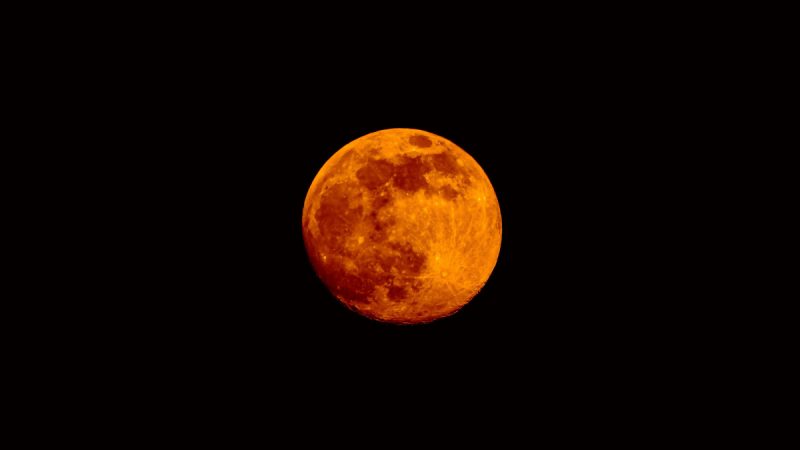
This year, the festival of Holi is going to witness the first lunar eclipse of the year. This rare combination of Bhadra Kaal and a total lunar eclipse is going to take place on March 3, the day of Holi. This unusual event makes the day even more significant both astronomically and religiously. Here’s everything you need to know about the eclipse.
All About The First Lunar Eclipse Of The Year
For those who don’t know, a lunar eclipse occurs when the Earth comes between the Sun and the Moon, placing the full Moon within Earth’s shadow. This lunar eclipse is going to be the first such celestial event of the year, which is going to be visible from India. According to the Bombay Times, this will be visible in the northeastern region of Bengal, Mizoram, Nagaland, Manipur, Assam, Delhi, Mumbai, and Arunachal Pradesh. It will begin at 3:20 PM on 3rd March and will last until 6:47 PM, lasting for a duration of 3 hours and 27 minutes.
Also Read: Partial Solar Eclipse, 2025: Date, Where To See & Other Details About This Celestial Phenomenon
As per Hindu traditions, the sutak period will begin 12 hours before the eclipse, during which auspicious activities and temple visits are said to be avoided. During this lunar eclipse, the moon will appear red, and this is why it is also called a ‘blood moon.’
Why Is A Lunar Eclipse Also Called ‘Blood Moon’?
According to NASA, during the period of a lunar eclipse, the moon appears either dark red or orange. This happens because our planet blocks the Sun’s light from reaching the Moon, and the light that does reach the lunar surface is filtered through a thick slice of Earth’s atmosphere. It looks as if all the world’s sunrises and sunsets are shadowed onto the Moon.
What Is The Sutak Period?
As per the Hindu beliefs, the period leading to a solar or lunar eclipse is known as the Sutak period and is said to be inauspicious. This is a precautionary phase observed before an eclipse starts, and during this time, any auspicious activities, temple visits, and new beginnings are avoided.
Also Read: Thai Pongal 2026: Date, Significance, Traditions & Meaning Behind The Overflowing Pot
The Sutak period is considered an important event in Hinduism. During an eclipse, devotees pay extra attention to the Sutak timings. During a lunar eclipse, the sutak period usually starts 9 hours before, while during a solar eclipse, it starts around 12 hours before.
This rare Holi lunar eclipse makes the day even more special, bringing together tradition and astronomy.
Image Courtesy: Pexels/Luxe Tinker
For more such snackable content, interesting discoveries and the latest updates on food, travel and experiences in your city, download the Curly Tales App. Download HERE.