
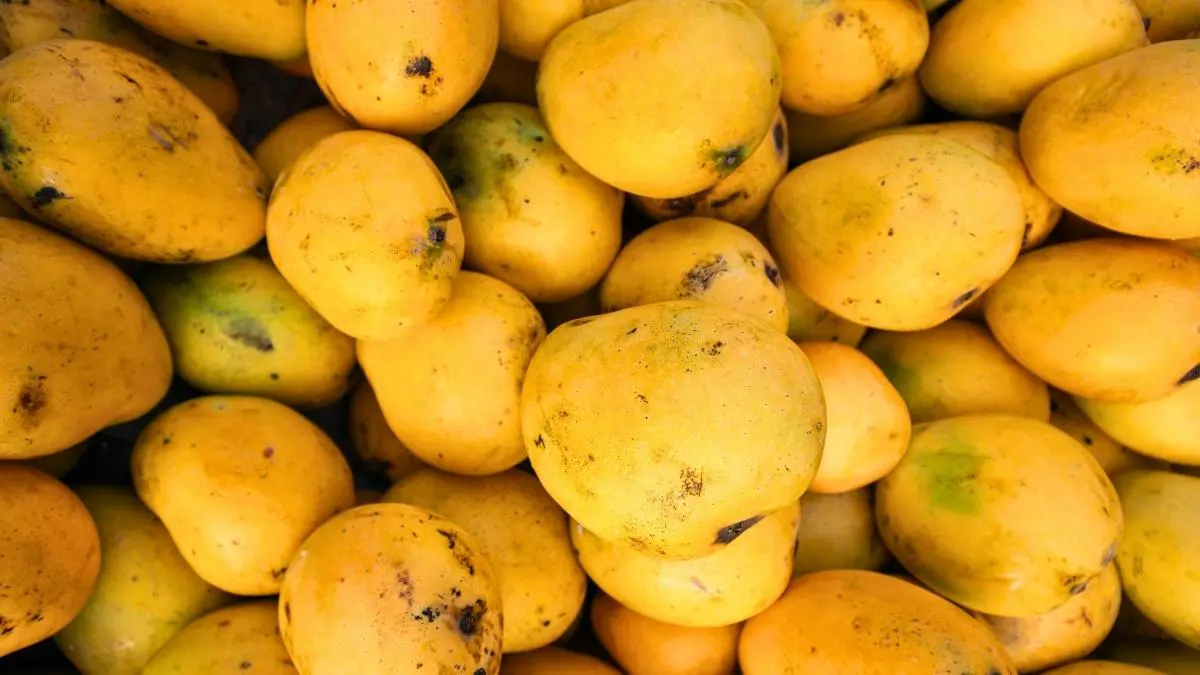



Mango season is here, bringing with it endless indulgence in the ‘king of fruits’ and the many desserts it inspires. But while you’re stocking up, food safety should remain a priority, especially after the Hyderabad Police conducted a series of raids across the city and seized at least 200 kg of artificially ripened mangoes. Scroll on to know more about this and learn how to ensure your mangoes are safe to eat.
Man Arrested For Unsafe Chemical Ripening Of Mangoes In Hyderabad
According to NDTV, a police team from Hyderabad’s Goshamahal Police Station seized at least 200 kg of artificially ripened mangoes on April 3. The raid was conducted near Balkishan Mandir in Chudi Bazar, where officials found a fruit seller using ‘Diamond Ripe – Ethylene Ripener’ to chemically speed up the ripening process before selling the mangoes in the market.
In addition to the mangoes, the Hyderabad Police also seized four packets and 25 loose sachets of the chemical. The report noted that food safety regulations in India permit only five sachets of ethylene ripener per 20 kg of mangoes. However, the seller was using six sachets for each 20 kg tray, exceeding the limit set by the Food Safety and Standards Authority of India (FSSAI). As per the latest update, a case has been registered against the man under sections related to food adulteration, cheating, and endangering public health.
Also Read: Hyderabad: 4 Tonnes Adulterated Ginger-Garlic Paste Seized; 50L Unhygienic Badam Milk Destroyed
How To Check If Your Mangoes Are Safe To Consume?
Following this, Hyderabad CP VC Sajjanar has urged the public to be careful while buying mangoes this summer. To ensure you eat nothing but the best, we have listed five FSSAI-approved ways to ensure the purity of your mangoes.
1. Check the colour of the fruit. According to The Times of India, chemically ripened mangoes often have a uniform colour. They may also appear overly yellow and slightly shiny.
2. Look for damage and firmness. If you notice bruises or spots, or if the mango feels unusually soft or mushy, it may not be naturally ripened. This can sometimes be a result of chemical treatment.
3. Smell the mango. There’s a reason people smell fruits before buying them. As per FSSAI, naturally ripened mangoes have a sweet, pleasant aroma, while artificially ripened ones may have a slightly chemical or unusual smell.
4. Try a baking soda test at home. Soak mangoes in a mixture of water and baking soda for 15–20 minutes. If the colour changes after washing, it could indicate chemical treatment or polishing.
5. Do a float test. This simple test involves placing mangoes in a bucket of water. If they sink, they are likely naturally ripened; if they float, they may have been chemically ripened.
Also Read: 8 Regional Mango Dishes Across India That Show How Each State Uses Mango Differently
We hope this article was helpful and helps you enjoy only safe and healthy mangoes this season.
Cover Image Courtesy: Canva Pro/Anurag Jamwal (representative image)
For more such snackable content, interesting discoveries and the latest updates on food, travel and experiences in your city, download the Curly Tales App. Download HERE. First Published: April 05, 2026 10:55 AMFAQs
How to check for chemically-ripened mangoes?
There are several ways to check this, such as examining the fruit’s firmness, colour, smell, and any visible damage.
How to check if mangoes are natural or artificially ripened at home?
You can soak the mangoes in a baking soda and water mixture to check for colour changes, or try a float test, where chemically-ripened ones are more likely to float in a bucket of water.
Which is the best mango variety in India?
India is famous for its wide variety of mangoes and the ‘best’ usually depends on one’s taste. You can check out varieties like Alphonso, Kesar, Dasheri, Langra, Banganapalli, and Himsagar.