

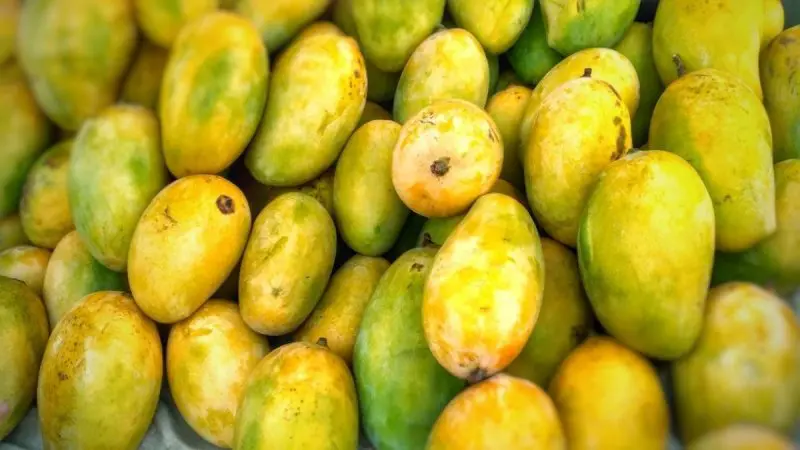
It appears that the mango season has not begun positively. The unseasonal rains across the Konkan belt have severely disrupted the Alphonso mango season this year, cutting down the production to early 25% of the usual levels. Read on to know more about the development.
Rain Affects Mango Production In Konkan Belt
As per a report by the Hindustan Times, unseasonal rains across the Konkan belt have majorly disrupted the Alphonso mango season this year, slashing the production to 25% of the usual levels. The drop in production has triggered a supply crunch, now evident in wholesale arrivals, pricing trends, and export flows.
The disruption is due to the rains during the important flowering and fruit-setting stages between December and February, followed by mild showers in March. Furthermore, the season’s delay of nearly two to three weeks has further diminished the market’s supply of Alphonsos.
Alphonso Mango Cost Increases
The unseasonal rains have resulted in reduced inflow, which has led to a rise in mango prices. As per the news portal, the wholesale rates of Alphonso mangoes are currently ranging between ₹2,000 and ₹6,000 per box, depending on size and quality, with premium-grade fruit ranging from ₹5,500 to ₹6,000 per box.
To bridge the supply gap, mangoes from Southern states have started arriving in enormous volumes. Other mango varieties are sold at lower prices, Badami at ₹80-₹110 per kg and Lalbagh at ₹70-₹100 per kg, while others are being sold at ₹100 and ₹200. As per the portal, the sharp fall in production is expected to shorten this season too. According to traders handling mango arrivals from the Konkan belt, supplies from Devgad and Sindhudurg are likely to decline after May 10, while production from the Ratnagiri belt will be available only until May 25.
The rains affected the flowering and fruit setting, which resulted in substantial crop losses and inconsistent quality. The mango cultivators told the portal that even with higher prices, the cultivators are not benefiting much because yields are very low. As a result, a larger share of the limited production is being diverted to domestic markets.
Also Read: “Taylor Swift Se Bhi Zyada Demand Hai,” Diljit Dosanjh Reacts To LPG Shortage In Latest Vlog
What are your thoughts on this? Let us know in the comments.
FAQs
Why is Alphonso mango expensive?
Alphonso mangoes are expensive due to their limited geographical cultivation (mainly Ratnagiri/Devgad), a very short 3-4 month season.