

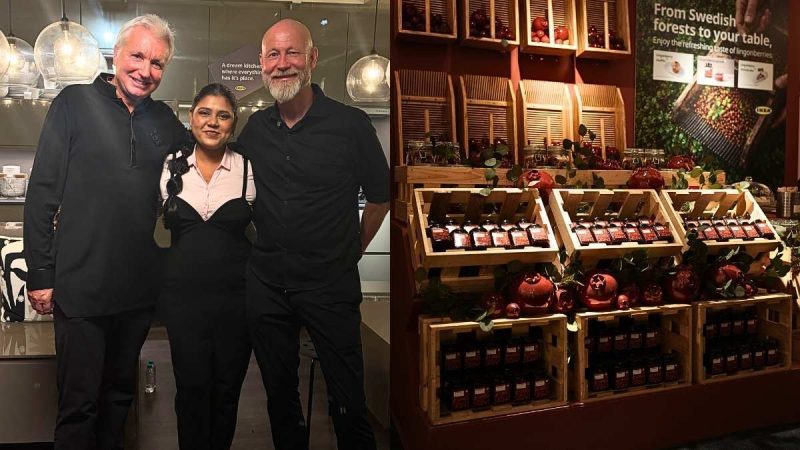
For many people, a trip to IKEA is as much about the food as it is about finding furniture for their homes. Whether it is stopping for chicken meatballs, picking up a hot dog after browsing the showroom or bringing home something from the Swedish Food Market, the brand’s food offering has developed a following of its own.
IKEA India On Chicken Meatballs, Rupee-Friendly Hot Dogs & ‘SweDesi’ Menu!
But how much of that experience is Swedish, and how much is designed around Indian preferences? We spoke to Kevin Johnson, IKEA India’s Country Food Brand Manager, about the thinking behind its menu, the role of affordability and why the company is looking beyond a one-size-fits-all Indian food offering. The conversation also revealed a few things that regular IKEA visitors might already know from experience.
Q. IKEA Food Was Originally Meant To Support Furniture Sales. When Did It Become A Destination In Its Own Right?
Food remains a support function, but it has also become a destination. Around the world, 30% of people say food is their number one reason for visiting IKEA.
The idea goes back to the founder noticing that customers would leave the store at lunchtime because they were hungry and might not return. The solution was to bring a café into the store, encouraging people to stay longer.
Johnson explains that IKEA’s food business operates differently from a conventional restaurant. “We don’t have to make a profit because we’re here to sell sofas.” Food helps customers spend more time in the store, and those who visit the food section spend around 30% more in the store on average. Any profit made from food can also be reinvested in lowering prices.
IKEA has three food formats: the restaurant, the Swedish Food Market and the bistro. While the restaurant introduces customers to Swedish food alongside local dishes, the market celebrates Swedish products and traditions. The bistro, meanwhile, offers affordable, easy-to-grab favourites.
Its signature hot dog serves as what IKEA calls a breathtaking item, or BTI, a product designed to deliver impressive value at a low price. In India, the samosa has joined that role.
Q. How Much Can A Swedish Recipe Change For The Indian Palate?
IKEA starts with its original Swedish recipes but works with Indian suppliers to produce the food locally. Import restrictions mean that almost everything in the Indian food range is made in India, with the Daim almond cake and another cake among the limited imported products mentioned during our conversation.
That local production also allows the company to adapt flavours. Johnson uses the hot dog as an example, explaining that the Swedish version can taste bland to Indian customers. The Indian version has been adjusted with a little more spice.
“We take the basic recipe from Sweden, but adapt it to the Indian palate.”
The process involves collaboration between IKEA’s food team and its suppliers. The team identifies a product it wants to develop, establishes its price and other requirements, and then works through samples and tastings before launch.
Affordability is central to the process. As Johnson puts it, IKEA begins with the price and design before considering other elements, including sustainability.
Q. Where Do You Draw The Line Between Swedish Authenticity And Localisation?
Some dishes have to retain their traditional composition. The Swedish meatball meal, for example, comes with meatballs, sauce, mashed potatoes and lingonberry jam. Johnson says he would not compromise on those elements, even while allowing other products to evolve.
“The rest, we can have flexibility.”
The distinction matters because the company wants customers to experience Swedish food rather than simply serve familiar Indian dishes under the IKEA name. At the same time, customers who do not enjoy the traditional combinations can choose from the local menu.
Johnson also believes customers should be given time to discover unfamiliar products. When he arrived in India, his team questioned whether hot dogs would sell well. He pushed for better communication rather than abandoning the product outright.
The same learning has applied to cheesecake, which has sold beyond expectations, while some products have been less successful. Not every launch works, but customer response helps the team understand what deserves another chance.
Q. How Is IKEA Building A Distinctly Indian Menu Without Losing Its Swedish Identity?
The next phase is to understand regional preferences more closely. IKEA has spent eight years in India learning which products customers want and which they do not. The next step is to develop offerings that reflect differences between the North, South, East and West.
Before opening a new store, the team plans to spend time in the location, eat locally and speak to customers. Research and development will begin around six months before the opening, helping the company shape the local part of its menu.
Johnson says IKEA is also working towards a stronger Swedish presence in its food offering. The restaurant currently has a mix of Swedish and local products, while the longer-term ambition is to increase the Swedish share. The Swedish Food Market is also moving towards a range of Swedish products manufactured in India, with 13 new products introduced during the year discussed in the interview.
One example of blending the two cultures is ‘Swedesi’, a collaboration involving an Indian chef who studied IKEA’s traditional Swedish meatballs before creating Indian-sauce variations using Swedish chicken balls, salmon and other dishes. Johnson says the three additions recorded a 500% increase in sales, although the interview did not establish the precise measurement period or baseline.
The concept is intended to introduce Indian customers to Swedish ingredients and dishes through flavours they already recognise.
Q. What Are Customers Actually Eating At IKEA India?
Drinks, particularly coffee, lead the food range, followed by cheesecake and chicken balls. Among hot meals, chicken balls are the leading item, followed by local dishes and other Swedish offerings. Salmon is also a strong seller despite being among the more expensive menu options.
The additional sales figures shared by IKEA India offer a closer look at the range’s performance. Chicken meatballs recorded approximately 350,000 units sold year to date in FY26, while cinnamon buns recorded approximately 128,225 units sold year to date.
The top-selling items identified by IKEA India are chicken meatballs, lingonberry cheesecake, paneer butter masala, hot dogs and samosas.
These figures suggest that the menu’s appeal comes from a combination of Swedish signatures, familiar Indian favourites and affordable snacks. However, the figures provided do not break sales down by store or region.
Also Read: From Meatballs To Vada Pav, IKEA’s Food Contributes 8.5% Of Its Indian Revenue
Q. Is There One Distinctly Swedish Product With Untapped Potential In India?
Johnson points to the hot dog, which he describes as IKEA’s leading product globally but says ranks much lower in India.
The company’s pricing philosophy makes the product especially important. Johnson explains that the founder believed an IKEA hot dog should never cost more than the competition’s equivalent. It should remain the lowest-priced option.
The samosa can introduce customers to the bistro, but Johnson hopes they will eventually try the hot dog, too.
He also shared the scale of IKEA’s global food business: the company sells approximately 1.5 billion meatballs worldwide each year. Its annual hot dog sales, he says, would stretch around the planet twice if placed end to end. These are global figures, not India-specific volumes.
Also Read: IKEA’s Wildest Food Launch Yet! Free Meatball Lollipops Arrive In Stores This Summer
Q. What Role Does Food Play In Building IKEA’s Relationship With Indian Customers?
For Johnson, food creates an emotional connection with the brand. Customers might initially visit for coffee, cheesecake or a family meal rather than a sofa, but those experiences can encourage them to return and eventually explore the home-furnishing range.
He believes word of mouth remains one of the strongest forms of marketing. A satisfying meal can bring customers back and lead them to recommend the store to friends and family.
As IKEA expands its Indian footprint, the challenge is to preserve what makes its food Swedish while recognising that Indian tastes vary enormously. For Johnson, the opportunity lies in using food to introduce customers to the brand, one affordable bite at a time.
Cover Image Courtesy: Internal
FAQs
Why does IKEA serve food in its stores?
Food began as a way to keep hungry shoppers in the store instead of leaving at lunchtime. It is still a support function, but it is now also a destination: globally, 30% of people say food is their main reason for visiting. Customers who visit the food section also spend around 30% more in the store on average
What are the best-selling items at IKEA India?
IKEA India lists chicken meatballs, lingonberry cheesecake, paneer butter masala, hot dogs and samosas as its top sellers. Chicken meatballs sold approximately 350,000 units year to date in FY26.
What is a “breathtaking item” (BTI) at IKEA?
A product designed to deliver impressive value at a low price. The hot dog is IKEA’s signature BTI, and in India the samosa has joined that role.