

Airports are among the busiest public spaces, with thousands of passengers passing through their facilities every day. From check-in counters to boarding gates, travellers interact with several shared surfaces during their journey. At Mumbai’s Chhatrapati Shivaji Maharaj International Airport (CSMIA), Terminal 2, touchless technology is one of the features being incorporated into modern washroom facilities. Want to know more? Read on!
Mumbai’s Terminal 2 Airport Has Touchless Features In Washroom
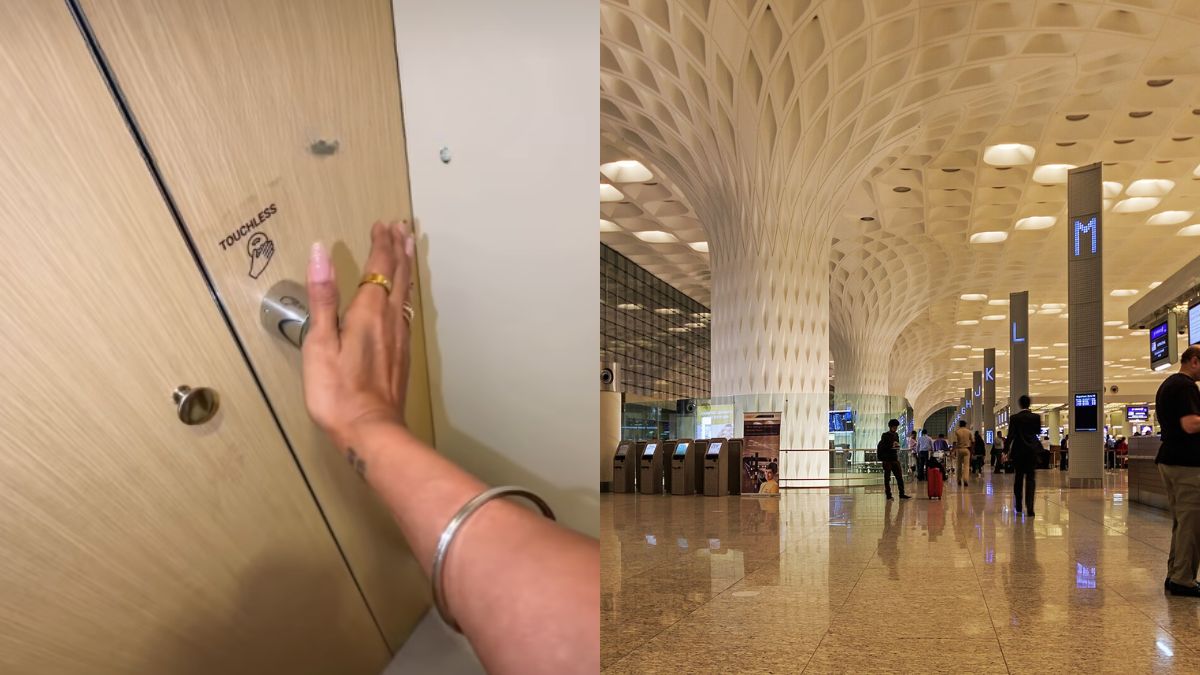
The terminal’s washroom upgrades include technology designed to reduce the need to touch common surfaces, including sensor-based taps and touch-free door systems. These features are intended to make washroom visits more convenient while supporting hygiene in a high-footfall environment. Touchless taps typically use sensors to detect a user’s hands and release water automatically. Once the hands are moved away, the water flow stops. This eliminates the need to turn a conventional tap handle on and off.
Similarly, touch-free door systems allow users to enter or exit without directly handling a door. Depending on the mechanism, doors may open automatically through sensors or be designed to operate without requiring users to touch a shared handle. These features can be particularly useful at airports, where washrooms experience frequent use throughout the day. By reducing contact with commonly used surfaces, touchless fittings can help support better hygiene practices.
However, these systems do not replace regular cleaning and handwashing. Keeping washrooms clean and ensuring that fixtures are maintained remain essential to the overall passenger experience.
Also Read: Book Lovers, There Is A Vending Machine In London That Chooses A Book For You
Part Of A Larger Washroom Upgrade
The touchless features are part of a broader effort to modernise passenger washrooms at Terminal 2. In a submission to the Airports Economic Regulatory Authority of India in April 2025, Mumbai International Airport Limited outlined plans to refurbish 41 sets of passenger washrooms at T2. The proposal highlighted the potential of smart washroom technology, including touchless systems and smart mirrors, to improve the passenger experience. It also noted that heavy usage had led to the deterioration of some existing fittings and fixtures.
Water conservation is another important part of the airport’s approach. CSMIA has also adopted measures such as waterless urinals, tap aerators and sensor taps to reduce water consumption. Industry reporting on the airport’s water-saving initiatives has noted that sensor taps can help reduce water use by dispensing water only when needed.
Also Read: In Andheri, Rakesh Runs A Used Bookstall Where Mumbaikars Can Rent Books At ₹10
For passengers, these small design choices can make everyday airport facilities more convenient. While touchless doors and taps may seem like minor details, they reflect how technology can be used to improve hygiene, accessibility and resource efficiency in busy public spaces.
Cover Image Courtesy: Instagram/the.kaur
FAQs
How far is T1 and T2 in Mumbai?
Terminal 1 (T1) and Terminal 2 (T2) at Mumbai's Chhatrapati Shivaji Maharaj International Airport are about 3.6 to 5 kilometers (2.2 to 3 miles) apart by road.
Is Mumbai T1 closed?
Mumbai Airport's Terminal 1 (T1) is not closed right now, but it is scheduled to close for flight operations starting October 25, 2026.
Who is the owner of Bombay airport?
Chhatrapati Shivaji Maharaj International Airport in Mumbai is operated and majority-owned by the Adani Group through a public-private partnership.


