

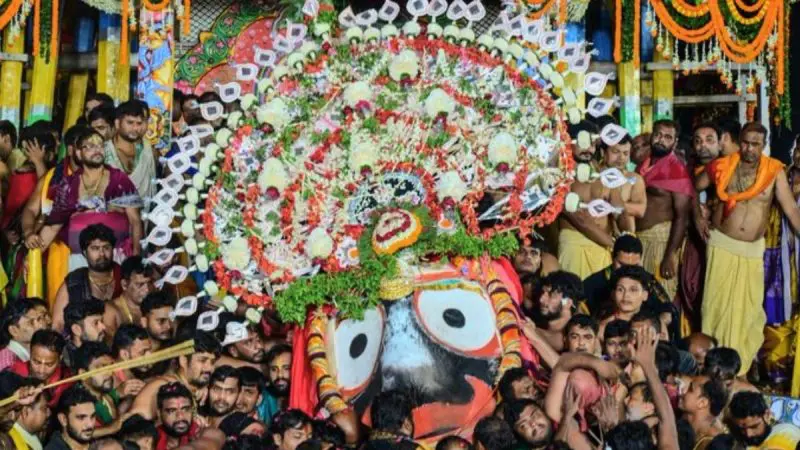
The nine-day Rath Yatra in Puri came to an end with the sacred Niladri Bije ritual, marking the return of Lord Jagannath, Lord Balabhadra, and Devi Subhadra to the Jagannath Temple. During this final ceremony, the deities are carried from their chariots back into the temple in a traditional procession known as Pahandi. But Niladri Bije is much more than just a homecoming; it is one of the most emotional and significant rituals of the festival. Here’s everything you need to know about this grand finale of the Rath Yatra.
Niladri Bije: The Grand Concluding Ritual Of The Annual Puri Rath Yatra
Niladri Bije is the final and one of the most emotional rituals of the annual Rath Yatra, marking the homecoming of Lord Jagannath, Lord Balabhadra, and Devi Subhadra. Every year, lakhs of devotees flock to Puri to witness this sacred ritual that marks the grand finale of the world-famous Rath Yatra.
Amid Vedic chants and elaborate rituals, the three deities are ceremonially carried from their chariots back into the Jagannath Temple and reinstated on the sacred Ratna Singhasana. The ritual symbolises the Lord’s return to His eternal abode after spending time among His devotees outside the temple.
Also Read: Why Is Jagannath Rath Yatra’s Adhar Pana Spilled On The Ground & Not Served As Prasad?
Goddess Lakshmi’s Playful Protest
Observed on the Trayodashi tithi (13th day of the bright fortnight) in the month of Ashadha, Niladri Bije is much more than a ceremonial homecoming. That’s because Lord Jagannath can’t simply walk back into the temple; He must first win over Goddess Lakshmi, who playfully refuses Him entry, setting the stage for one of Rath Yatra’s most cherished traditions.
Here is that moment – Maa Lakshmi finally opened the doors of Shree Mandira last night for Mahaprabhu.
As Shree Jagannatha approaches the Singhadwara on Niladri Bije, the temple doors are temporarily closed, signifying Maa Lakshmi’s displeasure at being left behind during the… pic.twitter.com/tSlbbKQRa9
— Manas Muduli (@manas_muduli) July 28, 2026
After returning from the Rath Yatra, Lord Jagannath doesn’t immediately enter the temple. According to tradition, Goddess Lakshmi playfully bars Him from entering because He left for the journey without taking Her along. To win back Her favour and have the temple doors reopened, the Lord offers Her rasagola.
The sweet offering is a symbol of reconciliation, where Goddess Lakshmi forgives Lord Jagannath and allows Him to enter the sanctum again. It is a celebration of love, forgiveness and the re-establishment of harmony between the divine couple. This tradition also explains why Rasagola Dibasa is celebrated all over Odisha on the same day, remembering the legendary offering that reunited the Lord and Goddess Lakshmi.
Also Read: Did You Know Lord Jagannath Gets A Health Check-Up Before Rath Yatra?
This is so wholesome! Let us know in the comments if you knew about these rituals of the annual Rath Yatra.
Cover Image Courtesy: X/@arvindpadhee
FAQs
What is Niladri Bije?
Niladri Bije is the final ritual of Puri's annual Rath Yatra, marking the return of Lord Jagannath, Lord Balabhadra, and Devi Subhadra to the Jagannath Temple after their nine-day journey.
Why does Goddess Lakshmi stop Lord Jagannath from entering the temple?
According to tradition, Goddess Lakshmi playfully refuses Lord Jagannath entry because He left for the Rath Yatra without taking Her along. The ritual symbolises love, reconciliation, and forgiveness.
What is Pahandi in Rath Yatra?
Pahandi is the ceremonial procession in which Lord Jagannath, Lord Balabhadra, and Devi Subhadra are carried to and from their chariots during Rath Yatra, including their return to the Jagannath Temple during Niladri Bije.