

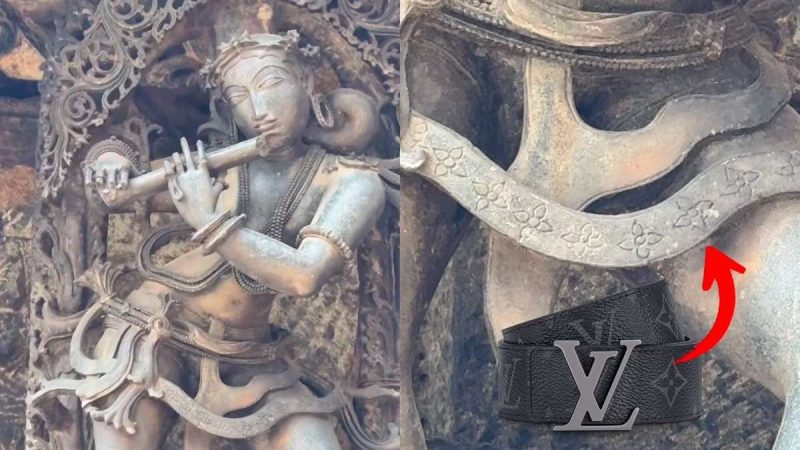
We all love luxury brands, and all because of their unique and signature designs. All the luxurious brands like Gucci, Versace and Louis Vuitton are known for their exclusive element that adds on to the brand’s image. But do you know that one of the best brands, Louis Vuitton, has an Indian connection? Recently an Australian travel influencer claimed that LV, known for its logo, stylised flowers and quatrefoils, has a significant link to ancient Indian temple art. Read on to know more about this.
How Is The Louis Vuitton Logo Related To An Ancient Indian Temple?
In a video shared on Instagram, the influencer Liam Richards was seen visiting the 12th-century Chennakeshava Temple in Belur, Karnataka, which is also a UNESCO World Heritage site known for its intricate stone detailings. While witnessing the beauty and craftsmanship of the temple, he came across a sculpture which instantly made him remember something.
In the video shared by Liam, he said, “I’ve made a great discovery, groundbreaking in the world of fashion. I found where Louis Vuitton gets their little flower symbol from, except they don’t credit the ancient Indians. “It’s carved here in stone, the original Louis Vuitton belt from 1,000 years ago; check this out.” He then zoomed the camera in on a figure wearing something similar to what looked like a belt. It appeared to feature a petal floral pattern similar to that of LV’s well-known monogram flower.
How Did Indians React To The Viral Video?
As soon as the video went viral, Indians started flooding the comment section, appreciating the country’s beautiful culture. One user wrote, “We Indians are the best, and why are we searching for validation from the foreign countries to start valuing our Indian culture and ethics?” While others wrote, “Wow, good observation, bro”, “India is full of history” and “It always starts in India”.
Also Read: Louis Vuitton Opens Its 1st Concept Cafe In Italy; Shop While Relishing Delish Sicilian Food
Located on the banks of the Yagachi River in Belur, the Chennakeshava Temple is also known as the Vijatanarayana or Keshava Temple of Belur. It is one of the most prominent Hoysala temples and was commissioned by King Vishnuvardhana in 1117 CE after a military victory over the Cholas in the great battle of Talakkad.
FAQs
Where is Chennakeshava Temple located?
Chennakeshava Temple Is located in Belur, Karnataka.