

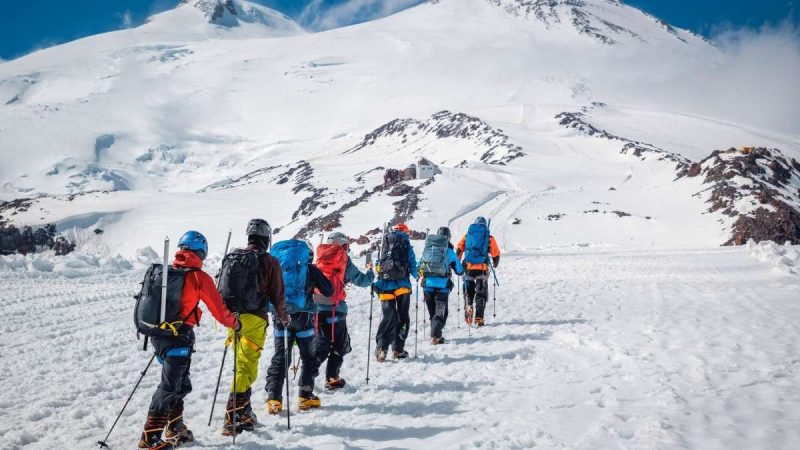
Mount Everest is known for its breathtaking glaciers and snow-covered peaks, but a new study has highlighted a less-talked-about threat to the mountain’s icy landscape. Human activity at Everest Base Camp is contributing to local glacier melt, with human waste emerging as one of the factors behind the change. Scroll on to know more about this.
Mount Everest Glaciers Are Melting Faster
According to a study published in Regional Environmental Change, the growing activity around Everest Base Camp is putting additional environmental pressure on the Khumbu Glacier. During the climbing season, thousands of mountaineers, guides and support staff gather at the base camp, which can turn into a temporary settlement with around 1,600 tents.
The research found that the heat produced by fuel consumption and human waste during the climbing season can contribute to significant ice and snow loss. According to The Times of India, during the 2023 spring climbing season, camp operators reportedly used 824 LPG cylinders, 18,935 litres of kerosene and 5,130 litres of gasoline for cooking, heating and running generators.
Together, the heat generated by these activities was estimated to reach around 849,174 megajoules during the season. Researchers calculated that this amount of energy could melt nearly 2,492 tonnes of glacier ice and snow — roughly enough water to fill an Olympic-sized swimming pool.
Also Read: At 55, Kami Rita Sherpa Has Climbed Everest 32 Times And Broken His Own Record Again
Human Waste Is The Biggest Contributor?
One of the more unusual findings of the study involves urine. Due to dehydration at high altitudes, climbers consume large amounts of fluids, resulting in more than 6,000 litres of urine being discharged every day at Base Camp.
While solid human waste is collected in storage tanks and transported down the mountain, liquid waste is generally released directly onto the surrounding glacier in the Mount Everest. Researchers estimated that the heat transferred from urine alone could be responsible for melting around 154 tonnes of ice during a climbing season.
However, the study points out that these figures may actually be conservative. Researchers did not include heat generated by helicopter operations, the body heat of thousands of climbers or transport animals such as yaks in their calculations.
Also Read: Mount Everest Losing Its Beauty? Viral Video Shows Waste Scattered Across The Mountain
While climate change remains a major concern for Himalayan glaciers, the study shows that activity at Everest Base Camp may also be contributing to localised ice melt.
Cover Image Courtesy: Pexels
FAQs
How much ice and snow could melt due to activities at Everest Base Camp?
Researchers estimated that the heat generated by activities at the base camp could contribute to the melting of around 2,492 tonnes of ice and snow during a climbing season.
How much urine is produced at Everest Base Camp each day?
More than 6,000 litres of urine are estimated to be discharged at Everest Base Camp every day during the climbing season.
What other activities contribute to ice melt at Everest Base Camp?
Fuel used for cooking, heating and generators produces heat that can contribute to ice and snow loss. The researchers also noted that some factors, such as helicopter operations and body heat from climbers, were not included in their calculations.