

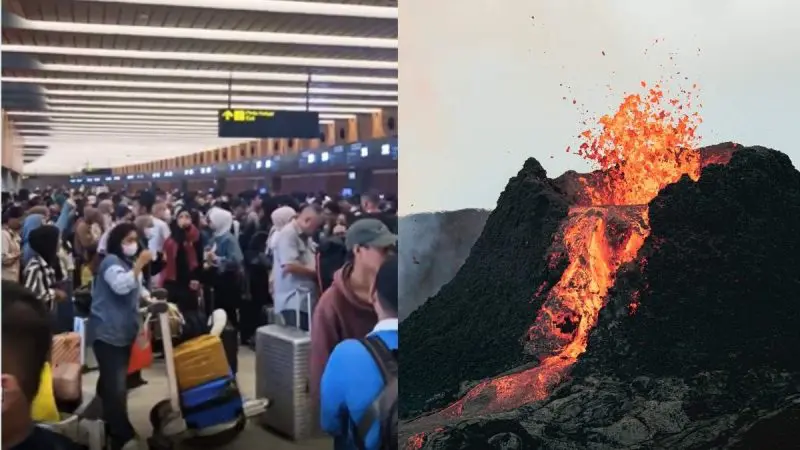
Indonesia is dealing with a major travel disruption after Mount Anak Krakatau erupted. The eruption sent volcanic ash into the surrounding airspace, forcing authorities to temporarily suspend operations at Jakarta’s main international airport. Here’s all you need to know about this.
Volcanic Ash Forces Jakarta Airport To Suspend Operations
🚨 Indonesia’s Mt. Anak Krakatau erupted Friday September 4 overnight into Saturday, spewing rocks and volcanic ash into the air.
Another eruption occurred in the following hours, with the height of the column of black smoke observed at over 1,000 meters. pic.twitter.com/hmDClI85Ne
— Massimo (@Rainmaker1973) September 5, 2026
According to the BBC, the eruption took place on Saturday, with the volcano producing a fountain of lava and booming sounds that were reportedly heard hundreds of kilometres away. The situation continued into Sunday, when two more eruptions were recorded.
Ash from Anak Krakatau was detected around Jakarta’s Soekarno-Hatta International Airport, located more than 150 km from the volcano. As a safety precaution, airport operations were suspended, with the closure extended as volcanic activity increased.
The disruption has affected more than 22,000 passengers and 209 flights, including several international services. Flights to and from Singapore have been particularly affected, while routes connecting Jakarta with destinations including Doha, Sydney and Kuala Lumpur have also faced disruptions.
At least 16 domestic flights to Bali were also cancelled, adding to the travel chaos caused by the volcanic ash.
Also Read: Why Japan Wants You To Visit Kyushu, A Region Reviving After Earthquake, Known For Volcanoes
Why Is Volcanic Ash A Problem For Flights?
Volcanic ash isn’t just a visibility issue. It can pose a serious risk to aircraft, particularly jet engines, which is why airlines and aviation authorities take ash clouds very seriously.
As the ash spread across parts of western Indonesia, authorities continued monitoring its movement and the impact on flight operations. Travellers flying to or from Jakarta have been advised to check with their airlines for the latest updates before heading to the airport.
Anak Krakatau, which means ‘Child of Krakatoa’, sits in the Sunda Strait between Java and Sumatra. The volcano emerged from the sea in the caldera left behind by the infamous 1883 eruption of Krakatoa.
That historic eruption was among the most destructive volcanic events in history and is estimated to have killed around 35,000 people, largely due to the tsunamis that followed. Anak Krakatau itself was also responsible for a deadly tsunami in 2018.
Also Read: India’s Only Active Volcano In Barren Island Is Now Accessible On An Andaman Cruise; Details Here!
For now, authorities are closely monitoring the latest activity, while travellers are being urged to keep an eye on flight updates.
Cover Image Courtesy: X/@Urrangawak & Canva Pro/Veniamin Zhuravlov (representative image)
FAQs
Why were flights suspended at Jakarta airport?
Volcanic ash was detected in the airspace around Soekarno-Hatta International Airport. Since ash can damage aircraft engines and affect visibility, authorities suspended flights as a safety precaution.
Is it safe to travel to Indonesia right now?
Travellers should check directly with their airlines for the latest flight status before heading to the airport, as schedules may change depending on volcanic activity and ash movement.
Where is Mount Anak Krakatau located?
Anak Krakatau sits in the Sunda Strait between Java and Sumatra. It emerged from the caldera left behind by the massive 1883 Krakatoa eruption.