

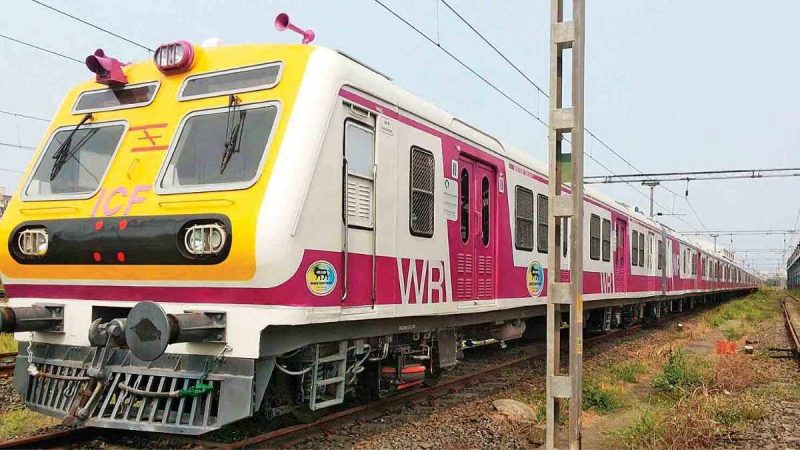
In recent news, Western Railway is set to improve safety infrastructure at two of Mumbai’s busiest railway terminals by replacing decades-old hydraulic buffer stops at Churchgate and Mumbai Central stations. Want to know more about it? Scroll down!
Western Railway To Replace Decade-Old Hydraulic Buffer
As per a report by the Free Press Journal, the project seeks to boost safety at dead-end platforms by setting up modern, high-capacity hydraulic buffers that are capable of safely taking in the impact of trains travelling at speeds of up to 15 kmph.
The Mumbai Central Division has permitted the installation of new hydraulic buffer stops at Platforms 1, 2 and 4 at Churchgate and Platform 4 at Mumbai Central. The full-service project will include the design, manufacture, supply, installation, testing and commissioning of the new systems.
Also Read: Bengaluru-Mumbai Vande Bharat Sleeper Reaches Final Testing Stage; Here’s All You Need To Know
In total, four buffer sets consisting of eight hydraulic buffers will be installed. The existing buffer stops at these platforms were installed between 1906 and 1958, and have extended their service life. Railway authorities stated that the ageing equipment is no longer cost-effective to maintain and will be replaced on priority.
Churchgate & Mumbai Central Serve As Key Stops
Churchgate and Mumbai Central serve as key stop stations on the Western Railway network, serving lakhs of suburban travellers every day along with long-distance trains such as the Rajdhani Express, August Kranti Rajdhani, Shatabdi Express and Humsafar Express. Since trains typically terminate at dead-end platforms, hydraulic buffer stops are a critical safety feature that help prevent serious damage if a train overshoots the platform.
The new buffer systems will be set up according to the latest Research Designs and Standards Organisation (RDSO) specifications issued in November 2024. Built as high-capacity energy absorption systems, they can safely stop a fully loaded passenger train weighing around 1,300 tonnes at a speed of up to 15 kmph without causing significant damage to coaches or station infrastructure. The buffers will also be compatible with both the Centre Buffer Coupler (CBC) and conventional side-buffer rolling stock.
Also Read: It’s Finally Here! Mumbai Locals To Get 1st Non-AC Train With Automatic Doors: All You Need To Know
Officials said the new hydraulic buffers are designed to last at least 20 years and will require minimal maintenance during the first 36 months of operation, unless involved in an accident. They will also feature reflective red-and-white markings for better visibility and are built to withstand Mumbai’s humid coastal weather, further strengthening safety at two of the city’s busiest railway stations.
What are your thoughts about it?
Cover Image Courtesy: Wikimedia Commons
FAQs
Which are the Western Railway line stations in Mumbai?
The Line starts at Churchgate station, which is situated in the heart of South Mumbai and terminates at Dahanu Road station, located in the Palghar district.