

To ensure customers know exactly what they’re paying for, the Maharashtra Food and Drugs Administration (FDA) has initiated a statewide crackdown on the use of cheese analogues. Starting May 1, all restaurants, caterers, hotels, and fast-food outlets will be required to clearly state on their menus whether a dish is made with real paneer or cheese, or with a cheese analogue, ensuring customers understand the difference before ordering.
Strict Action Against Food Outlets Using Cheese Analogues In Maharashtra
On Tuesday, the Maharashtra FDA said strict action will be taken under the Food Safety and Standards Act, 2006, against restaurants, caterers, hotels, fast-food vendors, and suppliers found violating rules related to the use of cheese analogues.
According to Hindustan Times, a statewide inspection and enforcement drive will begin from May 1. In a circular, FDA Commissioner Sridhar Dube Patil highlighted the importance of paneer in the Indian diet. He noted that despite India being one of the largest milk producers, many food establishments continue to use cheese analogues without adequately informing customers.
Taking note of multiple consumer complaints, the FDA has now directed eateries across Maharashtra to clearly disclose the use of cheese analogues in their dishes.
“According to Section 18(2)(e) of the Food Safety and Standards Act (FSSA), 2006, consumers must have information about the ingredients of food products so that they can make informed decisions about what they eat,” the circular specified.
Also Read: Pune FDA Destroys 3800 Kg Of Fake Mango Pulp Made With Unsafe Food Colours Worth ₹2.2 Lakh
What Is Cheese Analogue & How Is It Different From Paneer?
According to a report by Hindustan Times, Regulation 2.1.1 of the Food Safety and Standards Regulations, 2011 defines paneer as a product made entirely from milk. In contrast, dairy analogues are manufactured using edible oils, starch, emulsifiers, and other additives. While they may resemble paneer in appearance, they are not the same. As per FSSAI guidelines, such products are classified as “cheese analogues.”
Cheese analogue is actually a substitute for cheese that is made using vegetable oils (mostly palm oil), starch, and additives, instead of milk, or with very little dairy content. While it is designed to look, melt, and taste like cheese, it isn’t the real thing! Paneer, on the other hand, is a fresh Indian cheese made by curdling milk with an acid (either lemon juice or vinegar). It’s 100% dairy, rich in protein, and widely used in Indian cooking.
Also Read: Hyderabad: 4 Tonnes Adulterated Ginger-Garlic Paste Seized; 50L Unhygienic Badam Milk Destroyed
We hope this information was helpful to you all!
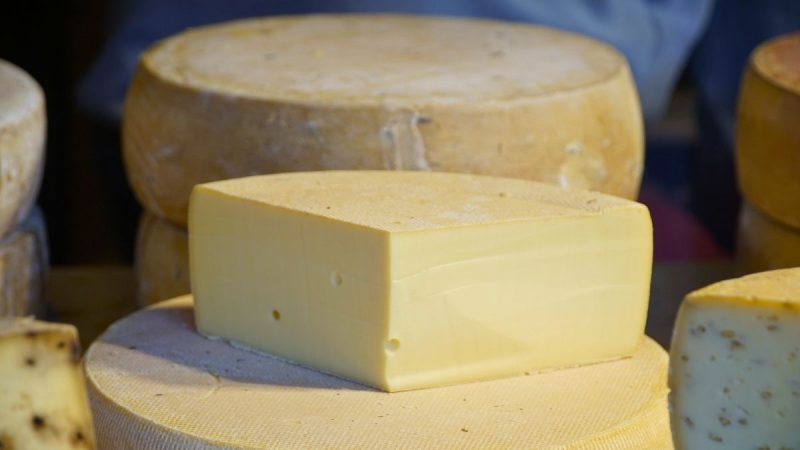
Cover Image Courtesy: Canva Pro/jhenning (representative image)
For more such snackable content, interesting discoveries and the latest updates on food, travel and experiences in your city, download the Curly Tales App. Download HERE.
FAQs
What is cheese analogue?
Cheese analogue is a substitute for cheese made using vegetable oils (like palm oil), starch, and additives.
How are cheese analogues different from paneer?
Paneer is made entirely from milk and is rich in protein, while cheese analogues are processed substitutes that may contain vegetable fats and have lower nutritional value.
Why do restaurants use cheese analogues?
This is mainly because they are cheaper, have a longer shelf life, and melt easily, making them popular in fast food like pizzas, burgers, and sandwiches.
Are cheese analogues unhealthy?
Not necessarily unsafe, but they may be lower in protein and higher in processed fats compared to real dairy products.