
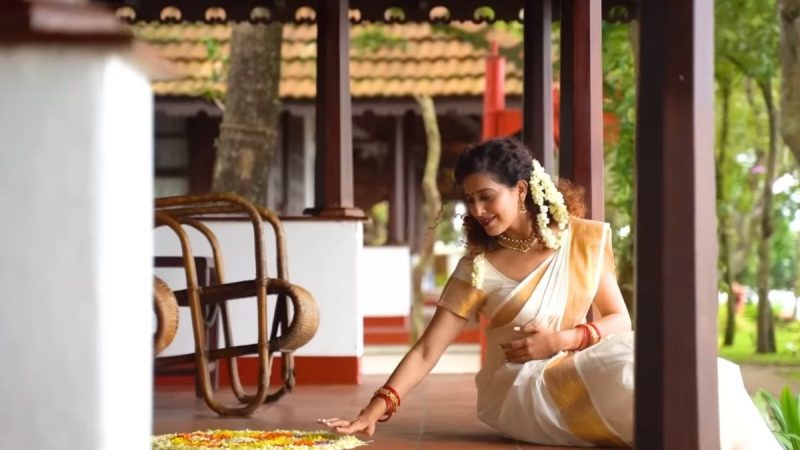
Onam has a reputation problem. Mention Kerala’s biggest festival, and the conversation usually reaches Sadya within seconds. Someone will talk about avial, someone else will defend their favourite payasam, and eventually there will be a photograph of a banana leaf so perfectly arranged that it looks like food has been briefed for a magazine cover. But Onam is much more than a spectacular lunch. The ten-day festival, celebrated in the Malayalam month of Chingam, is associated with the annual homecoming of King Mahabali, the legendary ruler whose reign is remembered as a time of prosperity and equality. So, before the Sadya steals the entire conversation again, here are 10 Onam traditions that deserve some attention too.
10 Onam Traditions That Go Beyond Sadya
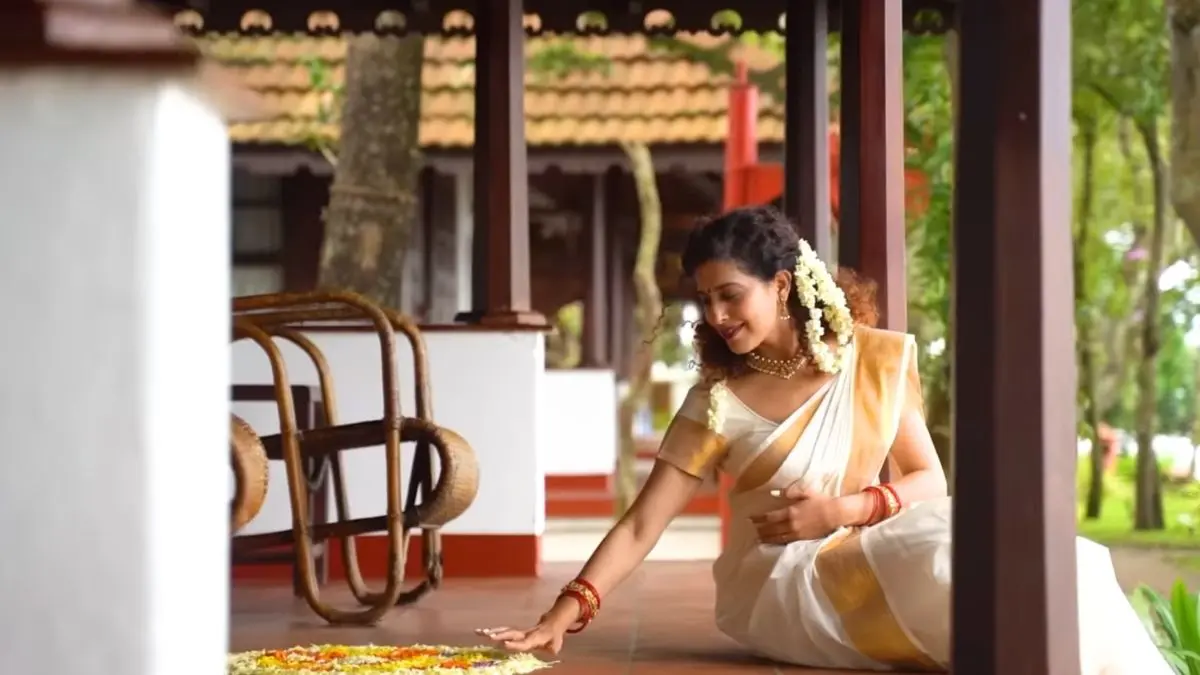
1. Pookkalam Is Basically Onam’s Ten-Day Art Project
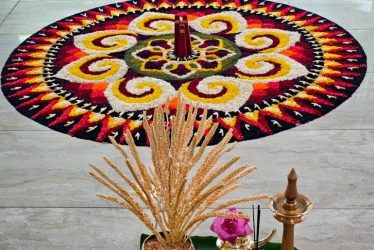
A Pookkalam does not simply appear outside a Malayali home on Thiruvonam morning. It builds up over the festival, beginning on Atham with a relatively simple floral arrangement and becoming more elaborate as the days go by. Traditionally, locally available flowers were used, and the growing carpet symbolises the welcome extended to Mahabali. By Uthradam, the day before Thiruvonam, the Pookkalam is at its most elaborate. In many places today, it has also become a serious community competition, with schools, offices and neighbourhoods creating increasingly ambitious designs.
Also Read: Onam 2026: Grab Your Banana Leaf & Feast At These 30 Spots For Pachadi, Payasam & More
2. Athachamayam Opens The Festival With A Parade
Before Kerala settles into its ten-day Onam rhythm, Thripunithura gets the festivities moving with Athachamayam. The colourful procession features musicians, folk performers, decorated elephants and cultural tableaux and has roots in the royal history of the erstwhile Cochin state. The Maharaja of Cochin once travelled with his entourage to meet his subjects, and the modern celebration carries echoes of that tradition. The parade was temporarily discontinued after the formation of Thiru-Kochi in 1949 and returned in 1961, when Onam was being embraced as a mass festival.
3. Vallam Kali Turns The Backwaters Into A Stadium
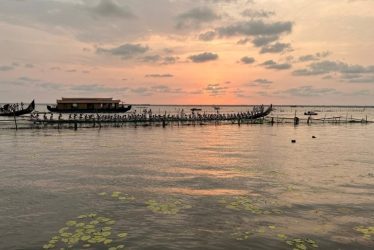
There are boat races, and then there is Vallam Kali. During Onam, Kerala’s waterways become arenas for teams rowing long, slender snake boats in remarkable synchronisation. The boats move to rhythmic chants and songs, with spectators lining the banks to watch the spectacle. Dozens of people have to row almost as if they share one nervous system, making Vallam Kali a particularly dramatic combination of sport, music and community participation.
Also Read: Onam Sadya 2025: 8 Restaurants In Chennai To Celebrate The Occasion With A Traditional Feast
4. Pulikali Brings The Tigers Out
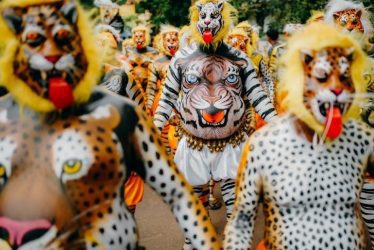
Onam has flowers and elegant dances, but it also has grown adults painting themselves like tigers and dancing through the streets. Pulikali, especially associated with Thrissur, is one of Kerala’s most visually striking folk performances. Artists cover their bodies in tiger-like patterns before dancing to the beat of traditional percussion.
5. Thiruvathirakali Finds The Rhythm In A Circle
Thiruvathirakali, also known as Kaikottikali, brings a completely different energy to Onam. Traditionally performed by women, the dance takes place around a traditional wick lamp, with dancers coordinating hand movements and steps while singing. The performers usually wear traditional Kerala attire, with their hair adorned with flowers.
6. Kummattikkali Makes A House Call
In parts of Kerala, Onam can quite literally walk into your neighbourhood. Kummattikkali performers move through the streets of Thrissur, Palakkad and Wayanad, singing, dancing and wearing colourful masks representing figures from mythology, animals and folk traditions. The performance is associated with welcoming Onathappan, and performers traditionally go from house to house around the Onam period. Some of the masks are elaborate enough to become artworks in themselves.
7. Onapottan Brings Mahabali To The Doorstep
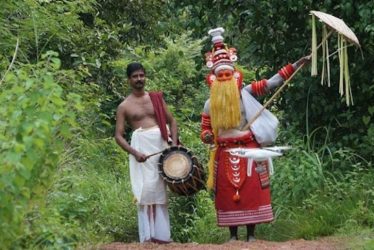
In North Malabar, the legend of Mahabali has a particularly striking form. Onapottan, a Theyyam associated with Kasaragod and Kannur, visits homes on Thiruvonam and is believed to symbolise Mahabali. The performer wears elaborate makeup, a distinctive costume, a beard and a traditional umbrella and moves from house to house offering blessings. The most intriguing detail is that Onapottan traditionally does not speak. He communicates the story through movement and performance, while accompanying artists provide the music and songs.
8. Onathallu Is Onam With A Competitive Streak
If your idea of a festival game is musical chairs, Onathallu may require a rethink. Believed to have originated in central Kerala, Onathallu is an old martial-art-style contest involving two participants using their hands and bodies. Punching and kicking are not permitted; the contest focuses on hand strikes, blocks and physical skill. The game is particularly associated with areas of Thrissur and is also played in parts of Malabar.
Also Read: Onam Raksha Bandhan Travel: 69% Rise In Kerala Hotel Bookings, Lucknow Air Bookings Soar 96%
9. The Onam Games Keep Everyone Moving
Onam does not stop at one traditional sport! No no. Tug-of-war, or Vadamvali, Thalapanthukali, Uriyadi, Kilithattu Kali, Thumbi Thullal and Kuttiyum Kolum are among the games associated with Onam celebrations. Some are physical contests, some involve agility and coordination, and others carry traces of older village recreation. So, yes, celebration was never meant to be a watching sport. You eat, you meet people, you play, you compete and, presumably, you eventually find your way back to another plate of food.
10. Thrikkakara Appan Gives The Pookkalam A Deeper Meaning
At the centre of some Pookkalams sits Thrikkakara Appan, a small pyramid-shaped clay figure associated with Onam rituals. Kerala Tourism notes that the exact practice varies across regions; in North Kerala, for instance, related figures known as Mathevara may represent Maveli, Thrikkakarappan and Shiva. Offerings are made to the figure as part of the household observances. So that beautiful flower arrangement outside the house is not merely decoration. For many families, it becomes a small ritual space connecting the everyday celebration to the mythology of Mahabali and Onam.
The Sadya might be the most photogenic part of Onam, but it is only one piece of a much larger celebration. The food is memorable, absolutely. But the flowers, songs, boats, masks, games and stories are what give the feast its context. Onam isn’t just served on a banana leaf; it spills into the streets as well.
Cover Image Courtesy: Internal
FAQs
What are the main traditions of Onam?
Pookkalam, Athachamayam, Vallam Kali, Pulikali, Thiruvathirakali, Kummattikkali, Onapottan, Onathallu and traditional Onam games are among the major traditions.
What is Pookkalam during Onam?
Pookkalam is a floral arrangement created during the Onam celebrations, traditionally becoming more elaborate over the ten days of the festival.
What is Vallam Kali?
Vallam Kali is Kerala’s traditional snake boat race, featuring teams rowing long boats in synchronised movements during the Onam season.
What is Pulikali?
Pulikali is a folk performance, especially associated with Thrissur, where performers paint themselves like tigers and dance to traditional percussion.


