

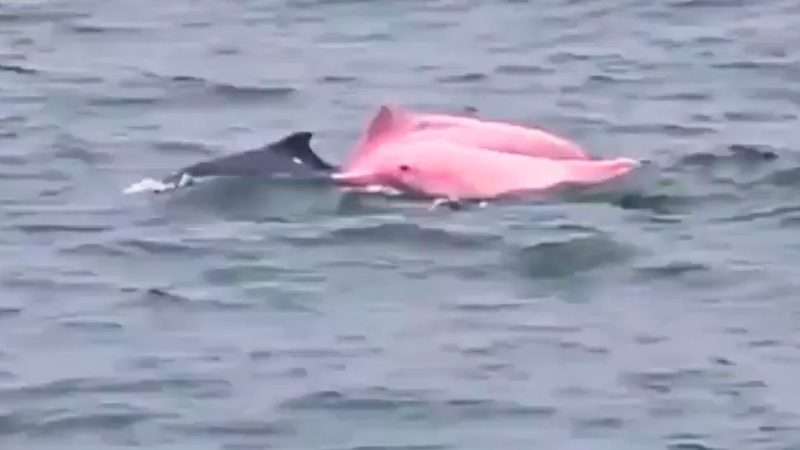
It’s always mesmerising to see dolphins. Their playful nature makes spotting them a memorable experience. But this time, these dolphins have caught everyone’s attention for a different reason. It’s their unusual pink colour that has everyone talking. The viral video has left everyone curious about their colour. Scroll down to learn more!
These Pink Dolphins Have Everyone Talking!
Rare Pink dolphin 🐬 spotted off the coast of Oman https://t.co/KDmHlDwiUF
— 💝🌹💖🇮🇳jaggirmRanbir🇮🇳💖🌹💝 (@jaggirm) October 21, 2026
A video is going viral showing a rare pink dolphin at Qantab Beach in Muscat, Oman. This sighting was captured by people at the beach, making it one of the most unusual sights of their lives. But one question has come to almost everyone’s mind: how are these dolphins pink in colour?
How Do Dolphins Get Pink Colour?
As per The Indian Express, one of the best-known pink dolphin species is the Amazon river dolphin, also known as the boto. These dolphins live in the Amazon and Orinoco rivers in South America.
We also have Indo-Pacific humpback dolphin, also called the Chinese white dolphin. These dolphins are born with grey colour. As it grows older, its skin slowly turns pink or white. Other dolphins, like bottlenose dolphins, may develop pink or very pale skin because of albinism or leucism. The blood vessels under their pale skin can also make them appear pink.
Also Read: Dubai Restaurant FZN Enters The 50 Best Restaurants 51–100 List For 2026; Full List Inside
Why Should We Avoid Going Near These Rare Dolphins?
We know that spotting rare dolphins can make you excited and make you want to touch them, but you should stop right there. As per The Indian Express, Dr Vinod Sharma advises people to stay at least 50 metres away from these animals.
Also Read: Why Won’t Dolphins Let Go Of Their Dead Calf? Viral Video Highlights & Mourning Behaviour
You should avoid going near them, surrounding them or chasing them. Moreover, boat operators should not block their way. This advice is important to avoid disturbing dolphins in their natural habitat.
What is your reaction to this unusual marine sight? Tell us in the comments below!
Cover Image Courtesy: X/@jaggirm