
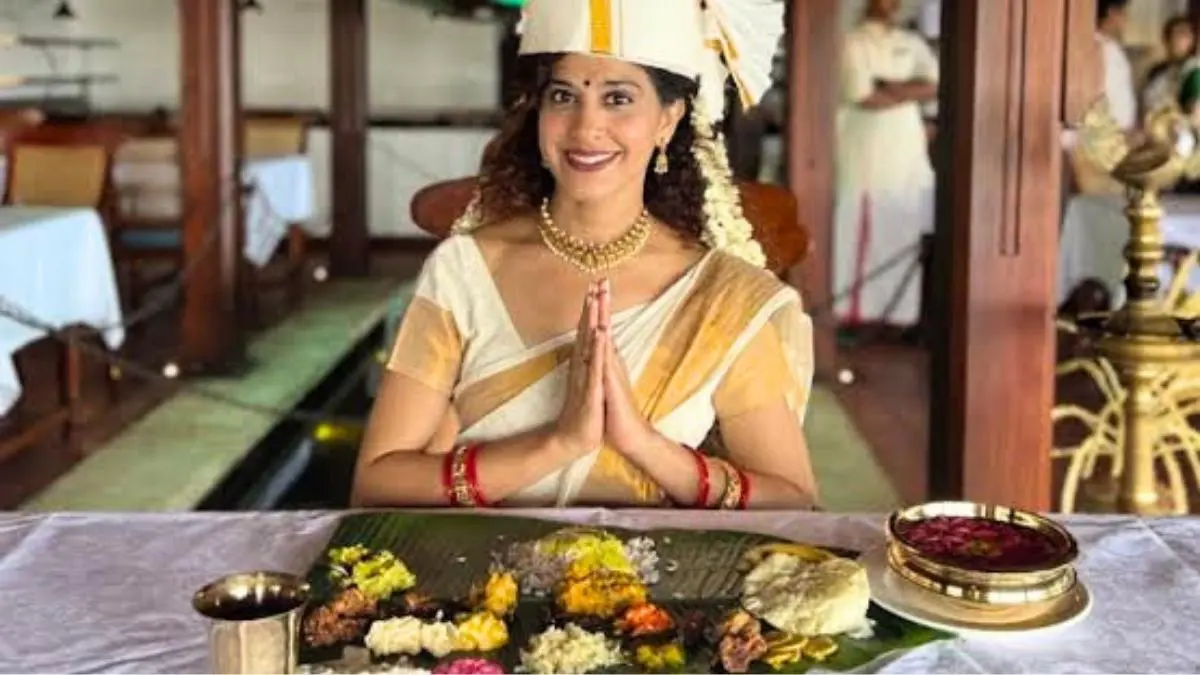


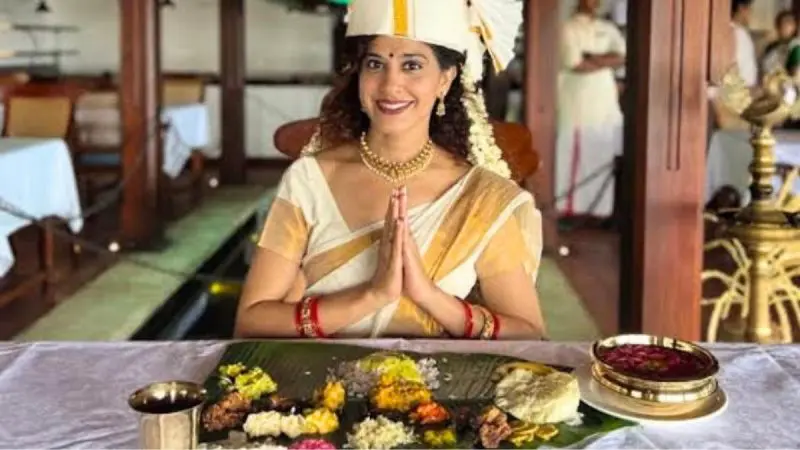
If you have ever sat down for an Onam Sadya and wondered whether everyone else received a secret instruction manual, you are not imagining things. There is, in fact, a proper way to go about the feast.. The banana leaf has a prescribed orientation. The food has designated spots. There is an order to the courses. Traditionally, even the way you eat, how much you take and what you do with the leaf afterwards can carry meaning. If you are sitting down for a traditional Onam feast this year, these are the etiquette rules worth knowing before you confidently commit a banana-leaf faux pas.
Eating Onam Sadya? These Banana Leaf Rules Could Save You From A Faux Pas
DOs
Do place the banana leaf the traditional way
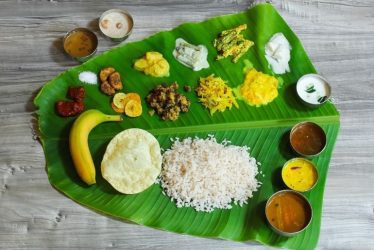
The tapered end of the banana leaf should traditionally point towards the left side of the person eating, with the broader end towards the right. This is not just an aesthetic choice; the arrangement helps determine where different dishes are placed.
Do rinse the leaf before eating
At traditional Sadyas, diners may sprinkle a little water over the banana leaf and wipe it before the food is served. It is a small ritual, but one that signals that the leaf is ready and the meal is about to begin.
Also Read: Onam 2026: Grab Your Banana Leaf & Feast At These 30 Spots For Pachadi, Payasam & More
Do use your right hand
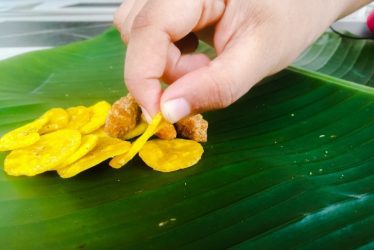
The traditional way of eating Sadya is with the right hand, without cutlery. Rice and curries are mixed using the fingers and brought to the mouth in small portions. Modern settings are more relaxed, particularly for left-handed diners, but the right hand remains the conventional etiquette.
Do eat with your fingertips
There is a technique to eating with your hands. Traditionally, food is gathered using the fingertips rather than being handled with the whole palm, keeping the eating hand relatively neat in the process. It is less “grab food with your entire hand” madness.
Do wait for the serving to be completed
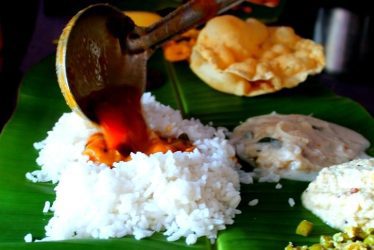
A traditional Sadya is not meant to be attacked the moment the first pappadam arrives. The accompaniments are placed first, followed by rice and the successive courses, with diners traditionally beginning together.
Do follow the serving order
The sequence is part of Sadya etiquette, not just kitchen logistics. After the preliminary accompaniments, rice is served with parippu and ghee, followed by sambar; payasam appears during the meal, before later courses such as rasam and buttermilk.
Do ask for more instead of taking too much
Sadya is famously generous, and servers will often replenish dishes as you eat. Take a sensible portion first and ask for another helping if you want it.
Do observe the people around you
This is especially useful when you are attending your first traditional Sadya. Practices can differ between regions and households, so if your host does something differently from what you have read, their custom wins.
Also Read: 5 Recipes To Make Delicious Paal Payasam At Home
Do fold the leaf after the meal
The final banana-leaf fold is one of Sadya’s most talked-about etiquette details. In many Kerala traditions, folding the leaf away from you after a celebratory meal signals satisfaction and appreciation.
DON’Ts
Don’t start eating before everyone is ready
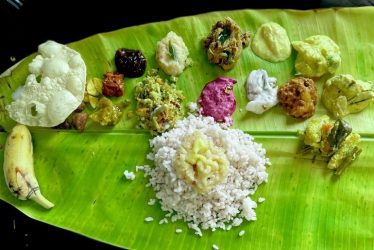
Sadya is traditionally a communal meal, so diving into the first pickle while the servers are still working their way around the room is not exactly the move.
Don’t rearrange the food on your leaf
The dishes are traditionally placed in specific areas of the banana leaf, with the arrangement forming part of the Sadya’s serving protocol. So no, you do not need to create your own little curry neighbourhood because you prefer your avial closer to the pappadam.
Also Read: Onam & Raksha Bandhan Travel: 69% Rise In Kerala Hotel Bookings, Lucknow Air Bookings Soar 96%
Don’t reach across someone else’s leaf
A banana leaf may be biodegradable, but it is still someone’s personal eating space. If you want another dish, ask the server rather than stretching across another diner’s food.
Don’t use your left hand for eating traditionally
Traditional Sadya etiquette reserves the right hand for eating. The left hand is generally kept away from the food, although contemporary Sadyas are understandably more flexible about this for left-handed diners.
Don’t assume everything on the leaf should be mixed immediately
Different combinations are introduced at different stages, so turning the entire leaf into one giant rice-and-curry mixture from the beginning means skipping the structure of the traditional meal.
Don’t waste food
A Sadya can contain more than 25 dishes, and elaborate versions can have considerably more. That abundance is part of the hospitality, so accepting food you know you cannot finish is poor form.
Don’t fold the leaf without knowing the local custom
The famous “fold it towards you” rule is more complicated than Instagram reels make it sound. In many Kerala contexts, folding away after a festive Sadya indicates satisfaction, while folding towards yourself can carry a different meaning.
Don’t correct someone over a regional variation
This might be the most modern Sadya etiquette rule of all. Kerala has genuine differences in serving practices and customs, so someone doing their family Sadya differently does not necessarily mean they are doing it incorrectly.
A traditional Onam Sadya is ultimately less about being perfect and more about understanding that the meal has a rhythm. The leaf is positioned with intention, the food arrives with purpose and everyone eats together. Even the final fold can become a tiny piece of communication between guest and host.
So, this Onam, you do not need to memorise 26 dishes or become an expert in Kerala cuisine overnight. Just remember the essentials: respect the leaf, respect the sequence, respect the people serving you, take only what you can eat and pay attention to how the host does things.
Also Read: Kerala Houseboats Too Expensive? 7 Budget-Friendly Waterfront Escapes Across India To Explore
And when the last drop of payasam has disappeared, remember, your banana leaf still has one final line to deliver.
Cover Image Courtesy: Internal
FAQs
What is the correct way to place a banana leaf for Sadya?
Traditionally, the tapered end of the banana leaf faces left and the broader end faces right.
Which hand should be used to eat Sadya?
Traditional Sadya etiquette calls for eating with the right hand and without cutlery.
What is the correct order of eating a Sadya?
The meal follows a traditional sequence, with accompaniments served first, followed by rice with parippu and ghee, sambar, payasam and later courses such as rasam and buttermilk.
Should you fold the banana leaf after eating Sadya?
Yes. In many Kerala traditions, folding the leaf away from yourself after a celebratory meal signifies satisfaction, although customs can vary by region and household.


