
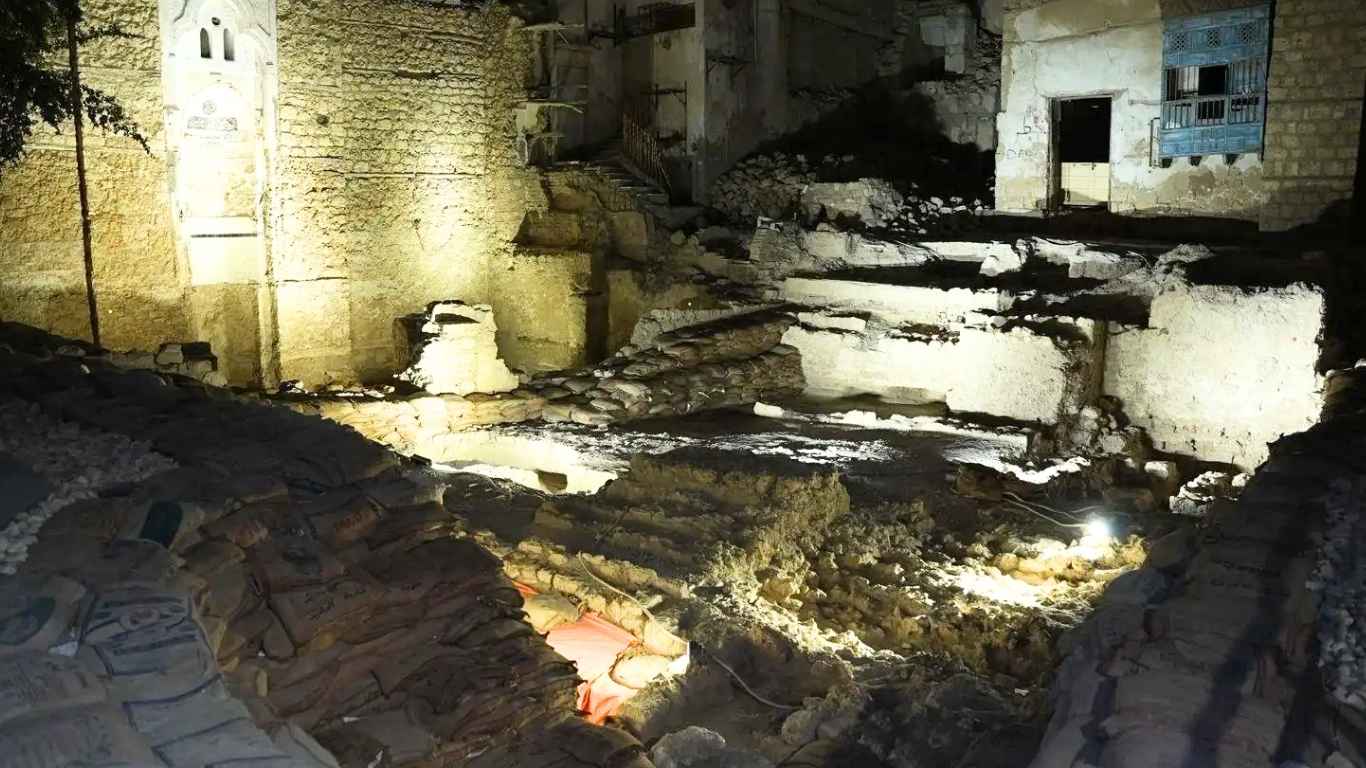



The story of one of the oldest mosques of the region is being retold, this time with a new archaeological perspective, in the heart of Jeddah. The Othman bin Affan Mosque which dates back as far as 654 CE has unveiled new dimensions of the past following recent excavations.
New Discoveries of 1,300-Year-Old Othman Bin Affan Mosque In Jeddah
According to the report by ummid, the site has been used throughout a period of more than 1,300 years. However, what is under the surface gives it even more weight to its legacy.
Layers Of History Under One Roof!
The archaeologists have discovered several periods of the mosque in terms of history, going back to the Umayyad, Abbasid, and Mamluk periods. The different layers represent various episodes in the history of the region.
This site has been struggling with development but it has never lost its aim. This was the place of worship during centuries, when empires came and went.
Among the most remarkable finds is a highly developed water system that is approximately 800 years old. It refers to an order of planning and engineering that enabled daily life as well as religion.
Trade Connections Made In Stone And Wood
The other notable discovery is in the mihrab of the mosque; there are some rare columns of ebony followed to ancient Sri Lanka which was formerly called Ceylon. This fact is not just a decoration but also marks the trade paths which used to link Jeddah with remote areas beyond the sea.
The presence of artefacts in the site reinforces that idea. The first examples of Chinese porcelain can indicate the existence of active communication with Asia, which supports Jeddah as the important maritime region.
This is in line with its establishment as one of the main Islamic ports by Caliph Othman bin Affan. The mosque was not simply a place of service to the locals but it was located at the intersection of movement, culture, and commerce.
Also Read:From Oman Spring Rose Festival To Saudi Call For Moon Sighting, 5 GCC Updates
Conserving The Past In A New Urban City
The architectural transformation of the mosque has been digitally recorded in seven phases, which have been captured by the researchers. Conventional construction materials such as coral stone and wood focus on the coastal construction methods that characterised the area.
The mosque still belongs to the cultural path of Jeddah today. Tourists will explore an area that contains over five hundred years of history and has a living use.
Cover Image Courtesy: WPA.Gov/Website
For more such snackable content, interesting discoveries and the latest updates on food, travel and experiences in your city, download the Curly Tales App. Download HERE. First Published: March 18, 2026 2:13 PM