

Long before “plant-based” became a global label, Thai kitchens were already building food with herbs, roots, ferments, and fire. What looks simple on a plate is often layered with trade history, regional identity, and technique that has been refined without being formalised. You don’t approach these dishes as substitutes; you approach them as complete ideas. So, if you’re a vegetarian heading to Thailand, here are 10 dishes you must try there.
10 Best Vegetarian Dishes To Try In Thailand
1. Pad See Ew With Tofu
If there is a Thai equivalent of comfort food, it is Pad See Ew. Wide rice noodles are tossed in a hot wok with garlic, Chinese broccoli, and dark soy sauce that stains everything a deep brown and almost caramel at the edges. Tofu steps in without trying to imitate anything; it simply absorbs. The real character comes from the high-heat cooking, that slightly charred, smoky note known as wok hei, which you cannot fake at home easily. The flavour sits in a restrained space; it is savoury first, then a quiet sweetness, making it one of the few dishes that doesn’t compete for attention but still holds it.
Also Read: 5 Vegetarian Protein Sources That Must Make It To Your Plate In 2026
2. Som Tam, Thai Papaya Salad
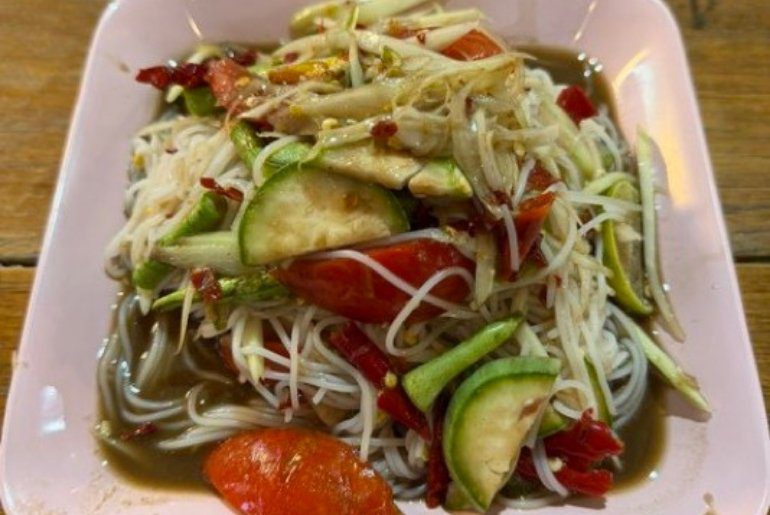
Som Tam hits sharp and immediate with lime, chilli and raw papaya crunch and then settles into something addictive. Traditionally from Thailand’s Isaan region, it’s made by pounding shredded green papaya with tomatoes, long beans, peanuts, palm sugar, and a dressing that, in vegetarian versions, swaps fish sauce for soy or salt without losing its edge. The mortar and pestle matter; they bruise the ingredients just enough to release flavour without turning them into mush.
3. Thai Massaman Curry
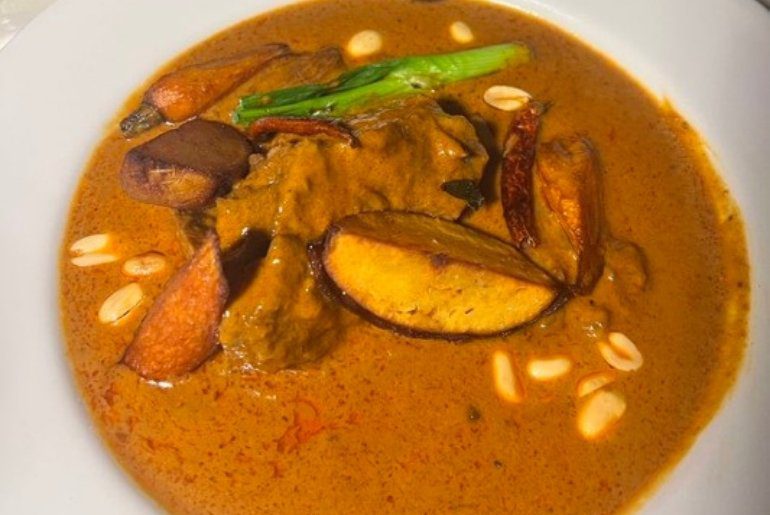
Massaman curry carries history in its aroma. You can trace it to Persian traders, Indian spices, and centuries-old exchange routes just by what’s in the pot. There’s cinnamon, cardamom, cloves, and nutmeg. Unlike sharper Thai curries, this one is warmer and slower. Coconut milk forms the base, thickened with potatoes, onions, peanuts, and tofu that soaks up everything around it. It’s often described as one of Thailand’s most globally accessible dishes, but that undersells it; it’s less about accessibility and more about adaptation done right.
Also Read: Thailand To Slash 60-Day Visa-Free Travel To 30 Days; Here’s What It Means For Indian Travellers
4. Green Curry
Green curry feels alive the moment it arrives! The colour alone is bright and almost electric; it comes from a paste built on fresh green chillies, lemongrass, galangal, kaffir lime leaves, and Thai basil. In a vegetarian version, tofu replaces meat, joined by bamboo shoots, eggplant, and pea eggplant which adds a slight bitterness. Coconut milk softens the heat but doesn’t erase it. What stands out is the fragrance; it is citrusy, herbal, and sharp, before the spice even registers. Served with jasmine rice, it is a very satisfying plate.
5. Pad Pak (Stir-Fried Vegetables)
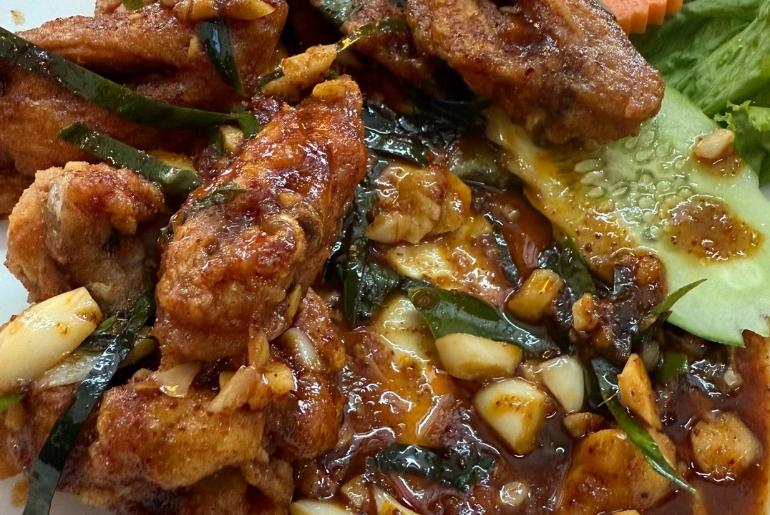
Pad Pak is what Thai food looks like on an ordinary day, which is exactly why it is significant. A mix of vegetables like broccoli, mushrooms, baby corn, carrots, and bok choy hit the wok with garlic and soy sauce, sometimes joined by tofu. It cooks fast, intentionally so, keeping everything crisp and bright. There’s no heavy spice blend and no attempt to complicate things. The flavour stays clean, lightly seasoned, letting the vegetables do most of the work.
6. Pad Thai Jay
Pad Thai Jay exists because food in Thailand often bends to belief systems without losing itself. Prepared during the Vegetarian Festival and beyond, this version removes fish sauce and eggs entirely, relying instead on tamarind paste, soy sauce, and palm sugar to build that familiar sweet-sour base. Rice noodles, tofu, bean sprouts, and crushed peanuts remain, so the structure of the dish doesn’t change, only its expression does. It tastes lighter, cleaner, but still unmistakably Pad Thai.
Also Read: What Is Thailand’s Songkran Festival? All About The Thai New Year, And Its Unique Traditions
7. Thai Bean Thread Glass Noodles
Glass noodles don’t look like much at first; they are translucent and almost invisible, but they carry flavour in a way heavier noodles don’t. Made from mung bean starch, they turn soft and slightly chewy when cooked, soaking up whatever they’re paired with. In vegetarian versions, tofu replaces meat, and the dish is built around lime juice, soy sauce, chillies, and fresh herbs. Often served as a salad, its flavour is somewhere between light and deeply satisfying.
8. Salapao, Thai Steamed Buns
Walk through a Thai market, and you’ll spot stacks of these white, cloud-like buns in steamers. Salapao comes from Chinese bao, but it has settled into Thai food culture completely. The dough is soft, slightly sweet, and gives way to fillings that, in vegetarian versions, range from mushrooms and tofu to sweet bean paste. They’re eaten hot, often as a quick snack rather than a full meal. There’s something distinctly comforting about them, not in a nostalgic way, but in how straightforward they are.
9. Mango Sticky Rice
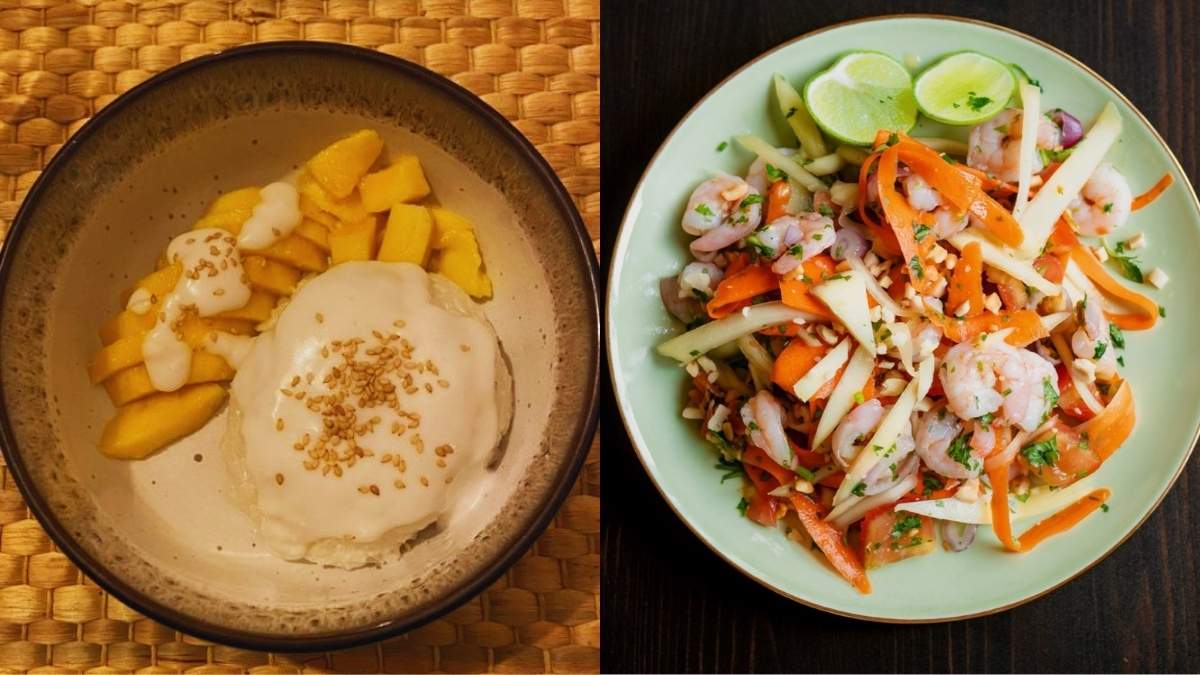
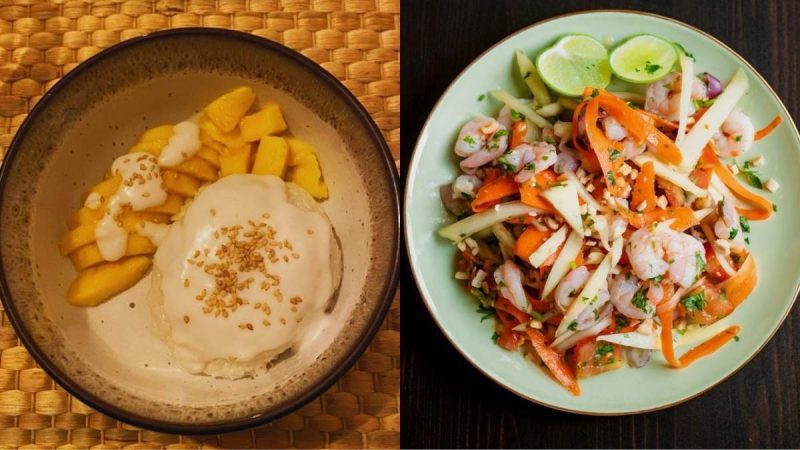
Mango sticky rice is a cult favourite because it doesn’t overthink itself. Glutinous rice is cooked, then soaked in sweetened coconut milk until it turns rich and almost creamy. Ripe mango slices sit alongside, sometimes barely needing a knife. A final drizzle of thick coconut cream, maybe a sprinkle of toasted mung beans or sesame seeds, and that’s it! The contrast does the work here as warm, dense rice mixes against the cool and juicy fruit. It shows up most during mango season, but its appeal isn’t seasonal, it’s immediate.
Also Read: Malaika Arora Talks Yoga, Duck Walk, Ghee Therapy & More On Sunday Brunch With Kamiya Jani
10. Thai Milk Tea
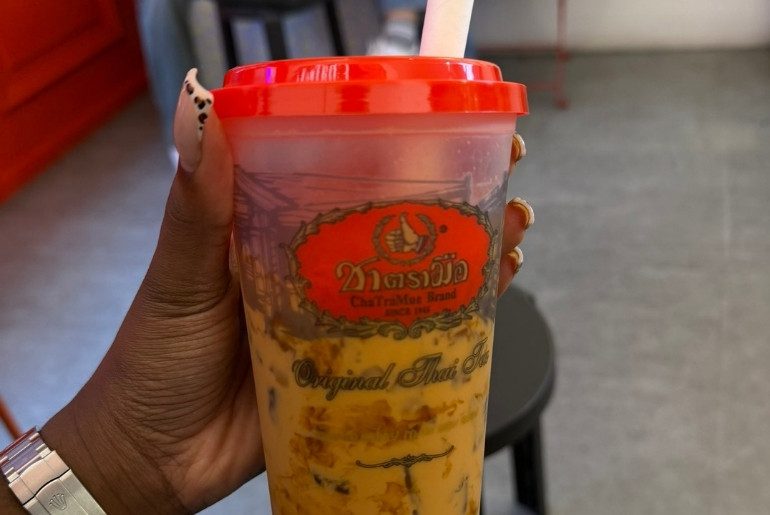
Thai milk tea is hard to miss; it is bright orange, poured over ice, usually in a plastic cup that sweats in the heat. It starts with strong black tea, then gets layered with condensed milk, sugar, and sometimes evaporated milk, creating a drink that is intensely sweet and creamy. The colour comes from added spices and colouring in the tea mix.
Also Read: Is Milk At Bed Time Actually Good For Your Kids? Dentist Reveals 5 Food Items To Never Give Kids
So, which of these are you craving the most now?
Cover Image Courtesy: mangostickygirl/X & atulpinheiro/X
For more such snackable content, interesting discoveries and the latest updates on food, travel and experiences in your city, download the Curly Tales App. Download HERE. First Published: March 31, 2026 11:08 PMFAQs
Is vegetarian food easily available in Thailand?
Yes, Thailand offers many vegetarian dishes, especially with tofu, vegetables, and plant-based sauces.
What are the best vegetarian dishes in Thailand?
Pad Thai Jay, green curry, massaman curry, som tam, and mango sticky rice are popular choices.
Can Thai food be made vegetarian?
Yes, most Thai dishes can be adapted by replacing fish sauce and meat with tofu or soy-based alternatives.
Is Thai food vegan-friendly?
Many dishes can be made vegan, but you should check for fish sauce or shrimp paste.