
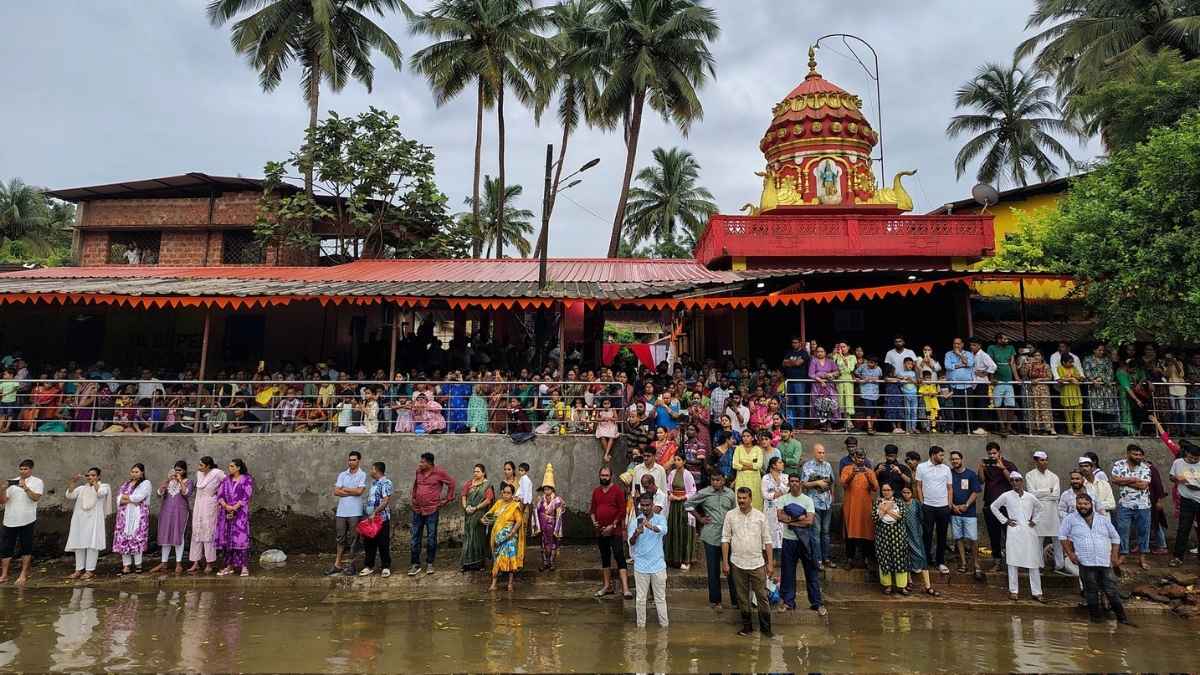



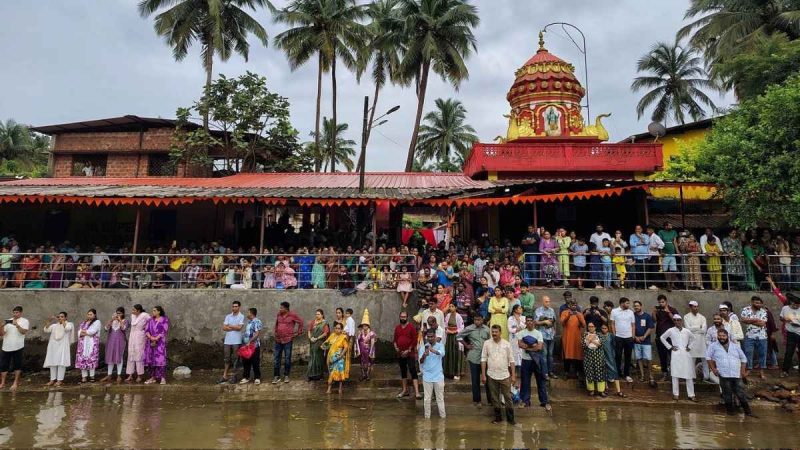
In Mumbai, Ganpati can mean towering idols, traffic jams, celebrity pandals and a soundtrack loud enough to make your neighbour’s neighbour know that Bappa has arrived. Goa has Ganpati too, but Chovoth, as Ganesh Chaturthi is commonly called in Konkani, has a very different personality. Here are seven traditions that explain why Goan Ganpati deserves its own category.
Goa Ganesh Chaturthi 2026: 7 Unique Chovoth Traditions You Should Know
1. The Matoli Is Basically A Forest Hanging Above Bappa
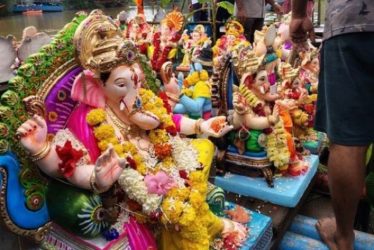
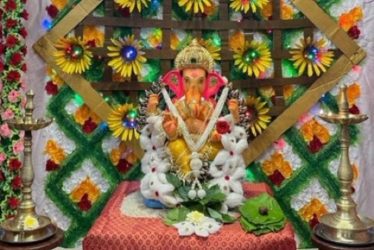
Forget plastic garlands for a second. The matoli is one of the most awe-striking features of Goan Chovoth: a wooden framework suspended above the Ganpati idol and decorated with whatever the local landscape has generously produced during the monsoon. Think fruits, vegetables, roots, tubers, seeds, flowers, herbs, leaves and other seasonal forest produce. Collecting matoli material can involve knowledge of local plants that has been passed down through generations. Families know what grows where, what is available in the monsoon and what can be used in the kitchen later. In other words, Bappa gets a decoration, while everyone else gets a crash course in Goa’s biodiversity.
2. The Next Day Is About New Rice Harvest
Goan Chovoth is closely tied to agriculture, which is why Navyachi Pancham, celebrated the day after Chaturthi, matters so much. Navya refers to the new crop, and the occasion marks the arrival of freshly harvested paddy from the fields. The new rice is brought home and worshipped, turning the festival into something much bigger. That connection is particularly revealing because it explains why so much of Chovoth feels rooted in the landscape. The same season that fills Goa with rain also brings agricultural produce into homes, and the festival incorporates that abundance into its rituals and food. So while Mumbai’s Ganpati is famously associated with its massive pandals and public celebrations, Goan Chovoth can literally involve bringing the year’s first rice home to Bappa.
3. The Aarti Comes With Ghumot
If your mental soundtrack for Ganpati is Sukhakarta Dukhaharta blasting from a loudspeaker, Goa has another sound you need to know: the ghumot. This traditional Goan percussion instrument plays an important role in Chovoth aartis, often alongside taal, the traditional cymbals, and other instruments. The combination gives the prayer a raw, rhythmic sound that feels far removed from a recorded devotional track playing on loop. The ghumot is traditionally an earthen percussion instrument, and its distinctive sound has become strongly associated with Goan cultural performance.
Also Read: 11 New Restaurants In Jaipur, Hyderabad, Chennai & Goa With Seriously Exciting Menus
4. Women Have Their Own Rituals
Goan Chovoth also carries traditions centred around women that can easily get lost if you only look at the idol and the immersion. On the festival day, Parvati and Shiva are worshipped by women, with fasting forming part of the observance in some traditions. The rituals are accompanied by instruments including ghumot and taal.
Then there is fugdi, the energetic Konkani folk dance traditionally performed by women in parts of Goa and the wider Konkan region, including during Ganesh Chaturthi. Women form groups, move rhythmically and sing, turning what might otherwise be a quiet domestic ritual into something far more communal.
5. Food Is A Whole Separate Ganpati Event
Goan Chovoth comes with its own menu, and modak is only the beginning. Traditional festive preparations include nevri, the crescent-shaped sweet pastry stuffed with coconut and sugar; khatkhate, a mixed vegetable preparation made with seasonal produce and tubers; and other dishes prepared specifically around the festival.
The food is significant because it follows the same blueprint as the matoli: eat what the season gives you. Seasonal vegetables, tubers, rice, coconut and local ingredients dominate the festive kitchen.
6. Not Every Goan Ganpati Is Made The Same Way
Historical accounts of Chovoth traditions in Goa document families that have worshipped Ganesha idols made from stone, wood or paper, while in some traditions Ganesha has been represented through patri, or leaves. One family in Margao has even maintained a dedicated place for its Ganpati idol in the ancestral house rather than immersing the newly installed idol every year; the previous year’s idol is immersed and the new one takes its place.
There are also unusual collective traditions. At Ranyache Juve, a small island hamlet near the Colvale River, members of the Rane Sardesai families have historically gathered for a five-day celebration in which the idol is prepared using 21 lumps of clay contributed by 21 families. At Pethechawada in Pernem, another collective Chovoth tradition involves an idol made from 12 lumps of clay.
So there really isn’t one single “Goan Ganpati.” There are family Ganpatis, ancestral Ganpatis, village Ganpatis and traditions with histories that can stretch back generations.
Also Read: Ganesh Chaturthi 2026: 5 Ganesha Pandals In Bengaluru For Aartis, Puja & Festive Vibes
7. In Cumbharjua, Bappa Can Leave On A Boat
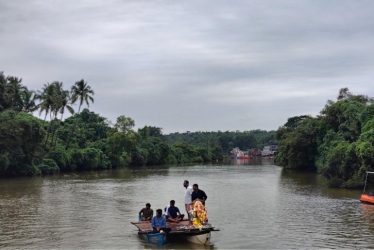
And finally, Goa decides to put Ganpati on water, but in a way that is very much its own. In Cumbharjua, the seventh day of Chaturthi is associated with the centuries-old Sangod Utsav. Decorated canoes and boats are joined together to create floating platforms, which carry tableaux through the Cumbharjua canal. The displays can depict mythological stories as well as contemporary social issues. The tradition grew out of the seventh-day immersion ritual and evolved into a major community spectacle. People gather around the canal and bridge to watch the decorated floating creations pass by.
So, while Mumbai makes Ganpati larger than life, Goa keeps him closer to home; and honestly, we love both celebrations!
Cover Image Courtesy: shefvaidya/X
FAQs
What is Chovoth in Goa?
Chovoth is the Konkani name commonly used for Ganesh Chaturthi in Goa. The festival combines Ganesha worship with distinctive Goan traditions, food, music and agricultural rituals.
What is the matoli tradition in Goan Chovoth?
A matoli is a wooden framework suspended above the Ganpati idol and decorated with seasonal fruits, vegetables, leaves, flowers, roots and other monsoon produce.
What is Navyachi Pancham in Goa?
Navyachi Pancham is observed the day after Chaturthi and is associated with the new rice harvest. Freshly harvested paddy is brought home and worshipped as part of the celebration.
What is Sangod Utsav in Goa?
Sangod Utsav is a traditional seventh-day Chovoth celebration in Cumbharjua. Decorated boats and canoes are joined to create floating platforms carrying colourful tableaux through the canal.


