
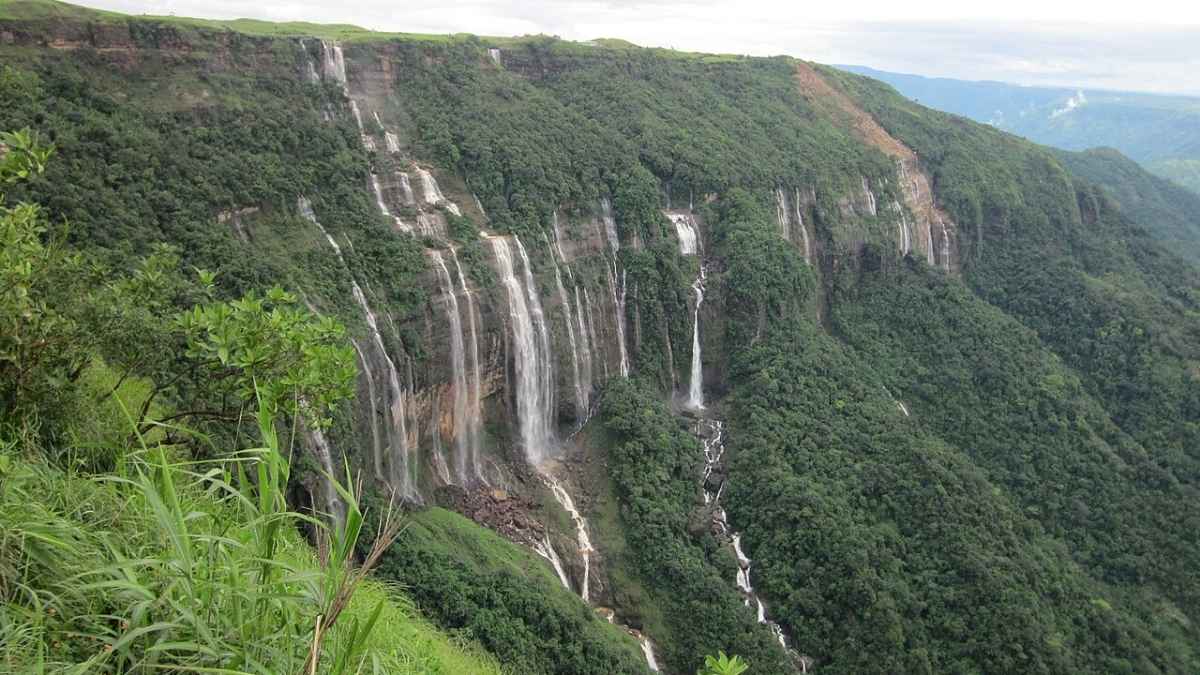



Known for being home to some of the rainiest places on Earth, Meghalaya is experiencing an unusually dry monsoon this year. According to the India Meteorological Department (IMD), the state has recorded a 57% rainfall deficit between June 4 and July 28, receiving just 272.9 mm of rainfall against the normal 632.1 mm. Read on to know more.
Meghalaya Records 57% Rainfall Deficit
The deficit places Meghalaya among the country’s most rain-deprived states this monsoon. The development is particularly striking as Sohra (Cherrapunji) and Mawsynram are both globally famous for their exceptionally high annual rainfall.
The rainfall gap is part of a wider monsoon imbalance across Northeast India. IMD data indicates that Assam and Arunachal Pradesh have each recorded a 40% deficit, while Manipur is down by 42% during the same period.
Also Read: Rajkummar Rao Spotted At A Cosy Shillong Cafe & Its Specialty Coffee Is Worth A Trip To Meghalaya
Meteorologists relate the weak rainfall to a shift in the monsoon system. A deep depression that moved inland from the Bay of Bengal has directed moisture towards Odisha, Chhattisgarh, Madhya Pradesh, Uttar Pradesh and parts of north India, leaving much of the Northeast outside the zone of expected heavy rainfall.
Why Is Meghalaya Receiving Low Rainfall?
Recent INSAT-3DS satellite images also indicate a thick cloud cover over central India and the Himalayan foothills, while cloud activity over Meghalaya has remained scattered and somewhat weak.
Daily observations from the IMD’s Meteorological Centre in Shillong demonstrate that most parts of the state have received only light to moderate rainfall in recent days. Even Sohra, which frequently witnesses intense downpours during the monsoon, has seen only average rainfall, while several western districts have stayed largely dry.
The ongoing dry spell could affect agriculture, groundwater recharge and drinking water supply if rainfall does not improve soon, as the state relies heavily on the southwest monsoon to replenish its rivers and water sources.
However, meteorologists expect the weather to improve gradually over the coming days. If the monsoon trough shifts eastward and fresh moisture reaches the Bay of Bengal, Meghalaya could see increased rainfall, helping reduce its unusually large seasonal deficit.
What are your thoughts about this?
Cover Image Courtesy: Wikimedia Commons
FAQs
Which is the highest rainfall in Meghalaya?
Mawsynram receives the highest rainfall in Meghalaya and is the wettest place in the world, with an average annual rainfall of 11,872 millimeters.
How much rain is it in Meghalaya?
Meghalaya is experiencing light to moderate rain with heavy downpours in isolated areas like the South West Khasi Hills and East Khasi Hills.
When to avoid Meghalaya trip?
You should avoid visiting Meghalaya from June to August.


