
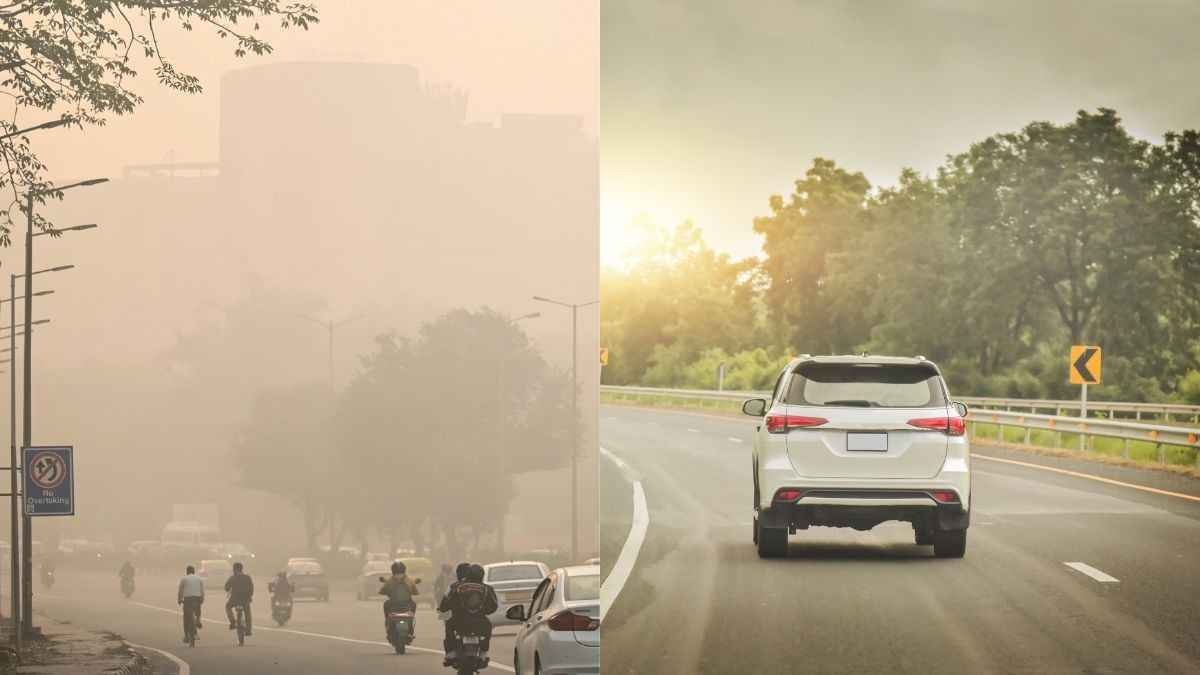



The air quality in Delhi is getting worse with each passing day. The AQI continues to remain in the ‘very poor’ category, accompanied by cold winds. Thick smog has clearly disrupted the daily lives of many Delhiites. To curb the worsening pollution, the government has enforced stricter rules. This includes banning the entry of non-BS-VI vehicles into the city. Here’s what the rule actually means and how you can check whether your vehicle is BS-VI compliant.
Non-BS-VI Vehicles Not Allowed To Enter Delhi
According to a report by India Today, Delhi recorded one of its worst air quality levels this season. On December 15, the AQI touched 498, falling under the ‘severe plus’ category. The rising AQI points to one clear issue. Pollution in the city is getting worse. The situation pushed the Commission for Air Quality Management (CAQM) to invoke GRAP-IV. This is the strictest set of anti-pollution restrictions enforced across the capital.
Under these rules, only BS-VI compliant vehicles from outside Delhi are now allowed to enter the city while GRAP-IV remains in force. The move, announced by Delhi Environment Minister Manjinder Singh Sirsa, aims to reduce vehicular emissions amid worsening air quality. According to a report by Business Standard, the state government last month also banned commercial goods vehicles that do not meet BS-VI emission norms. The CAQM has repeatedly flagged vehicular emissions as one of the main reasons behind Delhi’s air pollution.
Also Read: Delhi & Mumbai’s Rising AQI Equals Smoking 7 Cigarettes Daily; Here Are 5 Tips To Stay Safe
What Does The BS-VI Rule Mean?
Not everyone knows what BS vehicles actually mean, and here is a simple explanation. BS stands for Bharat Stage. These are India’s vehicle emission standards. They set limits on pollutants such as carbon monoxide, nitrogen oxides, hydrocarbons, and particulate matter. These standards aim to gradually phase out vehicles that emit high levels of pollutants. Here are the BS Vehicle categories:
- BS-I: It was applied to vehicles manufactured before 2005.
- BS-II: was in force between 2005 and 2010.
- BS-III: It was implemented across India from 2010 to 2017.
- BS-IV: It was in effect between 2017 and 2020, with stricter rules for diesel vehicles.
BS-VI: This rule has been in effect since April 2020. India skipped BS-V and moved directly to BS-VI to curb pollution. Vehicles under this category emit far lower levels of pollutants.
How To Check If Your Vehicle Is BS-VI Compliant:
Checking the BS category of your vehicle is simple. Vehicle owners can verify this using their registration details. The emission norm is often mentioned on the physical Registration Certificate under ‘Emission Norms’ or ‘Bharat Stage’.
You can also check it online through the VAHAN portal. Enter your vehicle registration number on the Ministry of Road Transport and Highways’ VAHAN website to view complete vehicle details, including the applicable BS emission norm.
According to Business Standard, the direct shift from BS-IV to BS-VI has led to a sharp reduction in emissions. BS-VI diesel vehicles emit at least 70% less nitrogen oxide. Petrol vehicles emit around 25% less.
Also Read: Pollution Getting To You? 5 Winter Destinations In India With Remarkably Low AQI
In conclusion, BS-VI compliant vehicles could play a key role in bringing Delhi’s pollution under control. With pollution levels continuing to rise, everyone is advised to take precautions and follow the rules.
Cover Image Courtesy: @theskindoctor13/ X and Canva Pro/ Mungkhoodstudio
For more such snackable content, interesting discoveries and the latest updates on food, travel and experiences in your city, download the Curly Tales App. Download HERE. First Published: December 17, 2025 2:15 PM