

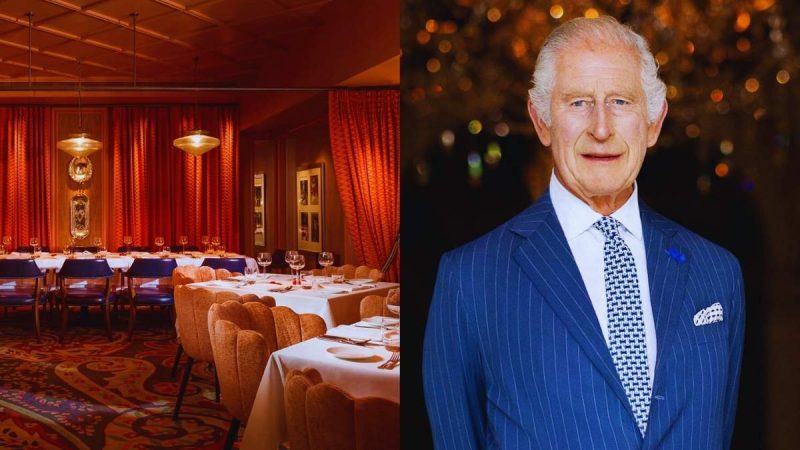
On a busy corner of Regent Street, tucked inside Victory House, a restaurant that has outlived empires, wars, and food trends is fighting for survival. Veeraswamy, founded in 1926, may be forced to leave the address it has occupied for nearly a century after its landlord, the Crown Estate, decided not to renew its lease. As the restaurant approaches its 100th year, supporters are turning to an unlikely last hope: King Charles III.
Why Is Veeraswamy Restaurant In The UK Under Threat?
Campaigners plan to take a petition to the gates of Buckingham Palace, asking the King to support what they describe as a “living piece of shared cultural history.” More than 18,000 people have already signed. Their argument is not sentimental nostalgia alone. Veeraswamy is widely seen as a cornerstone of Britain’s relationship with Indian cuisine, a place that helped define what “going for a curry” would come to mean in the UK.
The Crown Estate insists the decision has been carefully considered. Victory House, a Grade II-listed building, is due for a major refurbishment to bring it up to modern standards and into “full use.” Planning documents show the restaurant space would be converted into offices, with entrance changes that would make restaurant access impossible.
The Estate has offered help in finding alternative West End premises, along with financial compensation, but maintains that no proposal so far meets its obligation to manage public money responsibly.
For Veeraswamy’s supporters, relocation misses the point. This is a restaurant that kept serving food during the Blitz. Its walls have absorbed a century of conversations, celebrations, and quiet milestones.
Also Read: Odisha’s Strawberries Go Global; 51 Kg Fresh Strawberries Exported To London For The 1st Time
Save Veeraswamy Campaign Appeals To King Charles III
Co-owner Ranjit Mathrani speaks of guests who first visited as children in the 1950s, couples who got engaged there during wartime, and families who have returned for decades. Strip away the address, he argues, and you lose the continuity that gives the place its meaning.
The restaurant’s history reads like a social chronicle. Early customers included Anglo-Indians nostalgic for the food of the Raj, alongside civil servants and military officers. Over time, it became a West End fixture, hosting figures such as Mahatma Gandhi, Jawaharlal Nehru, Charlie Chaplin, Marlon Brando, and Sir Winston Churchill.
How Veeraswamy Helped Shape Britain’s Love Affair With Indian Food
In later years, Princess Anne, David Cameron, and Andrew Lloyd Webber joined the guest book. Veeraswamy’s chefs have even cooked at Buckingham Palace itself, catering for Indian state visitors in 2008 and 2017.
Culinarily, its influence is hard to overstate. Menus from the late 1940s show Madras chicken curry, vegetable salan, and rabbit curry, paired, somewhat improbably, with vintage champagne. By the 1950s came chicken korma, vindaloo, poppadums, and Britain’s first tandoor oven. The restaurant picked up a Michelin star in 2016, on its 90th anniversary.
High-profile chefs, including Raymond Blanc, Michel Roux, and Richard Corrigan, have publicly questioned why London would allow such a place to disappear. Corrigan put it bluntly: most great cities protect their culinary landmarks, so why shouldn’t London?
Also Read: Looking For A Cosy Cafe In Riyadh? London’s Apple Butter Just Landed In KAFD
Unless a settlement is reached, the dispute is heading to court later this summer. With another historic Indian institution, the India Club, already lost to redevelopment in 2023, the stakes feel higher than a single lease. As Veeraswamy nears its centenary, the question is no longer just whether the King can intervene, but whether Britain is willing to recognise this corner of Regent Street as more than real estate.
Cover Image Courtesy: veeraswamy/website and whitehouse/wikipedia
For more such snackable content, interesting discoveries and the latest updates on food, travel and experiences in your city, download the Curly Tales App. Download HERE.