

Some places don’t let you leave as the same person. India’s great forts belong to that category. They are not just scenic viewpoints or weekend destinations; they are where kingdoms were defended, rebellions were crushed, impossible victories were won, and the idea of freedom took shape long before Independence became a political reality. On August 15, these forts feel different. The crowds are larger, the flags are everywhere, and the stories seem closer to the surface. If you’re looking for a trip that goes beyond patriotic playlists and social media posts, start with these eight forts.
8 Historic Forts In India That Tell The Story Of Freedom And Resistance
1. Red Fort, Delhi
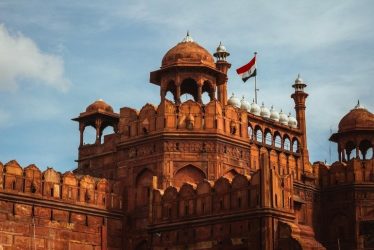
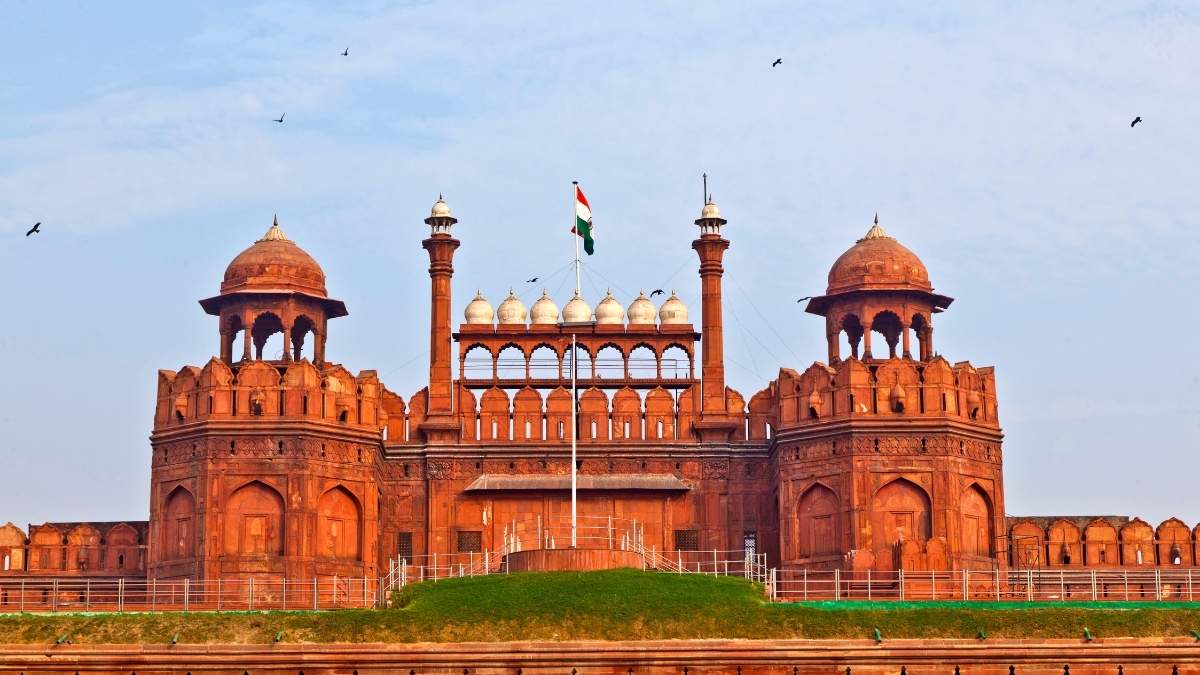
The Red Fort is the only fort in India where Independence Day is not a symbolic association; it is a living tradition. Every year, the Prime Minister addresses the nation from its ramparts, continuing a ritual that began on 15 August 1947 when Jawaharlal Nehru hoisted the tricolour here after India became independent. But the fort’s significance runs deeper than that moment. It was the residence of the Mughal emperors, the site where Bahadur Shah Zafar became the reluctant figurehead of the Revolt of 1857, and later a space transformed by British occupation.
Parts of the fort were demolished, repurposed, and militarised after the rebellion. Standing before the Lahori Gate on Independence Day, you are not looking at a monument frozen in time; you are looking at a place that has repeatedly witnessed the transfer of power in India.
Also Read: In Pics: Mumbai Airport Marks India’s 80th Independence Day With Stunning Tricolour Lighting
2. Chittorgarh Fort, Rajasthan
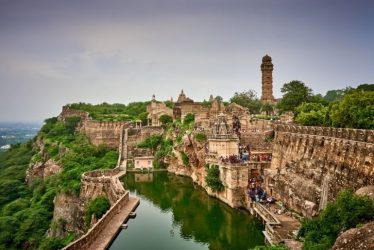
Chittorgarh refuses to be reduced to a postcard. It stretches across nearly 700 acres, and every corner seems to carry a story that has survived for centuries. The fort was besieged repeatedly, most famously by Alauddin Khalji in 1303 and later by Bahadur Shah of Gujarat. Its history is inseparable from the legends of Rani Padmini, Rana Kumbha, and Maharana Pratap, whose resistance became central to Rajput identity. The Vijay Stambh rises above the landscape like a declaration carved in stone, while the ruins of palaces and temples make the scale of the former kingdom impossible to ignore.
3. Raigad Fort, Maharashtra
The climb to Raigad has a way of changing the mood of the journey. By the time you reach the top, the noise of the plains has disappeared, and it becomes easier to understand why Shivaji Maharaj chose this as the capital of the Maratha Empire. It was here that he was crowned Chhatrapati in 1674, formally establishing a sovereign Maratha kingdom. The fort was not merely a military outpost; it was a functioning capital with administrative quarters, marketplaces, water systems, and royal residences. Shivaji’s samadhi still draws visitors who arrive not as tourists but as pilgrims.
Also Read: 15 Independence Day Menus Across India To Eat Your Way Through The Long Weekend
4. Sinhagad Fort, Maharashtra
Sinhagad is often remembered through one name: Tanaji Malusare. In 1670, he led a daring assault to recapture the fort from Mughal forces, climbing its steep cliffs under the cover of darkness. The battle was won, but Tanaji was killed, prompting Shivaji Maharaj’s famous lament that the fort had been gained at the cost of a lion. That story has become folklore, but the geography of Sinhagad makes it feel startlingly plausible. Unlike many forts where history is confined to plaques and museums, Sinhagad’s landscape itself explains the battle. Visit on August 15, and the idea of sacrifice stops feeling abstract.
5. Gwalior Fort, Madhya Pradesh
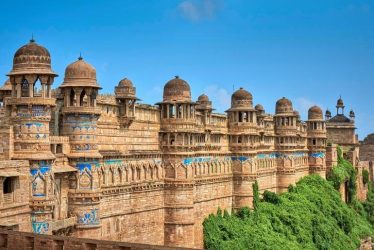
Gwalior Fort has been called the “Gibraltar of India” for good reason. Its sandstone plateau dominates the surrounding city, and rulers from the Tomars to the Mughals fought fiercely to control it. Yet for many Indians, its most powerful chapter belongs to 1858, when Rani Lakshmibai of Jhansi fought near Gwalior during the final phase of the Revolt of 1857. She died during the campaign, but her resistance turned her into one of the defining figures of the freedom struggle. The fort’s blue-tiled palaces, Jain rock-cut sculptures, and massive gates speak of a much older history, but Independence Day lends the place a different emotional register.
Also Read: Independence Day 2026: On Aug 15, Bengaluru To Host Freedom Habba At Vidhan Soudha With Tours & Art
6. Agra Fort, Uttar Pradesh
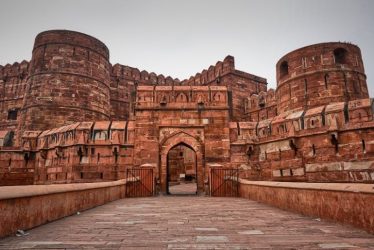
People arrive in Agra for the Taj Mahal and leave surprised by the fort. Built largely under Emperor Akbar in the 16th century, Agra Fort functioned as the political heart of the Mughal Empire. Shah Jahan was eventually imprisoned here by his son Aurangzeb, spending his final years looking across the Yamuna towards the Taj. After 1857, the British converted significant portions of the fort into military barracks, altering its character and embedding it within the history of colonial control. The Diwan-i-Am, Diwan-i-Khas, and Jahangiri Mahal reveal an empire at its peak, while the later modifications reveal an empire in decline.
7. Mehrangarh Fort, Jodhpur
Mehrangarh erupts from the rock above Jodhpur, its walls rising almost seamlessly from the cliff face. Founded by Rao Jodha in 1459, the fort became the nerve centre of the Rathore kingdom and survived repeated conflicts that left their marks on its gates. The museums are exceptional, but the most striking experience is standing on the ramparts and looking over the blue houses of the old city below. Independence Day celebrations here are often quieter than in Delhi, but that is part of the appeal.
Also Read: 500-YO Forts To Royal Palaces, 9 Heritage Properties To Book This Republic Day Long Weekend
8. Kangra Fort, Himachal Pradesh
Kangra Fort feels older than memory. Long before the Mughals arrived, long before the British established their foothold in the hills, this fort was already one of the most coveted strongholds in northern India. The Katoch rulers defended it for centuries, Mahmud of Ghazni plundered its wealth in the 11th century, Emperor Akbar sought control over it, and the British eventually occupied it after the Anglo-Sikh conflicts. Earthquakes damaged much of the structure, but that fragility only adds to its power. The fort sits against the Dhauladhar mountains with an almost unsettling sense of permanence. On Independence Day, Kangra offers a useful correction to the way history is often taught. India’s struggle for autonomy was not a single movement with a single timeline. It was a thousand different struggles, and this fort has watched many of them unfold.
Cover Image Courtesy: meinzahn/Canva Pro
FAQs
Which is the most important fort for Independence Day in India?
The Red Fort in Delhi is the most important Independence Day fort because the Prime Minister hoists the national flag and addresses the nation from its ramparts every year.
Which fort is associated with Shivaji Maharaj?
Raigad Fort in Maharashtra was the capital of the Maratha Empire and the site of Shivaji Maharaj’s coronation in 1674.
Is Chittorgarh Fort a UNESCO World Heritage Site?
Yes, Chittorgarh Fort is part of the UNESCO-listed Hill Forts of Rajasthan and is one of India’s largest and most historically significant forts.
Which fort is linked to Rani Lakshmibai?
Gwalior Fort is closely associated with Rani Lakshmibai’s final campaign during the Revolt of 1857.


