
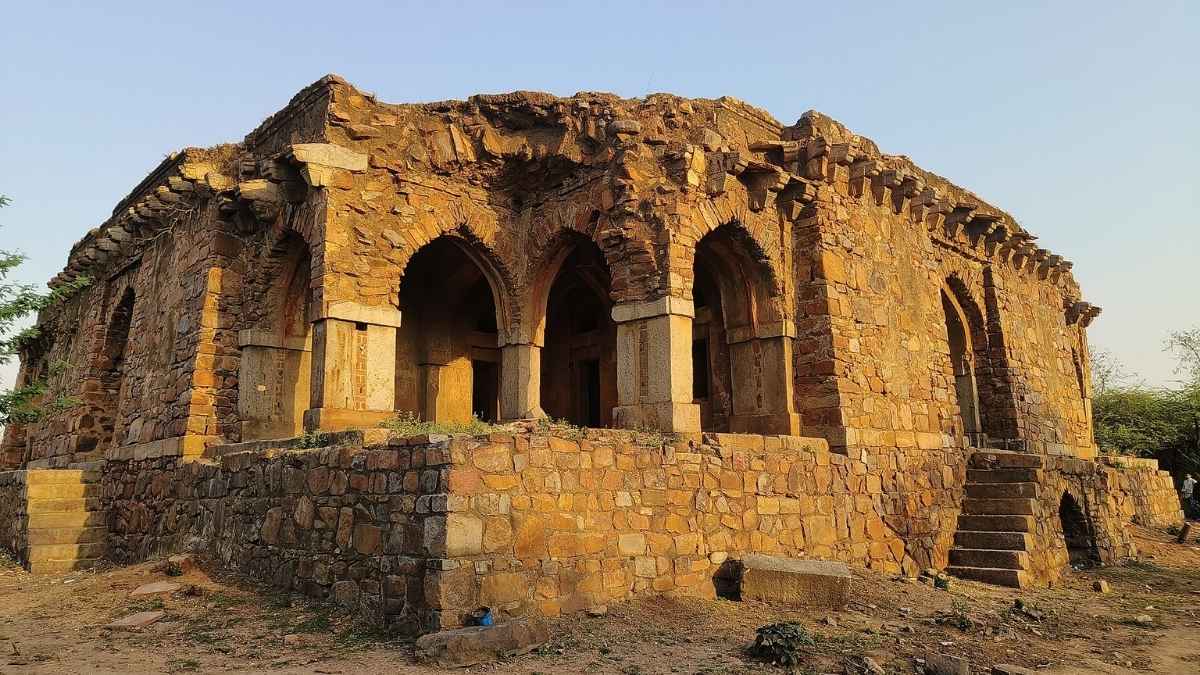



Recently, some of Delhi’s less-visited yet culturally important monuments, including Mirza Ghalib’s Haveli in Ballimaran, Bhuli Bhatiyari Ka Mahal near Karol Bagh, Malcha Mahal, and 75 other monuments, may soon get a new lease of life. The Delhi government has approved a new initiative that will allow private organisations to adopt these heritage sites. Want to know more? Scroll down!
Delhi Govt Lists 75 Monuments For Adoption
As per a report by NDTV, the Delhi government has declared a new initiative that will allow PSUs, NGOs, and educational institutions to adopt lesser-known heritage sites and contribute to their preservation. The list of monuments includes some of the city’s prominent monuments, like Mirza Ghalib’s Haveli, Malcha Mahal, the Dara Shikoh Library Building at Kashmere Gate and others.
The Delhi Cabinet just approved two new initiatives directed at enhancing the upkeep of the city’s heritage monuments. While one scheme permits eligible groups to adopt historic sites for five years and improve tourist facilities, the other provides funding of up to ₹2 crore for scientific protection and redevelopment work.
Launched under the ‘Hamare Smarak, Hamara Gaurav’ initiative, the scheme covers 75 monuments maintained by the Delhi government’s Department of Archaeology. The aim is to enhance maintenance, promote public involvement in heritage conservation, and make these sites more welcoming for visitors.
What Does ‘Adopting’ A Monument Mean?
As per the news portal, adopting a monument does not mean transferring its ownership. Instead, chosen organisations, known as Monument Mitras, will take care of visitor amenities such as cleanliness, security, lighting, landscaping, and light-and-sound services using their own resources for a period of five years. The landmarks will nevertheless continue to remain under the Delhi government’s inspection and regular monitoring.
Interested groups will have to submit an Expression of Interest (EOI) along with a visionary document outlining their suggested improvements. A tripartite Memorandum of Understanding (MoU) will then be agreed upon between the Delhi government, the land-owning agency, and the selected Monument Mitra. Any revenue obtained through approved activities must be put back into the monument’s maintenance and development.
The list includes both iconic and lesser-known landmark sites such as Mirza Ghalib’s Haveli, Malcha Mahal, Bhuli Bhatiyari Ka Mahal, Dara Shikoh Library Building, Mutiny Memorial, Turkman Gate, Jharna in Mehrauli, and Gol Gumbad near Lodhi Road. It also features several medieval tombs, baolis, mosques, gateways, gardens, and Kos Minars spread across the capital city.
Also Read: New 8-Lane Road To Connect Greater Noida To Ganga Expressway In 30 Mins? Here’s All You Need To Know
What are your thoughts about this?
Cover Image Courtesy: Wikimedia Commons
For more such snackable content, interesting discoveries and the latest updates on food, travel and experiences in your city, download the Curly Tales App. Download HERE.FAQs
How many monuments are there in Delhi with names?
Red Fort, Qutub Minar, Hauz Khas Fort, Humayun's Tomb, Rashtrapati Bhawan, Jantar Mantar, Akshardham Temple, Lotus Temple, Lodhi Gardens, Agrasen ki Baoli, Purana Quila, Tughlaqabad Fort, Mehrauli Archaeological Park, Jahanpanah Fort, Jama Masjid, Safdarjung Tomb and many more.
What is a famous monument?
A famous monument is a landmark, structure, or building of historical, cultural, or architectural significance constructed to preserve memory or celebrate an event.
What does adopting a monument means?
Adopting a monument does not mean transferring its ownership. Instead, chosen organisations, known as Monument Mitras, will take care of visitor amenities using their own resources for a period of five years.


