
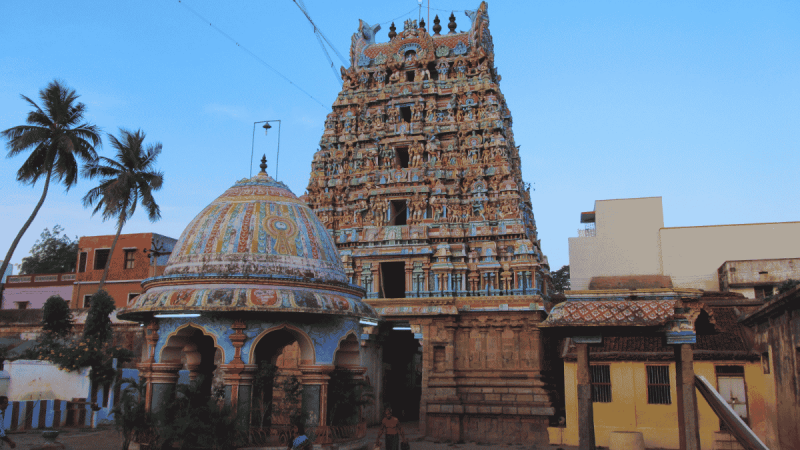
Kumbakonam does not need an elaborate introduction for anyone familiar with Tamil Nadu’s temple heritage. Often called the Temple Town of South India, this historic destination in Thanjavur district is dotted with ancient shrines, towering gopurams and sacred temple tanks. Here, mythology is woven into everyday life, and some of the finest examples of Chola and Nayak architecture stand just a short walk or drive from one another. From a temple where sunlight falls directly on a Shiva Lingam to another where Lord Murugan is believed to have taught his father the meaning of Om, Kumbakonam has plenty to keep curious travellers occupied. If you are planning a spiritual and cultural getaway, here are nine temples in Kumbakonam that deserve a place on your itinerary.
9 Famous Temples In Kumbakonam You Must Visit
1. Adi Kumbeswarar Temple

You cannot begin a temple trail in Kumbakonam anywhere other than Adi Kumbeswarar Temple. Dedicated to Lord Shiva and Goddess Mangalambigai, this is considered one of the oldest and largest Shiva temples in the town, with a magnificent 128-foot rajagopuram. Its origin is tied to the legend of a divine pot (Kumbha) containing the nectar of immortality and the seeds of creation, which floated across the waters during a great cosmic deluge.
Lord Shiva is believed to have broken the pot with an arrow, scattering its contents across the region before manifesting himself as a Lingam at this very spot. The temple’s Maha Lingam is traditionally believed to have been fashioned from the sacred material of the pot. Do not miss the Navaratri Mandapam, where all 27 nakshatras and 12 zodiac signs are carved into a single stone.
Also Read: These 8 Temples & Pagodas Of Bagan, Myanmar Warrant To Be On Every History Buffs Must-Visit List!
2. Sarangapani Temple
Sarangapani Temple is among the most important Vaishnavite pilgrimage sites in Tamil Nadu and one of the 108 Divya Desams glorified in the hymns of the Alvar saints. Dedicated to Lord Vishnu, worshipped here as Sarangapani or Aravamudhan, the temple is particularly famous for its unusual chariot-shaped sanctum, complete with sculpted stone wheels and horses.
The presiding deity is seen in an exceptional reclining posture known as Utthana Sayanam, appearing almost ready to rise. The temple is also associated with Sage Hema Rishi, who is believed to have performed penance here before Lord Vishnu appeared before him. Its enormous gopuram, elaborate mandapams and impressive sculptural work make it one of the most recognisable landmarks in Kumbakonam.
3. Nageswaran Temple

Nageswaran Temple is a fascinating stop for anyone interested in the intersection of architecture, astronomy and mythology. Also known as Nageswaraswamy Temple, this ancient Chola shrine is dedicated to Lord Shiva and is particularly celebrated for an extraordinary solar phenomenon.
During the Tamil month of Chithirai, people believe sunlight enters the sanctum and illuminates the Shiva Lingam for a few days, creating the impression that the Sun God himself is offering prayers. The temple’s architecture is equally striking, especially its stone-carved chariot-style mandapam and Nataraja shrine.
Traditional legends associate the temple with the serpent deities Adisesha, Daksha and Karkotaka, who are believed to have worshipped Lord Shiva here.
4. Chakrapani Temple
Kumbakonam’s Chakrapani Temple has an unusual distinction: its presiding deity, Lord Vishnu, is depicted with a third eye on his forehead, a feature more commonly associated with Lord Shiva. The deity is worshipped here as Chakrapani, representing the mighty Sudarshana Chakra.
According to temple legend, Surya, the Sun God, once challenged the Chakra to establish who possessed greater brilliance. The Chakra emerged victorious, and Lord Vishnu eventually restored the Sun God’s radiance. The temple’s eight-armed deity, elaborate carvings and distinctive Dravidian architecture make it a fascinating addition to a pilgrimage itinerary.
Goddess Vijayavalli Thayar is worshipped here alongside the presiding deity. It is also one of the five important Vishnu temples associated with Kumbakonam’s Mahamaham traditions.
5. Ramaswamy Temple

If you have ever wanted to see the Ramayana brought to life through temple art, Ramaswamy Temple is worth exploring. Built during the Nayak period under Raghunatha Nayak’s patronage in the 17th century, the temple is renowned for its beautifully sculpted pillars depicting episodes from the epic. The presiding deity, Lord Rama, is worshipped in his Pattabhisheka form, seated alongside Goddess Sita, with Lakshmana, Bharata, Shatrughna and Hanuman completing the divine ensemble.
Look closely at Hanuman’s depiction; unlike the familiar image of him holding a mace, he is shown holding a veena.
The mandapam’s intricate stone carvings include scenes from the Ramayana, making the temple particularly interesting for mythology and art enthusiasts.
Also Read: After Ramayana Film, Jatayu Earth Centre In Kerala Gets Spotlight; PM Modi To Visit Soon
6. Kasi Viswanathar Temple
Located close to the famous Mahamaham Tank, Kasi Viswanathar Temple is among Kumbakonam’s important Shiva shrines. Dedicated to Lord Kasi Viswanathar and Goddess Visalakshi, it holds a special place in local pilgrimage traditions because of its association with the holy city of Varanasi.
According to legend, nine sacred rivers, including the Ganga, came to Lord Shiva seeking relief from the sins washed into their waters by pilgrims. They were directed to bathe in the Mahamaham Tank and worship the deity at Kumbakonam.
This belief gives the temple a fascinating connection to the sacred geography of Kashi. Its location also makes it convenient to explore the Mahamaham Tank, which is surrounded by 16 mandapams and is central to one of Tamil Nadu’s most significant religious festivals.
7. Someswarar Temple
Someswarar Temple, also known as Kudanthai Karonam, is an ancient Shiva shrine located near Sarangapani Temple on Big Bazaar Street. Its presiding deity is Lord Someswarar, worshipped alongside Goddess Somasundari.
The temple’s history is associated with the Chola period, with later additions and renovations attributed to successive rulers. Its most interesting legend involves Chandra, the Moon God, who is believed to have worshipped Lord Shiva here to seek relief from a curse. This association gives the deity the name Someswarar, referring to the Lord of Soma or the Moon.
The temple is also one of the 12 Shiva shrines associated with Kumbakonam’s Mahamaham festival and is counted among the Paadal Petra Sthalams, temples praised in the devotional hymns of the Nayanmar saints.
8. Swaminatha Swamy Temple, Swamimalai
A short drive from Kumbakonam takes you to Swamimalai, home to one of the six sacred abodes of Lord Murugan, known as the Arupadaiveedu. Swaminatha Swamy Temple is built on an artificial hillock, and devotees climb 60 steps to reach the main shrine, with each step representing one year of the traditional 60-year Tamil calendar cycle.
The temple’s central legend is particularly fascinating; Lord Murugan is believed to have explained the meaning of the sacred Pranava Mantra, Om, to his father, Lord Shiva, effectively becoming his own father’s guru.
The story is why the deity is worshipped here as Swaminatha, the teacher of Shiva. The temple’s hilltop setting, colourful gopurams and deep association with Murugan worship make it a must-visit when exploring the region around Kumbakonam.
9. Airavatesvara Temple, Darasuram

A visit to Kumbakonam would be incomplete without making a detour to Airavatesvara Temple in Darasuram, one of the three monuments that form the UNESCO-listed Great Living Chola Temples.
Built by Chola ruler Rajaraja II in the 12th century, this architectural masterpiece is dedicated to Lord Shiva and is celebrated for its elaborate stone carvings. Its front mandapam is designed like a chariot, with carved wheels and horses, while miniature sculptural panels depict episodes from the lives of the 63 Nayanmar saints.
The temple is also associated with Airavata, the white elephant of Lord Indra, who is believed to have worshipped Shiva here to be freed from a curse. Its 24-metre vimana and exceptionally detailed stonework offer a glimpse into the artistic brilliance of the later Chola period. Set aside time to examine the sculptures closely; this is not a monument to rush through.
Also Read: 5 Grand Temples To Visit Across South India Made By The Chola Dynasty
A Little Travel Tip: October to March is generally a comfortable time to explore Kumbakonam. Most temples in the central town can be covered together, while Swamimalai and Darasuram make for convenient short excursions. Temple timings can vary, so check the latest darshan schedules before setting out. Remember that some shrines have restrictions on photography.
Cover Image Courtesy: sarangapanitemple/Website
FAQs
Why is Kumbakonam famous for its temples?
Kumbakonam is famous for its ancient temples, Dravidian architecture and religious traditions. The town has several important Shiva and Vishnu shrines and is closely associated with the Mahamaham festival.
Which are the most famous temples in Kumbakonam?
Some popular temples include Adi Kumbeswarar Temple, Sarangapani Temple, Nageswaran Temple, Chakrapani Temple, Ramaswamy Temple, Kasi Viswanathar Temple and Someswarar Temple.
Which is the famous Murugan temple near Kumbakonam?
Swaminatha Swamy Temple in Swamimalai is one of the six sacred abodes of Lord Murugan. It is associated with the legend of Murugan explaining the meaning of Om to Lord Shiva.


