
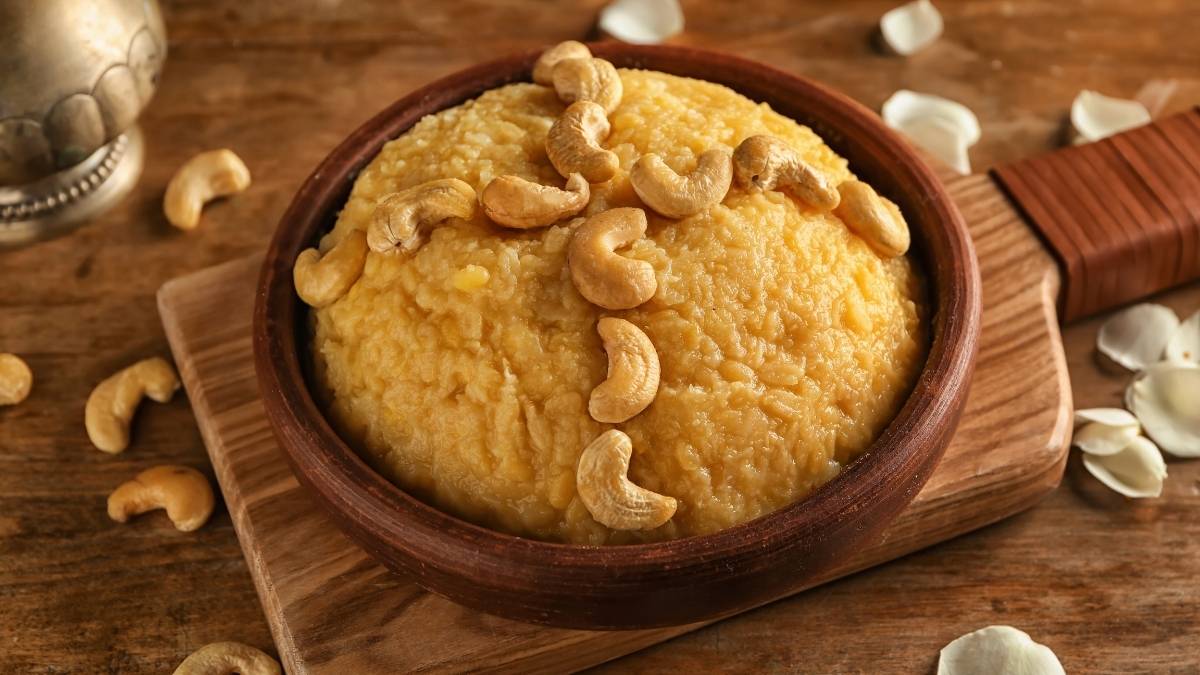



Pongal is not just something you eat, it is a meal that takes over your day, in the best way possible. The word itself means “to boil over”, and that action is the heart of both the festival and the dish. In South India, especially Tamil Nadu, Pongal refers to the harvest celebration, but it also names the food cooked on that very morning. Learn how to make it in simple steps at home with this authentic Pongal recipe.
A Dish Born From The Harvest: Pongal
Remember that moment when milk, rice, and lentils rise and spill over the pot as families shout, “Pongalo Pongal?” It’s a moment that symbolises abundance, relief after months of farm work, and gratitude for a good yield.
As a dish, Pongal is rooted in what the land gives immediately after harvest. Freshly collected rice, split yellow moong dal, jaggery, milk, and ghee come together to form something unpretentious yet deeply satisfying.
There are two widely known versions:
- Sakkarai Pongal, the sweet one, is cooked slowly with jaggery and ghee and offered to the Sun God.
- Ven Pongal, seasoned with black pepper, cumin, and cashews, is more familiar as a breakfast staple across South Indian homes and temples. The ingredients change slightly, but the soul remains the same.
What makes Pongal special is that it is not about restraint or rush. It is meant to be soft, almost collapsing into itself, rich with ghee, and gently sweet rather than sugary. Traditionally cooked outdoors in clay pots, the dish is watched closely, not stirred constantly, but respected. The boiling over is not corrected; it is welcomed. That overflow is the point.
Also Read: Where To Celebrate Pongal In Tamil Nadu? 10 Places That Should Be On Your List
Sakkarai Pongal: How To Make Festival Classic At Home
Pongal also carries an agricultural meaning that goes beyond symbolism. This is one of the rare festival foods tied directly to newly harvested grain. It is a reminder that food is seasonal, earned, and shared. Families cook together, neighbours exchange portions, and the dish becomes a quiet acknowledgement of farmers, cattle, sunlight, and rain, all equally responsible for what ends up on the plate.
Below is a traditional method for making Sakkarai Pongal, the version most closely associated with the festival.
Ingredients
- 1 cup raw rice
- ¼ cup split yellow moong dal
- ¾ cup jaggery (powdered or grated)
- 3 cups water
- 2 tablespoons ghee
- 10-12 cashew nuts
- 1 tablespoon raisins
- ¼ teaspoon cardamom powder
- A small pinch of edible camphor (optional)
Method
- Dry roast the moong dal until it releases a nutty aroma.
- Wash the rice and dal together and pressure cook with water until they turn very soft.
- Melt jaggery with a little water, strain, and return it to the pan.
- Add the cooked rice-dal mixture and simmer, stirring occasionally.
- Mix with it cardamom powder and optional camphor.
- Heat ghee separately, fry cashews and raisins, and fold them in.
- Serve it while still hot, slightly loose, and rich with ghee.
Also Read: 8 Types Of Pongal Varieties To Try This Harvest Festival
Pongal isn’t designed to impress. It’s designed to mean something. And that’s exactly why it is as festive as it is functional.
Cover Image Courtesy: pixelshot/CanvaPro
For more such snackable content, interesting discoveries and the latest updates on food, travel and experiences in your city, download the Curly Tales App. Download HERE. First Published: January 21, 2026 6:16 PM