

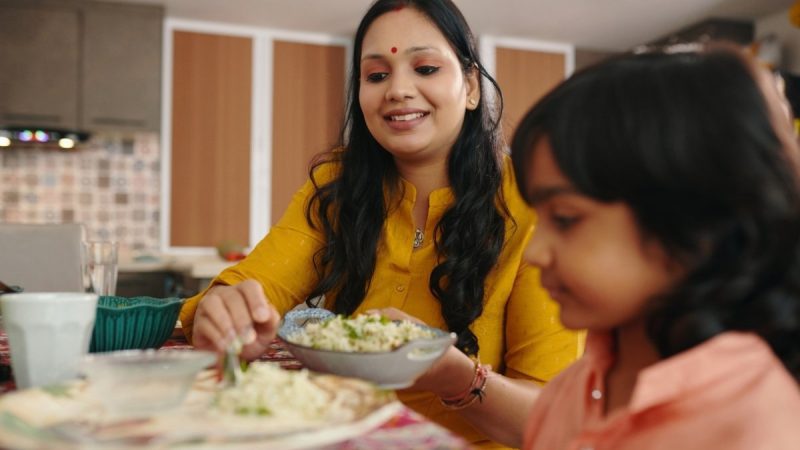
There is a very specific kind of madness that exists in Indian kitchens at 8 AM in the morning. As kids, most of us barely noticed it. It is only later, usually when you move out, burn your third roti, or realise that groceries cost actual money, that the kitchen starts looking less like a room and more like a survival training centre run by mothers. Because hidden inside everyday cooking were lessons nobody formally sat us down to teach, let’s decode them on Mother’s Day 2026.
Mother’s Day 2026: 8 Life Lessons Every Indian Mom Taught Us
1. Patience Was Never A Lecture, It Was Delivered Via Rajma

Nobody learns patience from motivational quotes. You learn it when your mother refuses to cook rajma without soaking it overnight, no matter how much you beg.
There were no shortcuts in her kitchen for certain things. Pickles needed days in sunlight, cake batter could not be opened midway “just to check”, and hot rotis required waiting unless you wanted burnt fingers and a scolding.
As children, this felt annoying. As adults raised on instant delivery apps and 30-second reels, it suddenly feels revolutionary.
Also Read: Mother’s Day 2026: 15 Special Menus & Experiences In India To Celebrate Your Beloved Mom
2. “There’s Nothing At Home” Was Always A Lie
One of the greatest scams Indian mothers have ever pulled off is claiming there is “nothing in the fridge” and then producing an entire meal 20 minutes later.
Leftover rice became lemon rice, and extra rotis transformed into masala chips. There is actual genius in this kind of resourcefulness.
A lot of Indian households, especially middle-class ones, were built on careful budgeting and stretching ingredients intelligently. Waste was almost offensive. Not because sustainability was trendy, but because throwing away usable food simply made no sense.
Today, people call it “mindful consumption.” Moms just called it Tuesday.
Also Read: Mother;s Day 2026: 15 Thoughtful Gifts Ideas That Go Beyond Flowers Chocolates For Your Mom
3. Love Often Looked Like Cut Fruit In A Steel Bowl
Nobody really prepares you for the realisation that your mother probably expressed affection through labour more than words.
It looked like peeling oranges during exam season because “your hands will get sticky.” It sounded like asking whether you ate lunch even during arguments. It was waking up early before school trips to make fresh sandwiches instead of giving packaged snacks.
And strangely, food memories stay glued to emotions! People forget conversations all the time, but they remember the exact dal their mother made when they were sick.
4. Consistency Is Harder
Social media loves celebrating ambition, but nobody talks enough about repetition.
Cooking three meals every single day for years is repetition. Packing lunchboxes at 6 a.m. is repetition and cleaning the same kitchen you cleaned yesterday is a frustrating kind of repetition.
There are no awards for it either.
Most mothers did not have the luxury of saying, “I’m not feeling productive today.”
Watching that kind of consistency up close changes your understanding of discipline completely. It stops looking glamorous and starts looking reliable.
Also Read: Women’s Day 2026: 16 Women’s Day Gifts Featuring Cookies, Spirits & Makeup To Spoil Her
5. Indian Mothers Invented Sustainability
Long before people started carrying metal straws like personality accessories, Indian mothers were washing and reusing plastic ice cream containers to store everything except ice cream literally.
Every household had that one giant biscuit tin filled with sewing supplies instead of biscuits. Nothing truly left the ecosystem of the kitchen without being repurposed first.
And yes, some of it came from practicality rather than environmental activism. But the result was the same; less waste, more mindfulness and maximum utility.
6. Multitasking In Indian Kitchens Deserves Corporate Salaries
There should genuinely be case studies written about Indian mothers during peak kitchen hours.
Imagine simultaneously:
- remembering who likes less salt,
- packing school tiffins,
- mentally tracking grocery shortages,
- answering relatives on speakerphone,
- checking if the milk is boiling over,
- and yelling “switch off the fan!” from another room.
The mental load is insane.
And because this labour happens inside homes, people underestimate how skilled it actually is. Timing alone in Indian cooking is an art form, and one delayed tadka, and the entire sequence collapses.
You do not realise the complexity of domestic management until you try doing everything yourself without calling your mother every 12 minutes.
7. The Kitchen Changed How We Understand Work
As children, it is easy to treat household work like background noise; it just exists.
Then adulthood arrives with dishes!
Suddenly, you understand why your mother got irritated when people left plates everywhere, and suddenly, chopping onions daily feels less “simple” and more psychologically exhausting.
Domestic labour has historically been treated as invisible because it is unpaid. Yet it demands physical stamina, emotional regulation, planning, budgeting, and endless repetition.
Many mothers carried all of that while also handling jobs, caregiving responsibilities, and family crises, and sadly, this becomes apparent to most of us only on special events like Mother’s Day 2026. Real struggle deserves to be appreciated every day.
Also Read: Met Gala 2026: How Everyday Indian Kitchen Items Like Dabbas Became Ananya Birla’s Moment
8. Resilience Is Often Quaint
The strongest thing many mothers ever did was continue functioning normally while carrying things nobody else fully saw.
Some cooked dinner while silently worrying about finances. Some managed households through grief, while some navigated unhappy marriages, health problems, exhaustion, or loneliness without ever letting the household collapse around them.
And because society romanticises mothers constantly, people forget how brutal that emotional burden can be.
This Mother’s Day 2026, maybe the point is not just celebrating recipes; it is acknowledging the women who held entire households together so quietly that most of us only noticed the magnitude of it after growing up.
Cover Image Courtesy: dragonimages/Canva Pro
For more such snackable content, interesting discoveries and the latest updates on food, travel and experiences in your city, download the Curly Tales App. Download HERE.FAQs
What life lessons do Indian mothers teach through cooking?
Indian mothers often teach patience, discipline, budgeting, consistency, resilience and care through everyday kitchen routines.
Why are Indian kitchen memories so emotional?
Because food in Indian households is deeply connected to affection, comfort, routine and family identity.
How did Indian mothers practise sustainability before it became trendy?
Indian moms reused containers, minimised food waste and repurposed leftovers long before sustainability became a social media trend.
Why is this Mother’s Day article relatable to Indian families?
Because it reflects everyday realities of Indian households that many people only fully understand after growing up.