

Some festive sweets need an entire box, a decorative silver leaf and a fancy name to impress you. Pori urundai needs none of that. It is essentially puffed rice held together by jaggery syrup, shaped into little balls and enjoyed with the kind of enthusiasm usually reserved for much fancier desserts. And yet, this humble Tamil sweet has survived generations of changing food trends.
What Is Pori Urundai? All About Tamil Nadu’s Traditional Sweet
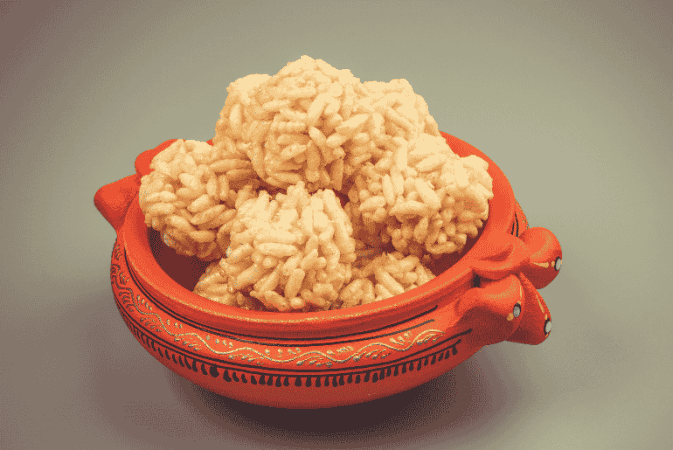
Every year, as Karthigai Deepam approaches, kitchens across Tamil Nadu get busy preparing this crunchy treat. The smell of melting jaggery fills the air, puffed rice waits in large mixing bowls, and someone in the family is usually entrusted with the very important job of shaping the mixture before it hardens.
There is a reason pori urundai is more than just another festive mithai. It is oh-so-sweetly connected to Tamil food traditions, religious offerings and the simple pleasure of making something delicious at home. So, if you have never encountered this little ball of sweetness, here is everything you should know.
Pori urundai is a traditional Tamil sweet made by combining puffed rice with jaggery syrup. The mixture is shaped into round balls and allowed to cool until firm. The name is quite literal. ‘Pori’ means puffed grain in Tamil, while ‘urundai’ translates to ball.
The ingredient list is short and sweet. Puffed rice and jaggery form the foundation of the recipe. Water is used to prepare the syrup, while cardamom and dry ginger powder are sometimes added for flavour. Some families also include roasted sesame seeds, coconut pieces or fried gram.
The interesting part is the contrast in textures. Puffed rice is incredibly light and airy, but the jaggery gives it a firm, crunchy coating. Every bite has a little sweetness followed by that unmistakable crackle.
It is also called Karthigai pori because of its association with Karthigai Deepam. While it is enjoyed as a snack, its traditional significance comes from its role as a festive food offering.
Also Read: What Is Gatpat Chaat? Exploring The Street Food That Has Put Jabalpur On The Food Map
Why Is Pori Urundai Prepared During Karthigai Deepam?
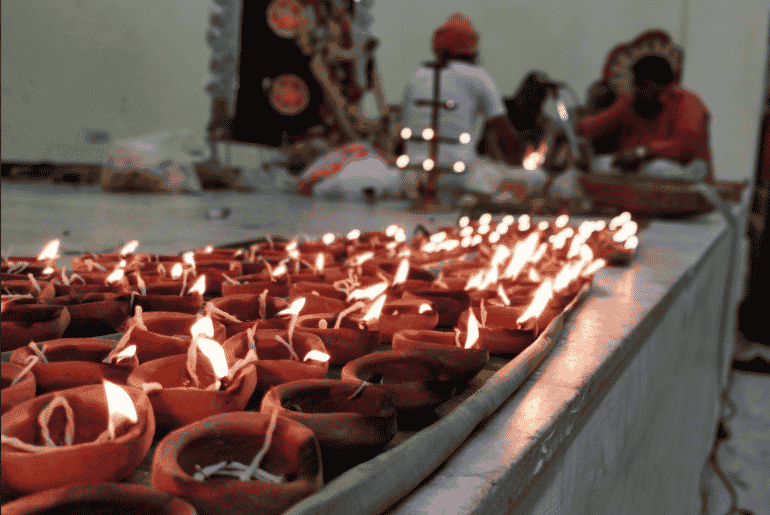
Karthigai Deepam is one of Tamil Nadu’s most significant festivals. Celebrated during the Tamil month of Karthigai, which generally falls in November or December, the festival revolves around the symbolism of light.
On this day, homes are decorated with kolams and illuminated with rows of small earthen oil lamps called agal vilakku.
Balconies, entrances and courtyards glow with little flames, creating an atmosphere that is quite different from an ordinary evening.
The festival is closely associated with Lord Shiva and the legend of the endless pillar of fire.
According to Hindu mythology, Lord Vishnu and Lord Brahma once argued over who was supreme. Shiva appeared before them as an immeasurable column of fire. Neither could discover its beginning or end, symbolising the infinite nature of the divine.
Karthigai Deepam also has associations with Lord Murugan and the six Krittika stars, which are connected to his birth and origin.
Naturally, food has its own place in these celebrations. Pori urundai is prepared as naivedyam, meaning an offering made to the deity. After the prayers, it is distributed among family members as prasadam.
Three Kinds Of Pori, Three Slightly Different Textures
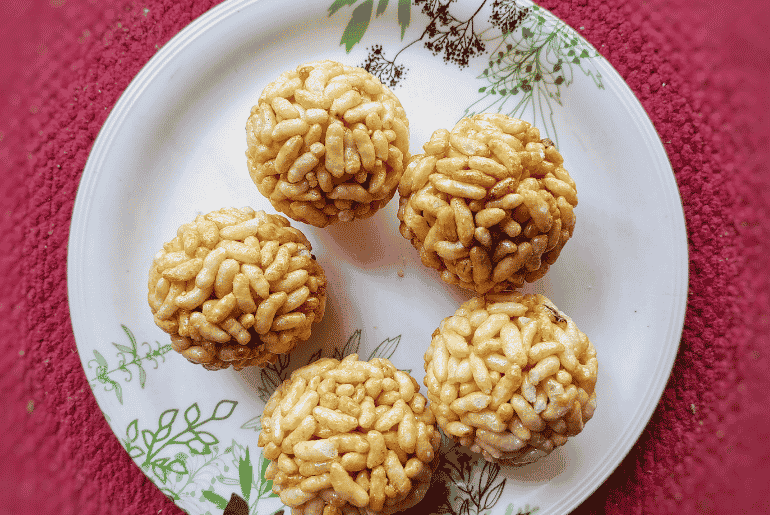
One detail that makes this sweet particularly interesting is that the word pori does not always refer to the same ingredient. Depending on the family recipe and regional availability, three varieties of puffed grains can be used.
Nel pori is made from puffed paddy. It is traditionally associated with Karthigai Deepam and is often considered the classic choice for the festival.
Arisi pori uses puffed rice, the light and airy grains commonly found in Indian snack mixtures. This is also a popular option for making pori urundai at home.
Aval pori is prepared using puffed flattened rice. Aval means flattened rice in Tamil, and this version has its own distinctive texture.
Also Read: Forget Fancy Cafés, Kasauli’s Narinder Sweets Does Bun Samosa And Gulab Jamun Right
The Jaggery Does All The Work Here!
The recipe has very few ingredients, but getting the jaggery syrup right requires a little attention.
The puffed rice is first cleaned and kept aside. Jaggery is dissolved in water, strained to remove impurities and heated again until it reaches the hard-ball stage. This is a traditional cooking term that refers to the consistency of the syrup.
How do you know when it is ready? Drop a little syrup into a bowl of cold water. If it gathers into a firm ball when rolled between your fingers, you have reached the right consistency.
Cardamom and dry ginger powder can be added for flavour. Some recipes also include small pieces of coconut roasted in ghee and roasted gram. The hot syrup is then mixed with the puffed rice before everything is shaped into balls.
There is a small window of opportunity here. The mixture needs to be warm enough to handle but not so hot that it becomes difficult to shape. Greasing your palms with ghee helps prevent the jaggery from sticking.
What Else Makes It To The Karthigai Deepam Menu?

Pori urundai has plenty of company during the festival. Tamil households prepare several other traditional dishes as offerings, although the exact menu varies from family to family.
Nei appam is among the popular choices. These little golden fritters are made using ingredients such as rice flour, jaggery and banana, and cooked in ghee. They have a soft centre and a beautifully fragrant exterior.
Adhirasam is another traditional Tamil sweet. Made using rice flour and jaggery, it is shaped into discs and deep-fried. Unlike the airy crunch of pori urundai, adhirasam has a dense, chewy texture.
Then there is maa vilakku, an edible lamp prepared using rice flour and jaggery. A small hollow is made in the mixture to hold a cotton wick, which is lit as part of the religious offering.
Also Read: Boost Parotta, Anyone? Roja Biriyani Place In Tamil Nadu Has Flaky Parotta With Cold Milk & Boost
So, when the festival arrives, and homes across Tamil Nadu begin glowing with rows of little lamps, look out for these golden, crunchy sweets too. Because sometimes, the most memorable festive treats are not the ones with the fanciest ingredients. They are the ones that have been sitting on family prayer plates for generations.
Cover Image Courtesy: muralinath/Canva Pro
FAQs
What is Pori Urundai made of?
Pori Urundai is made using puffed rice and jaggery syrup. Cardamom, dry ginger powder, sesame seeds, roasted gram and coconut pieces may also be added depending on the family recipe.
Why is Pori Urundai made during Karthigai Deepam?
Pori Urundai is traditionally prepared as a naivedyam offering during Karthigai Deepam. After prayers, it is distributed among family members as prasadam.
What are the different types of Pori used to make Pori Urundai?
The three commonly used varieties are Nel Pori, made from puffed paddy; Arisi Pori, made from puffed rice; and Aval Pori, made from puffed flattened rice.


