

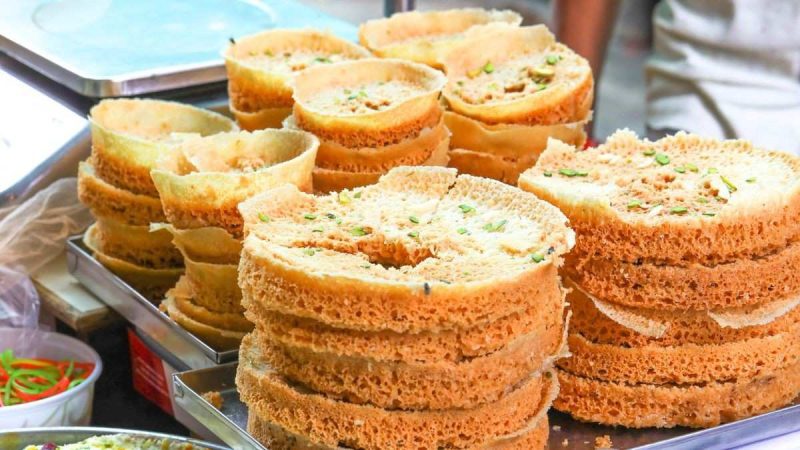
Monsoons are here, which means endless cups of coffee, chai, pakoras, and other snacks. But during this season, Ghevar, an Indian sweet, is also widely enjoyed. From sweet shops to our tables during festivals like Raksha Bandhan and Teej, this syrup-soaked dessert starts appearing everywhere. Unlike ladoos, barfis, and other sweets, have you ever wondered why Ghevar is specifically made and enjoyed during the monsoon? Here’s the answer!
Why Is Ghevar Made Only During The Monsoon?
When it starts raining in India, Ghevar, a honeycomb-like dessert soaked in sugar syrup and topped with mawa or malai, is seen everywhere. But when the monsoon ends, this sweet slowly disappears from most sweet shops. For many people in North India, Ghevar is not just a dessert but a monsoon ritual. And yes, there are a few reasons why it is traditionally made and enjoyed during this season.
One of the reasons comes from Ayurveda. According to The Times of India, the rainy season is believed to increase Vata and Pitta in the body, which can lead to bloating, internal dryness, and acidity. Ingredients like ghee and sugar syrup are believed to help balance these and keep the gut happy. So yes, a little helping of Ghevar during the monsoon might not be bad for your diet at all!
Also Read: Exclusive: Tina Ahuja Reveals Govinda’s Sweet Ritual To Make Up For Missing Time Together
Weather Also Plays An Important Role
Now, let’s talk about another reason why Ghevar is prepared during the monsoon. You will be surprised to know that making Ghevar is not like making ladoos. It is much more complex. To achieve its signature honeycomb-like texture, the weather also plays an important role. The batter needs enough moisture in the air to form its unique shape, which is easier to achieve when there is high humidity.
Ghevar can turn out dense and dry when the air is dry. Isn’t that amazing? Who would have thought that the weather could play such an important role in making an Indian sweet? Moreover, Ghevar has traditionally been associated with festivals like Raksha Bandhan and Teej, both of which are celebrated during the monsoon. So, the next time you spot Ghevar at a sweet shop, remember there is a reason this mithai is mostly seen only during this season. Enjoy it while it lasts!
Also Read: Shahid Kapoor Visits The Rameshwaram Cafe In Mumbai; 5 Dishes You Should Try This Monsoon
So, do you like Ghevar? And have you ever tried making it at home?
Cover Image Courtesy: Canva Pro/ Kailash Kumar
FAQs
What is Ghevar made of?
Ghevar is usually made of all-purpose flour, ghee, water, sugar syrup, and is often topped with mawa or malai.