

Some places wait for winter to reveal their best self, lakes top this list. The air feels sharper, light behaves differently, and landscapes slow down. In the Himalayas, lakes freeze into pale blue mirrors; in the northeast and east, wetlands transform into wholesome arrival gates for migratory birds; and in Rajasthan or Uttarakhand, winter simply makes everything gentler, clearer, and easier to breathe. If you’re planning a winter escape, here’s where the water becomes the season’s most efficient storyteller.
10 Stunning Rivers That Turn Iconic In Winter
1. Wular Lake, Jammu & Kashmir
One of Asia’s largest freshwater lakes, this lake feels almost ocean-like, especially in winter when the wind sweeps across its surface, and the nearby mountains carry streaks of snow. The atmosphere changes with the hour: mornings arrive quiet and silver-grey, afternoons turn choppy with waves, and evenings settle into a soft haze. Winter also brings migratory birds like gulls, pochards and herons, and watching them move across such a vast body of water feels cinematic rather than touristy. Wular doesn’t offer the romantic stillness of Dal Lake, nor the dramatic freeze of Pangong or Tsomgo, but it offers its own genre of magic.
Also Read: Srinagar Records Coldest Night Of The Season At -3.2°C; Cold Wave Hits Kashmir
2. Dal Lake, Srinagar

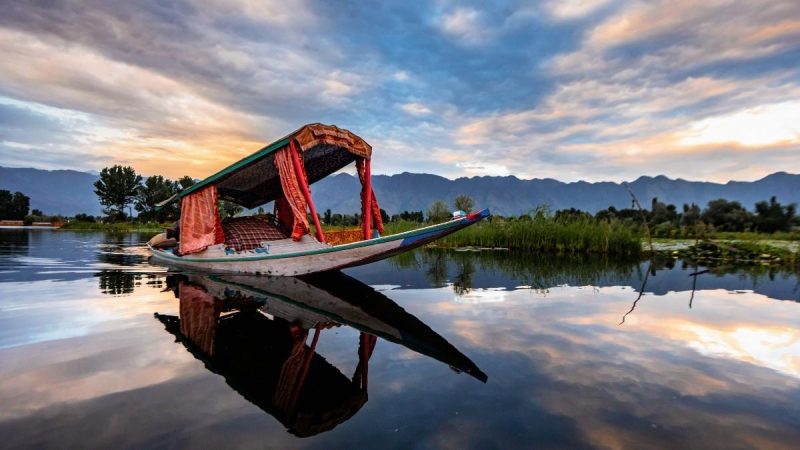
In winter, the Dal Lake becomes softer and almost shrunken, with parts of its surface freezing when temperatures drop to -7°C. Shikaras drift slowly along unfrozen channels, and the snow-dusted Zabarwan mountains look like they’re keeping watch. There are fewer tourists, which gives the water time to whisper instead of perform. A cup of hot kahwa on a houseboat, wrapped in fog – that’s Dal in winter at its truest.
3. Pangong Tso, Ladakh
If you’ve seen photos of Pangong Tso glowing in impossible shades of blue, winter will surprise you. At about 4,350 metres above sea level, the lake freezes, despite being saline, a fact that never stops feeling mildly shocking. Everything here looks stripped down with a clear sky above, frozen earth below, and mountains bare and honest. It’s beautiful, yes, but also harsh. Roads can close after snowfall, and travel requires acclimatisation, planning, and patience. Pangong isn’t winter tourism; it’s more like the winter truth.
Also Read: Viral Video Shows Pangong Lake Frozen Like Glass; Netizens Amazed By Ladakh’s Winter Magic
4. Gurudongmar Lake, North Sikkim
Gurudongmar sits at around 5,425 metres, in a world where the sky feels closer than the ground. Almost the entire lake freezes during winter, except for a small patch that locals believe stayed liquid thanks to the blessing of Guru Padmasambhava. The landscape looks other-worldly; it is white, vast and silent. The beauty is stark and even spiritual, but the region is demanding. Permits are required, temperatures stay brutally low, and altitude sickness is a common concern. Yet, for those who make it, winter here stays in memory long after the cold leaves the body.
5. Tsomgo (Changu) Lake, Sikkim
Forty kilometres from Gangtok, Tsomgo Lake sits at about 3,753 metres and often freezes solid by December. It’s accessible enough to be part of a day trip, but winter changes its temperament, as silence replaces the bustling summer energy. Snow piles up along the ridges, yaks wait patiently for visitors who want a short ride, and the frozen lake reflects the mountains in a way that feels still and unhurried. Accessibility depends on weather, and permits are required, but when conditions align, it’s one of winter’s easiest Himalayan miracles.
6. Suraj Tal, Himachal Pradesh
Located below the Bara-Lacha La pass in Lahaul-Spiti, Suraj Tal spends much of winter frozen and remote. It’s one of India’s highest lakes, and winter turns it into a silent white expanse bordered by rugged mountains. Access during the peak winter months is often limited due to snow, but travellers who pass through during the shoulder season, when the lake is partially frozen, find a scene that feels raw and untouched. There’s no café here, no staged view spot, just wind, ice, and sky.
Also Read: Himachal Pradesh Monsoon Fury: 386 Dead, Over 8,000 Homes Damaged, And Thousands Of Villages Cut Off
7. Lake Pichola, Udaipur
Not all winter lakes demand thermal layers and altitude precautions. Lake Pichola in Udaipur turns into a postcard during the cooler months, but not the mass-produced kind, more like something hand-painted with patience. The weather stays pleasant (around 10–25°C), and the palaces, like City Palace, Jag Mandir, and the iconic Lake Palace, glow warmly against the water. Sunset boat rides feel slower, more cinematic and more personal. Winter doesn’t transform Pichola, but rather it perfects it.
Also Read: Kriti Sanon’s Sister Nupur Sanon & Stebin Ben To Tie The Knot At THIS Luxe Udaipur Palace
8. Naini Lake, Uttarakhand
Naini Lake sits quietly in the centre of Nainital, shaped like an eye reflecting cedar trees and sleepy winter skies. Sometimes there’s snowfall; sometimes there’s just a cold quietness that wraps the entire valley. A stroll along Thandi Sadak, the sound of oars dipping into still water, evening lights flickering across the surface – winter here doesn’t ask for attention, it gives space.
9. Chilika Lake, Odisha
While the mountains freeze, Chilika comes alive! This is Asia’s largest brackish lagoon, but its winter identity belongs to the birds like flamingos, pintail ducks, plovers, sandpipers, and hundreds of thousands more that arrive from distant regions, including Russia and Central Asia. Boat rides through the Mangalajodi wetlands, or Satpada, become moving observation decks. In winter, Chilika is more like a seasonal ecosystem in motion.
Also Read: Why Is Odisha’s Famous Kuchinda Chilli Being Sidelined By Farmers? Will It Disappear Soon?
10. Loktak Lake, Manipur
Loktak doesn’t look like any other lake. Its floating circular islands, called phumdis, give the waterscape a shifting and organic geometry. Winter here means migratory birds, cool weather, and clear skies and also a chance to see the endangered sangai deer in the world’s only floating wildlife sanctuary, Keibul Lamjao National Park. Few places in India mix ecology, culture, and quiet like Loktak in winter.
Also Read: Manipur Floods: 1000+ Families Displaced In Imphal, Bridge Washed Away As IMD Warns Of Thunderstorms
There isn’t one “type” of winter lake in India. Some freeze into silence, some shimmer under heritage palaces, while others fill with wings instead of ice. But all of them prove a quiet truth: water doesn’t need summer to be beautiful. If you travel to any of these lakes this season, the water will greet you with a chilly magic. But feel special, it reveals itself only to those willing to pause and look.
Cover Image Courtesy: nitishwallia/CanvaPro
For more such snackable content, interesting discoveries and the latest updates on food, travel and experiences in your city, download the Curly Tales App. Download HERE.